
Army set to establish, operationalise first Integrated Battle Groups next month
Context
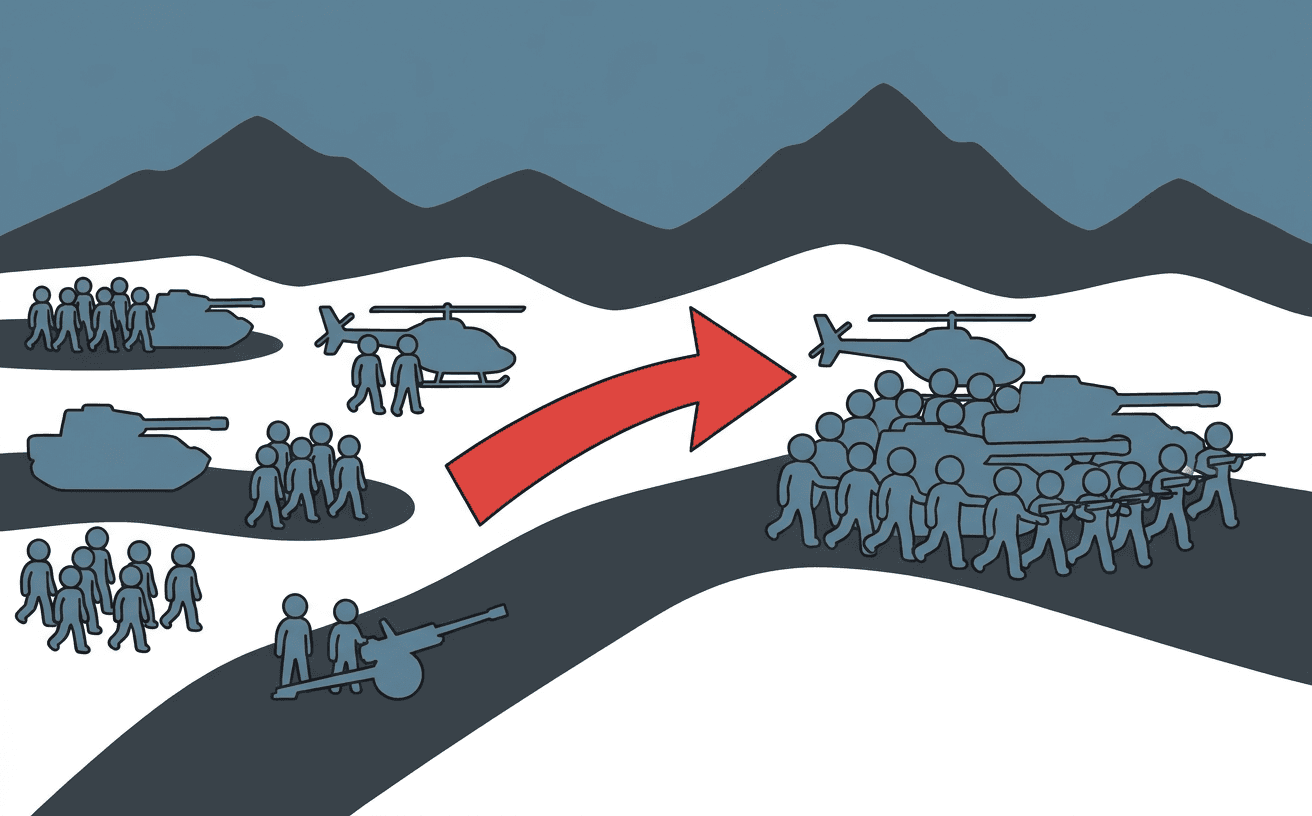
The is set to operationalise its first (IBGs) next month, drawn from the Panagarh-based (Mountain Strike Corps). This marks a major shift towards agile, self-contained, brigade-sized fighting units for swift deployment, particularly along the mountainous border with China.
Exam perspectives
This development represents a critical structural reform in India's defence posture. The traditional Corps-level deployment is cumbersome and time-consuming, unsuited for the rapid response required in modern warfare, especially in difficult terrains. The shift to Integrated Battle Groups aligns with the need for rapid deployment capabilities and combined arms operations. By integrating infantry, artillery, armour, combat engineers, and logistical support into smaller, self-sustaining units, the Army aims to drastically reduce mobilisation time. This concept, initiated during the tenure of former Army Chief General Bipin Rawat, reflects a proactive, capacity-based capability development model rather than a purely reactive, threat-based one. This restructuring is crucial for addressing potential flashpoints and maintaining a robust deterrent capability.
The specific focus on creating IBGs from the XVII Corps directly addresses the strategic challenges posed by China along the Line of Actual Control (LAC). The mountainous terrain of the Eastern theatre necessitates agile and swiftly deployable forces to counter potential incursions or provocations. This move is a strategic response to China's own military modernisation, which has seen the People's Liberation Army (PLA) transition to versatile Combined Arms Brigades (CABs). India's adoption of IBGs ensures parity in tactical agility and operational readiness, signaling a commitment to defending its territorial integrity and maintaining stability in the Himalayan region.
The operationalisation of IBGs is a significant step in the ongoing broader restructuring of the Indian Armed Forces. It highlights the evolving nature of military governance, moving away from rigid, legacy structures towards more flexible and responsive formations. The integration of various arms (infantry, artillery, EME, signals) at a lower level enhances interoperability and cohesive action. Furthermore, this structural reform is seen as a necessary precursor to the eventual establishment of Theatre Commands, which aim to synergise the operations of the Army, Navy, and Air Force under unified geographic commands. This signifies a maturation of India's higher defence management and a commitment to optimizing resource utilisation for maximum operational impact.
Key references
AI-generated study notes, sourced from Indian Express. Verify facts and figures with standard sources.