
Girls shouldn’t give up education due to lack of sanitary napkins, gender-segregated toilets in schools: Supreme Court
Context
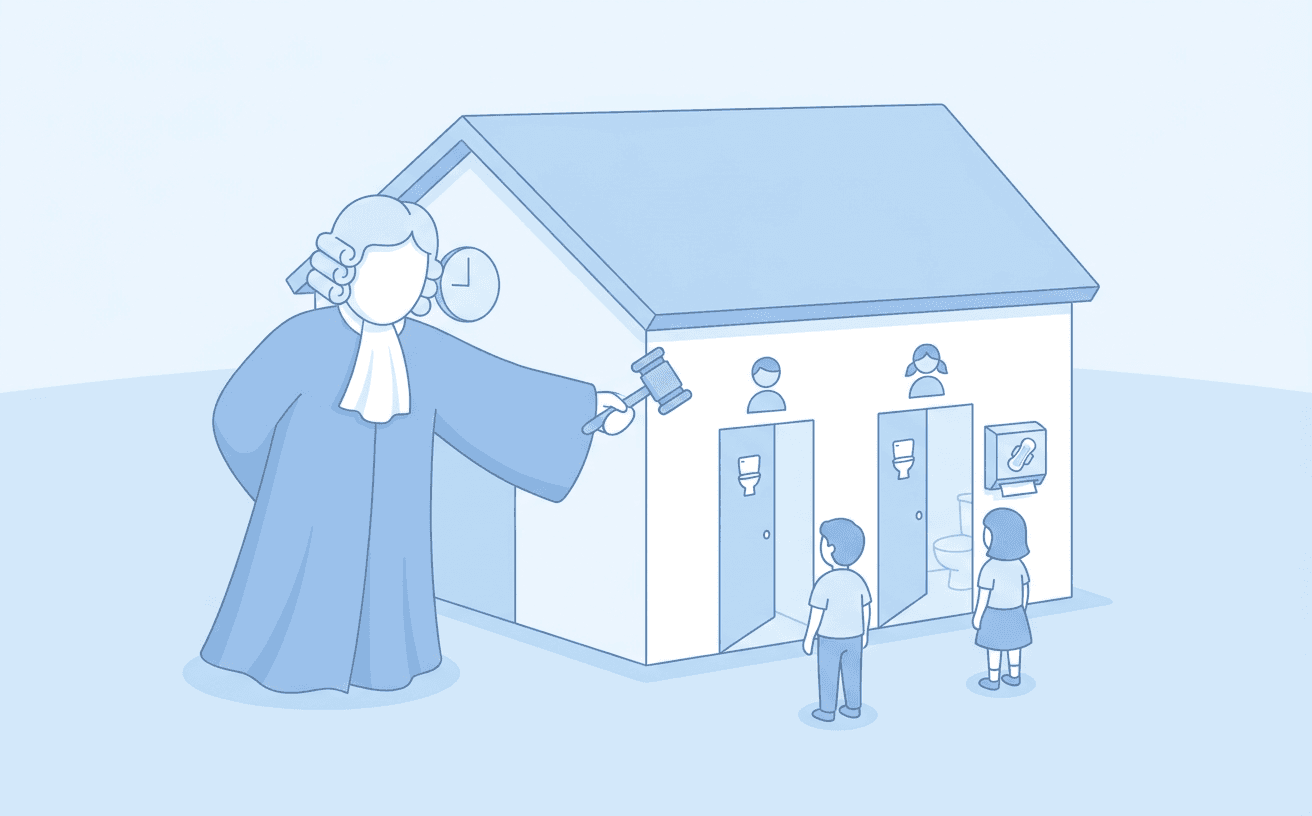
The has mandated the provision of free sanitary napkins and functional, gender-segregated toilets in all schools across India. This directive, stemming from a January 2024 judgment, aims to address school dropouts among adolescent girls due to inadequate menstrual hygiene facilities. The has been designated as the nodal ministry to ensure compliance across all States and Union Territories.
Exam perspectives
This judgment is a significant example of judicial activism expanding the scope of Fundamental Rights. The Supreme Court has explicitly linked menstrual hygiene to the Right to Life under Article 21 of the Constitution.
- Evolution of Article 21: This continues the trend of the judiciary reading implied rights into Article 21, similar to the right to clean environment or the right to privacy (Puttaswamy case). Here, 'life' is interpreted not merely as animal existence but a life with dignity, which includes the highest standard of sexual and reproductive health.
- Substantive Equality: This ruling promotes substantive equality under Article 14 and Article 15. By recognizing that biological differences (menstruation) create specific needs, the state must accommodate these needs to ensure girls can participate equally in education.
- UPSC Application: Expect questions on how the judiciary expands Fundamental Rights to address evolving social issues. You could be asked to analyze the intersection of Article 21 (Right to Life) and Article 21A (Right to Education) in ensuring gender equity.
The lack of Water, Sanitation, and Hygiene (WASH) facilities in schools is a critical barrier to female education in India.
- The Dropout Domino Effect: Inadequate menstrual hygiene management (MHM) leads to absenteeism, which eventually translates into permanent dropouts. This 'domino effect' strips girls of their Right to Education (Article 21A) and severely limits their future economic and social participation.
- Tackling Period Poverty: The directive to provide free sanitary napkins addresses period poverty—the inability to afford menstrual products. This is crucial for marginalized communities where such products are often considered luxury items rather than necessities.
- Gender Justice: Providing gender-segregated toilets is fundamental to maintaining safety and dignity for female students.
- UPSC Application: This is highly relevant for GS Paper 2 (Social Justice). You can use this judgment as a case study to discuss the socio-economic determinants of health and education, or in essays concerning women's empowerment and systemic barriers to gender equality.
The implementation of this judgment highlights the complexities of cooperative federalism and policy execution.
- Monitoring and Compliance: The Supreme Court has instituted a mechanism of continuous mandamus, requiring the Centre to monitor state-level compliance and submit progress reports every three months. This underscores the challenge of translating judicial pronouncements into ground-level realities.
- Nodal Ministry Role: Appointing the Ministry of Education as the nodal agency ensures accountability and centralized coordination. This aligns with existing schemes like Samagra Shiksha Abhiyan, which also includes components for school infrastructure and hygiene.
- Environmental Concerns vs. Health: The debate over 'oxo-biodegradable' pads (mandated under ASTM D-6954 standards) versus reusable options (like Telangana's Project Shakti) illustrates the policy tension between immediate public health needs and long-term environmental sustainability. Oxo-biodegradable plastics often break down into harmful microplastics.
- UPSC Application: Analyze the role of the judiciary in driving policy implementation when the executive lags. Discuss the challenges States face in scaling up infrastructure (vending machines, incinerators) and ensuring the continuous supply of consumables in rural schools.
Key references
AI-generated study notes, sourced from The Hindu. Verify facts and figures with standard sources.