
How 33 lakh enumerators are counting India’s population
Context
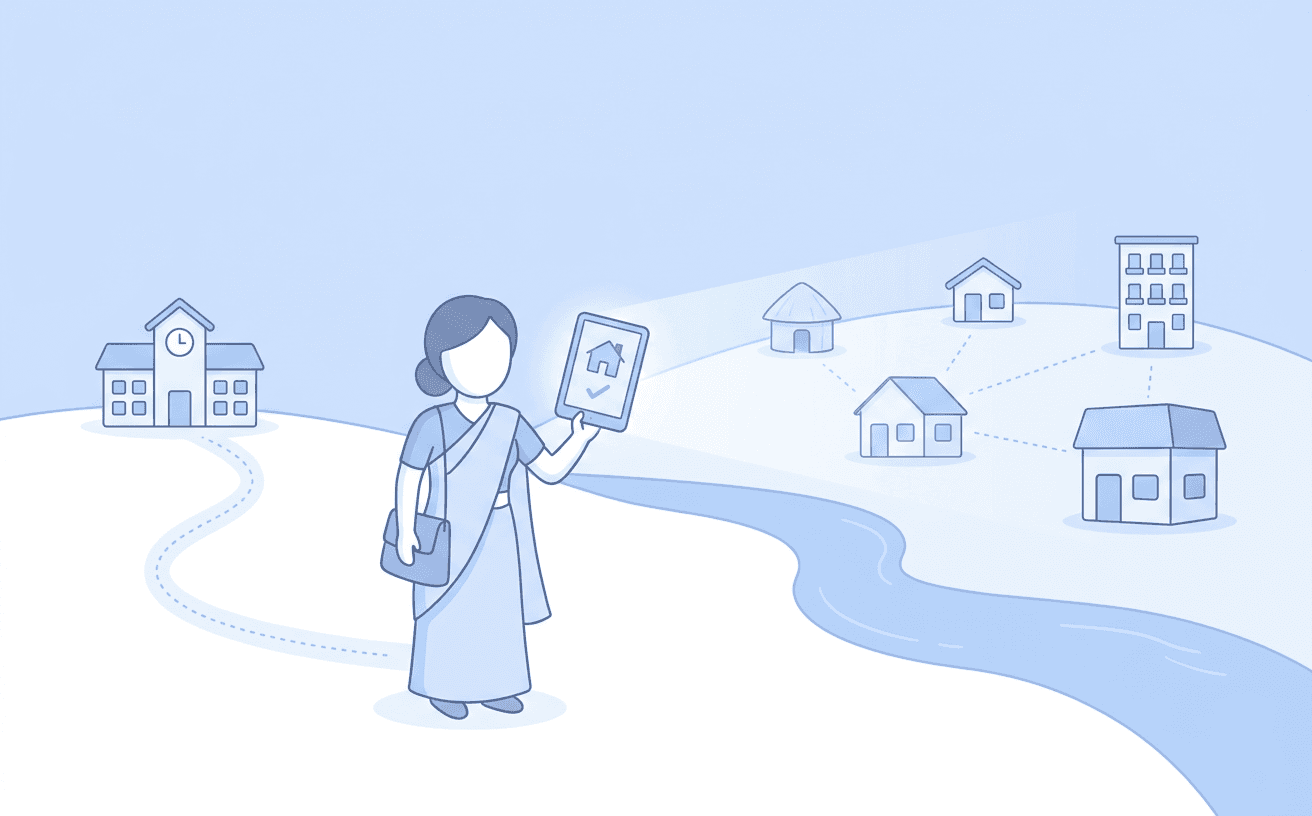
The upcoming will be India's first fully digital census, employing 33 lakh enumerators, predominantly government school teachers. The exercise faces significant implementation challenges, including technological glitches, infrastructural deficits, and social resistance, highlighting the complexities of conducting large-scale data collection in India. This data is critical for national planning, resource allocation, and policy formulation.
Exam perspectives
The Census is conducted under the provisions of the Census Act, 1948, which mandates public cooperation and ensures the confidentiality of the collected data. The constitutional mandate for the Census stems from Article 246, placing it in the Union List (Entry 69), thereby giving the central government exclusive power to legislate on it. This digital transition signifies a major governance reform, moving away from traditional paper-based methods towards a more efficient, albeit challenging, technological approach. The involvement of government school teachers as enumerators underscores the reliance on existing state machinery, raising questions about the impact on education continuity and the burden on public servants during such massive exercises.
The transition to a digital Census introduces new governance challenges, particularly concerning data security and digital infrastructure. Enumerators face connectivity issues and app glitches, reflecting the persistent digital divide across the country, especially in rural and remote areas. The safety concerns and resistance from residents highlight the need for robust public awareness campaigns and community engagement strategies to build trust and ensure accurate data collection. Effective governance requires addressing these implementation bottlenecks to guarantee the integrity and reliability of the Census data, which is foundational for targeted welfare delivery and policy planning.
Census data provides crucial demographic insights essential for addressing social inequalities and planning for future population dynamics. It forms the basis for delimitation exercises, determining political representation, and identifying beneficiaries for various welfare schemes. The challenges faced by enumerators, such as working in extreme heat and navigating complex social dynamics, reflect the broader socio-economic realities of India. Accurate demographic data is vital for understanding trends in urbanization, migration, education, and health, enabling evidence-based policymaking to foster inclusive growth and equitable resource distribution.
Key references
AI-generated study notes, sourced from The Hindu. Verify facts and figures with standard sources.