
India releases first anti-terror policy PRAHAAR
Context
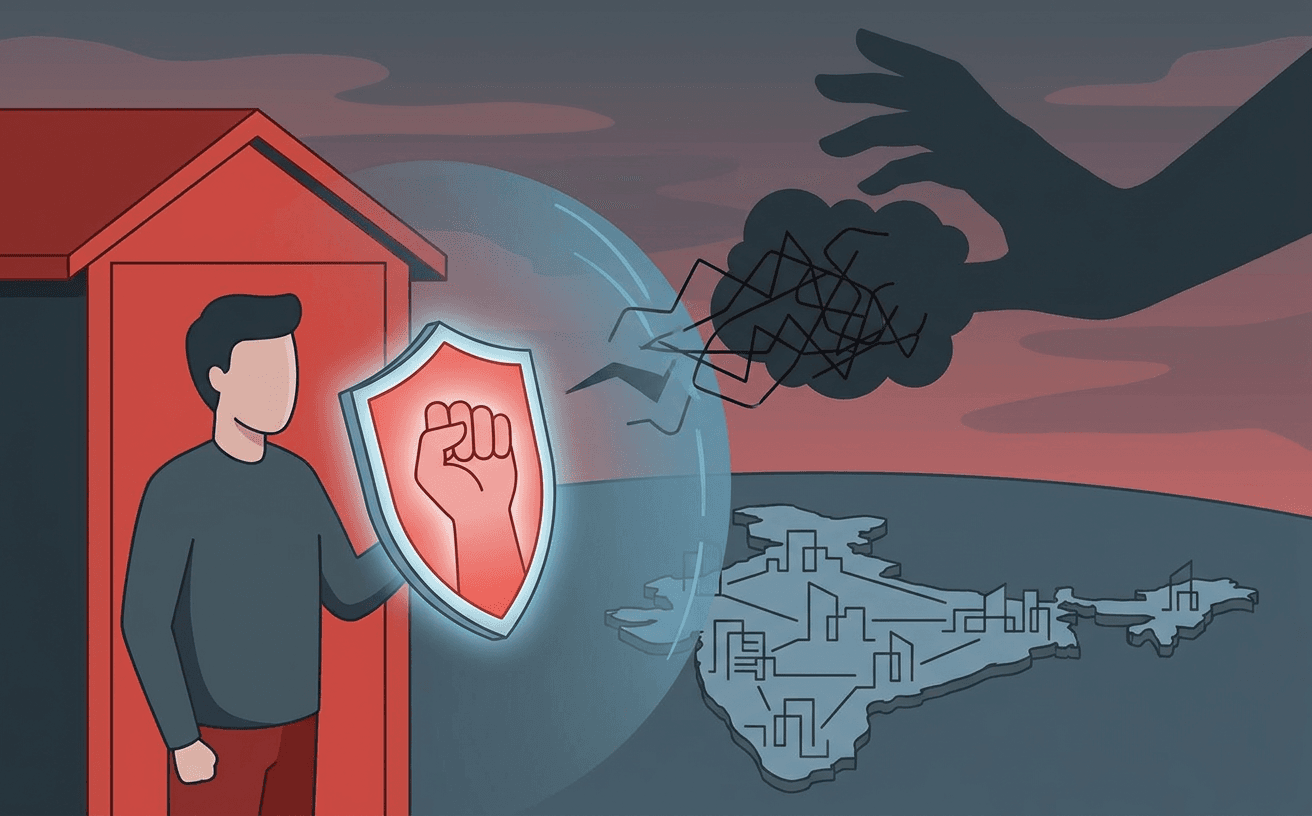
The (MHA) has released PRAHAAR, India's first dedicated national anti-terror policy. The policy acknowledges the evolving nature of threats, identifying state-sponsored terrorism from across the border alongside emerging threats from criminal hackers and nation-states targeting India through cyberattacks. It outlines a comprehensive approach, securing critical infrastructure across water, land, air, and cyberspace against both state and non-state actors.
Exam perspectives
The introduction of PRAHAAR addresses a long-standing gap in India's security architecture: the absence of a unified, comprehensive anti-terror doctrine. Historically, India has relied on a patchwork of legislation like the Unlawful Activities (Prevention) Act (UAPA), the National Investigation Agency Act, and the Armed Forces (Special Powers) Act (AFSPA), along with reactive strategies. PRAHAAR shifts the paradigm from reactive to proactive, explicitly categorizing threats across all domains (water, land, air, and importantly, cyber). By formally acknowledging threats from both state actors (like hostile neighboring intelligence agencies) and non-state actors (terrorist organizations, independent hacker syndicates), the policy creates a framework for cohesive capability development. UPSC candidates should view this policy as the doctrinal underpinning that will guide future intelligence gathering, inter-agency coordination (between bodies like Intelligence Bureau, Research and Analysis Wing, and state police forces), and resource allocation for national security.
A crucial evolution highlighted in PRAHAAR is the recognition of cyberattacks as a potent form of terrorism, perpetrated by both criminal hackers and nation-states. This aligns with modern geopolitical realities where physical borders are bypassed to target critical infrastructure (CI) — defined as assets essential for the functioning of a society and economy. The policy explicitly mentions safeguarding power grids, railways, aviation, ports, defense, space, and atomic energy sectors. This highlights the growing role of organizations like the National Critical Information Infrastructure Protection Centre (NCIIPC) and CERT-In (Computer Emergency Response Team - India). For the UPSC exam, the intersection of cybersecurity and national security is highly relevant. Candidates must understand how a cyberattack on a power grid (a kinetic effect achieved through digital means) can be as devastating as a conventional terror attack, and how PRAHAAR mandates the strengthening of both offensive and defensive cyber capabilities.
The effectiveness of the PRAHAAR policy relies heavily on governance mechanisms and institutional capacity building. Implementing a unified anti-terror policy in a federal structure requires robust cooperation between the Ministry of Home Affairs at the Center and state governments, as law and order is fundamentally a State subject under the Seventh Schedule. The policy implies a significant upgrade in the capacities developed to protect critical sectors. This will necessitate investments in technology, specialized training for security personnel, and potentially, the creation or restructuring of specialized task forces. For Mains, analyze this development in the context of the proposed but unfulfilled National Counter Terrorism Centre (NCTC) and the existing Multi-Agency Centre (MAC). The successful execution of PRAHAAR will depend on overcoming bureaucratic silos, ensuring real-time intelligence sharing, and equipping state police forces (often the first responders) with the necessary tools and training to counter both physical and cyber-terror threats.
Key references
AI-generated study notes, sourced from The Hindu. Verify facts and figures with standard sources.