
Revisiting India’s entry onto the nuclear stage
Context
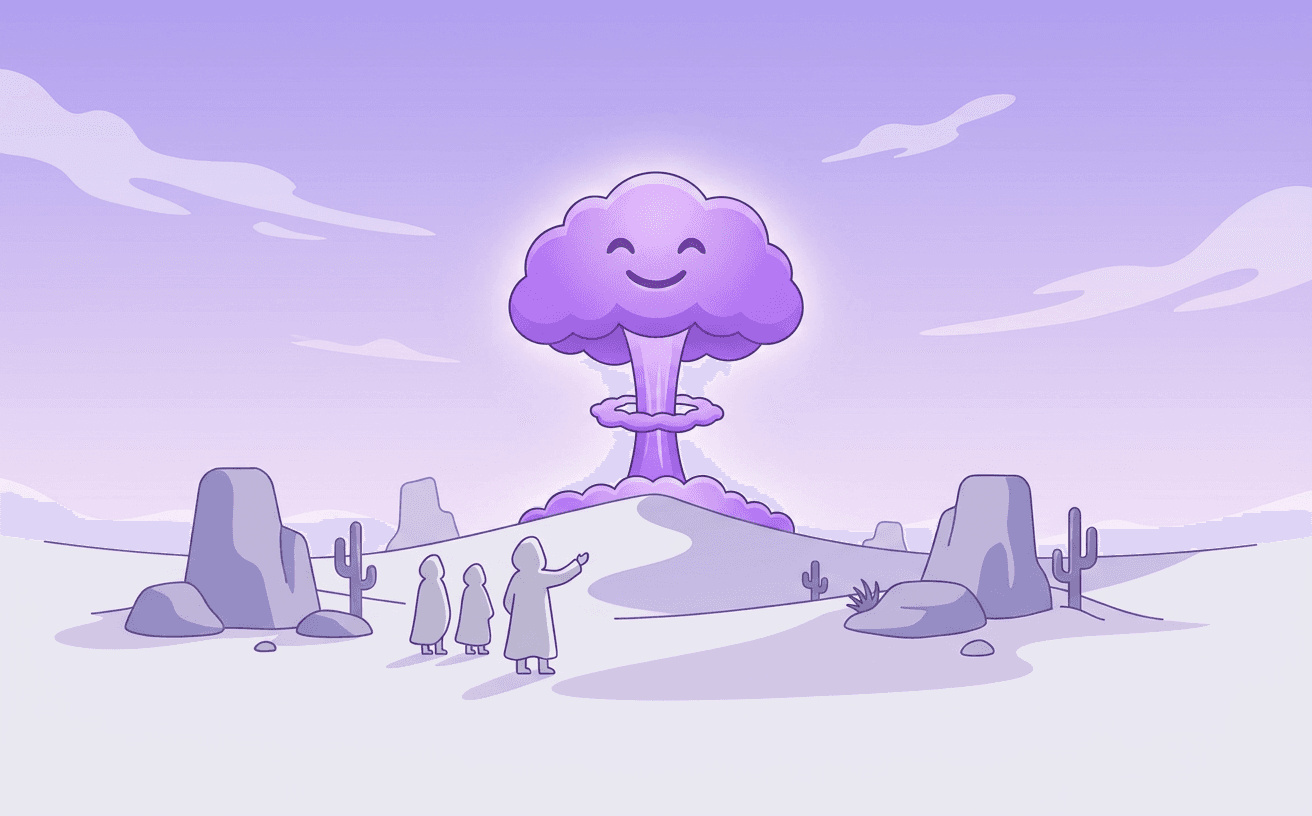
India's entry as a nuclear power was marked by its first successful nuclear test, codenamed 'Smiling Buddha' (Pokhran-I), conducted on May 18, 1974. Developed secretly by a team led by Raja Ramanna at the using plutonium from the Canadian-supplied , the test was officially termed a 'peaceful nuclear explosion' (PNE) to mitigate international backlash, though its strategic intent was undeniable in the face of China's nuclear capability.
Exam perspectives
UPSC frequently tests understanding of basic nuclear physics and India's nuclear energy program. A nuclear reaction alters the nucleus of an atom, either through fission (splitting heavy nuclei like Uranium or Plutonium) or fusion (combining light nuclei). Pokhran-I utilized an implosion design fission device, similar to the bomb dropped on Nagasaki, using plutonium extracted from the CIRUS reactor. For Prelims, differentiate between fission and fusion, and know the key research reactors like CIRUS reactor and Dhruva reactor at Bhabha Atomic Research Centre (BARC). The distinction between peaceful applications (power generation, medical isotopes) and weaponization is a core theme in India's nuclear doctrine.
The geopolitical context of Pokhran-I is crucial for Mains GS-2. Following the 1962 Sino-Indian War and China's subsequent nuclear tests, India felt strategically vulnerable. The global push for the Non-Proliferation Treaty (NPT) in 1970, which India refused to sign due to its discriminatory nature (creating 'haves' and 'have-nots'), further isolated New Delhi. The international reaction to 'Smiling Buddha' was severe, with nations like Canada and the US imposing strict embargoes and forming the Nuclear Suppliers Group (NSG) to restrict India's access to nuclear technology. This forced India to develop an indigenous program, eventually leading to Pokhran-II (Operation Shakti) in 1998, which fundamentally shifted global power dynamics and culminated in the landmark India-US Civil Nuclear Agreement of 2008.
While the strategic success is highlighted, the socio-environmental consequences of nuclear testing are often overlooked. The article notes the potential health impacts in villages near the Pokhran test site, emphasizing the long-term persistence of radioactive particles post-detonation. A lack of comprehensive epidemiological studies makes it difficult to definitively link increased cancer rates or birth defects to the tests, but this remains a critical concern. In a UPSC context, this highlights the tension between national security imperatives and the rights of citizens, specifically concerning Article 21 (Right to Life), which encompasses the right to a clean and safe environment. Evaluating the full cost of strategic programs requires balancing geopolitical necessity with public health and environmental degradation.
Key references
AI-generated study notes, sourced from The Hindu. Verify facts and figures with standard sources.