
As Russian oil purchases soared, India paid $15 billion of imports in rupees over three months
Context
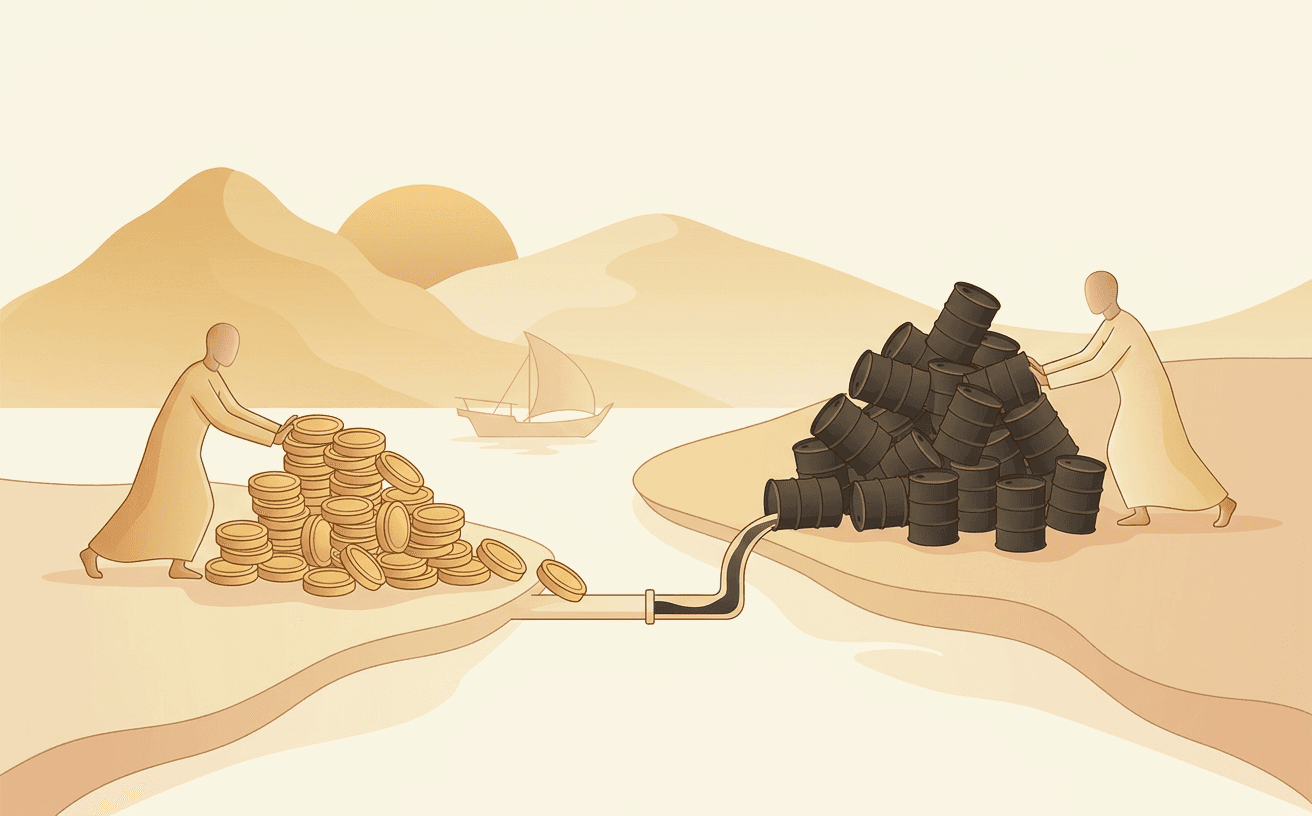
Recent data from the reveals that India paid approximately $15 billion for imports in rupees during March-May 2026, primarily driven by surging oil purchases from Russia amidst geopolitical tensions. This increase in rupee trade settlement highlights India's strategy to navigate global economic volatility, manage its trade deficit, and reduce reliance on the US dollar in international transactions.
Exam perspectives
The push for rupee internationalization (increasing the use of the rupee in cross-border transactions) is a crucial economic strategy for India. The Reserve Bank of India framework introduced in 2022 allows for trade settlement in INR, aiming to reduce the outflow of foreign exchange and shield the domestic currency from global shocks. This is vital because India typically runs a significant trade deficit (imports exceeding exports), which exerts depreciative pressure on the rupee. When imports, such as the massive volume of crude oil from Russia, are settled in rupees, it lessens the immediate demand for US dollars, helping to stabilize the exchange rate. Furthermore, it mitigates the impact of imported inflation caused by a depreciating currency or soaring global commodity prices. However, a significant challenge remains the limited acceptability of the rupee globally; for this mechanism to be truly effective long-term, trading partners must find utility for accumulated rupee reserves, either by investing in Indian assets or purchasing Indian exports. UPSC often examines the macroeconomic implications of such policies on the Current Account Deficit (CAD) and foreign exchange reserves.
India's increased reliance on Russian crude oil demonstrates its complex geopolitical maneuvering, often termed strategic autonomy. Despite Western sanctions on Russia due to the conflict in Ukraine, India has consistently prioritized its national energy security, capitalizing on discounted Russian oil to manage domestic fuel prices. This dynamic highlights the shift in global energy flows, especially when traditional supply routes like the Strait of Hormuz face disruptions. The temporary waivers granted by the US on purchasing sanctioned Russian crude further illustrate the intricate balance India maintains in its bilateral relations, ensuring it does not alienate Western allies while securing vital energy resources. The use of rupee settlements is partly a necessity driven by these sanctions, bypassing the dollar-dominated global financial system (SWIFT). This scenario presents a classic case study for UPSC Mains on how geopolitical events dictate trade realignments and the necessity for nations to build resilient supply chains.
The implementation of the rupee settlement mechanism requires robust coordination between the Reserve Bank of India, the Ministry of Finance, and the Ministry of Commerce and Industry. A key operational component is the use of Vostro accounts (an account held by a foreign bank with a domestic bank in domestic currency), which facilitate these transactions. The governance challenge lies in streamlining this process, minimizing regulatory hurdles for importers and exporters, and incentivizing foreign partners to engage in rupee trade. The data indicating that Russian entities are utilizing accumulated rupees to purchase Indian goods (though still a small percentage of overall exports) points towards the necessity of creating a favorable environment for bilateral trade balance. Policymakers must focus on expanding the basket of Indian exports to make holding rupees attractive. UPSC questions may focus on the institutional mechanisms required to support currency internationalization and the policy measures needed to boost domestic exports to offset trade imbalances.
Key references
AI-generated study notes, sourced from Indian Express. Verify facts and figures with standard sources.