
Citing lack of jurisdiction, India rejects Hague court’s Indus Waters Treaty ruling
Context
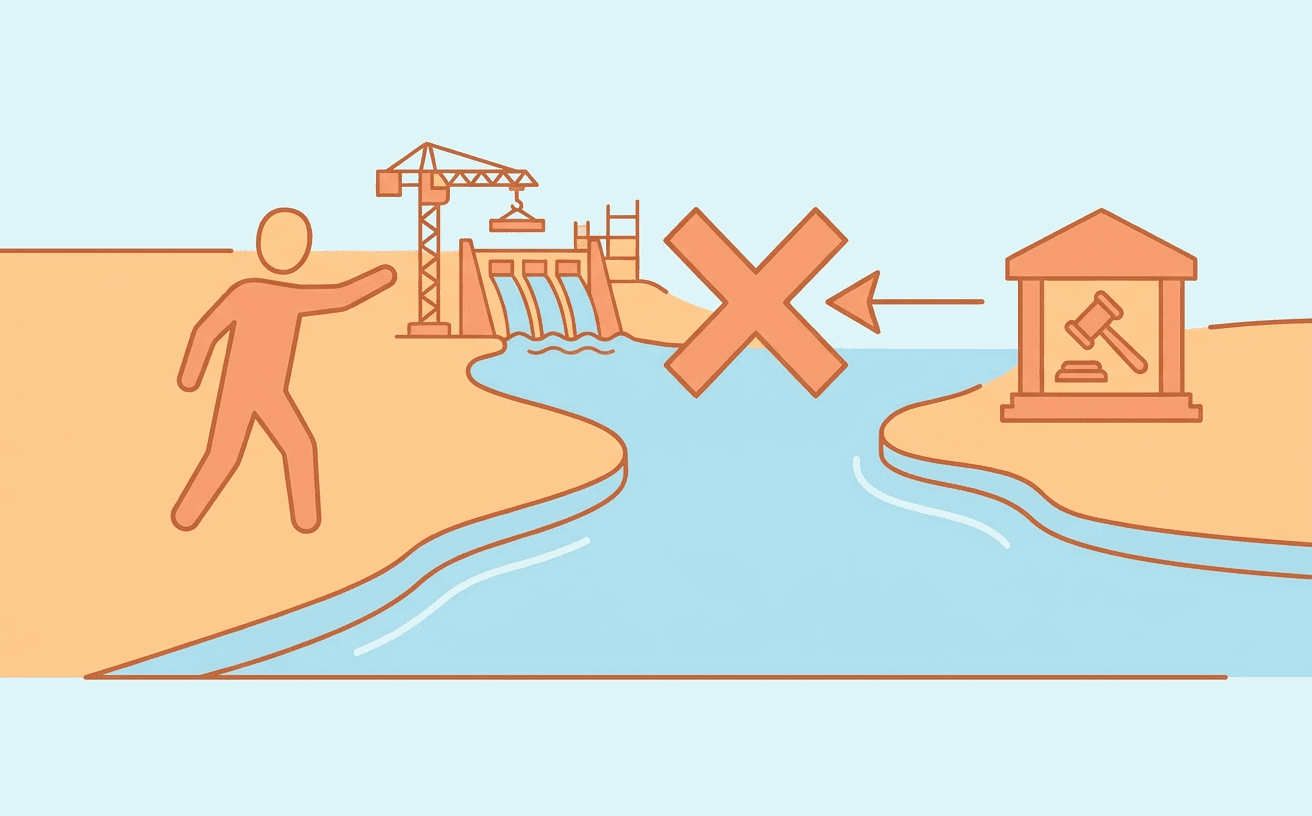
India has strongly rejected a ruling by the (PCA) at The Hague, which ordered India to halt specific construction on the and declared the fully in force. The stated that the arbitral body, established by the , lacks jurisdiction and was formed in violation of the treaty's provisions. Consequently, India has reiterated its stance of holding the treaty 'in abeyance' due to cross-border terrorism, refusing to comply with the PCA's interim measures.
Exam perspectives
The 1960 Indus Waters Treaty contains a highly structured, graded dispute resolution mechanism: 'questions' are handled by the Permanent Indus Commission, 'differences' by a Neutral Expert, and 'disputes' by a Court of Arbitration. The current crisis stems from Pakistan initiating parallel proceedings—requesting a Neutral Expert and simultaneously pushing for a Court of Arbitration. India argues that the World Bank's decision to activate both tracks concurrently is a patent breach of the treaty, as it risks yielding contradictory rulings. For UPSC Mains, this scenario highlights the structural vulnerabilities of bilateral treaties when institutional guarantors (like the World Bank) fail to ensure sequential adherence to dispute resolution frameworks. Furthermore, India’s decision to place the treaty in abeyance links transboundary water sharing directly to cross-border security, signaling a shift from treating the water pact as immune to geopolitical hostilities.
Under the treaty, the waters of the Eastern rivers (Ravi, Beas, Sutlej) are allocated for unrestricted use by India, while the Western rivers (Indus, Jhelum, Chenab) are allocated to Pakistan. However, India retains the critical right to construct run-of-the-river (RoR) hydroelectric projects on the Western rivers, provided they meet specific design criteria. The Ratle Hydro-Electric Project is an 850 MW RoR facility currently under construction on the Chenab River in the Kishtwar district of Jammu & Kashmir. Pakistan frequently objects to the pondage (water storage capacity) and spillway designs of Indian projects on these rivers, fearing they could be used to manipulate water flow and induce artificial floods or droughts. The PCA’s interim order restricting the concreting of the Ratle dam wall directly impacts India’s strategic infrastructure development and energy security in its border regions, making it a critical case study for GS Paper 3 (Infrastructure and Energy).
India's categorical rejection of the Permanent Court of Arbitration relies heavily on the principle of state consent in international law; a sovereign state cannot be subjected to binding arbitration without its explicit agreement to the forum's constitution. By holding the treaty 'in abeyance' following a terror attack, India implicitly invokes principles akin to the doctrine of rebus sic stantibus (fundamental change of circumstances) outlined in the Vienna Convention on the Law of Treaties. While India is not a signatory to the convention, this doctrine forms part of customary international law, allowing states to suspend treaty obligations if unforeseen events fundamentally alter the essential basis of the treaty. The Ministry of External Affairs asserts that sovereignty supersedes illegally constituted international tribunals. Aspirants must prepare to critically analyze this balance: how India safeguards its sovereign rights and national security interests while navigating the expectations of compliance in international legal frameworks.
Key references
AI-generated study notes, sourced from The Hindu. Verify facts and figures with standard sources.