
Denmark inaugurates CO2 storage facility in North Sea
Context
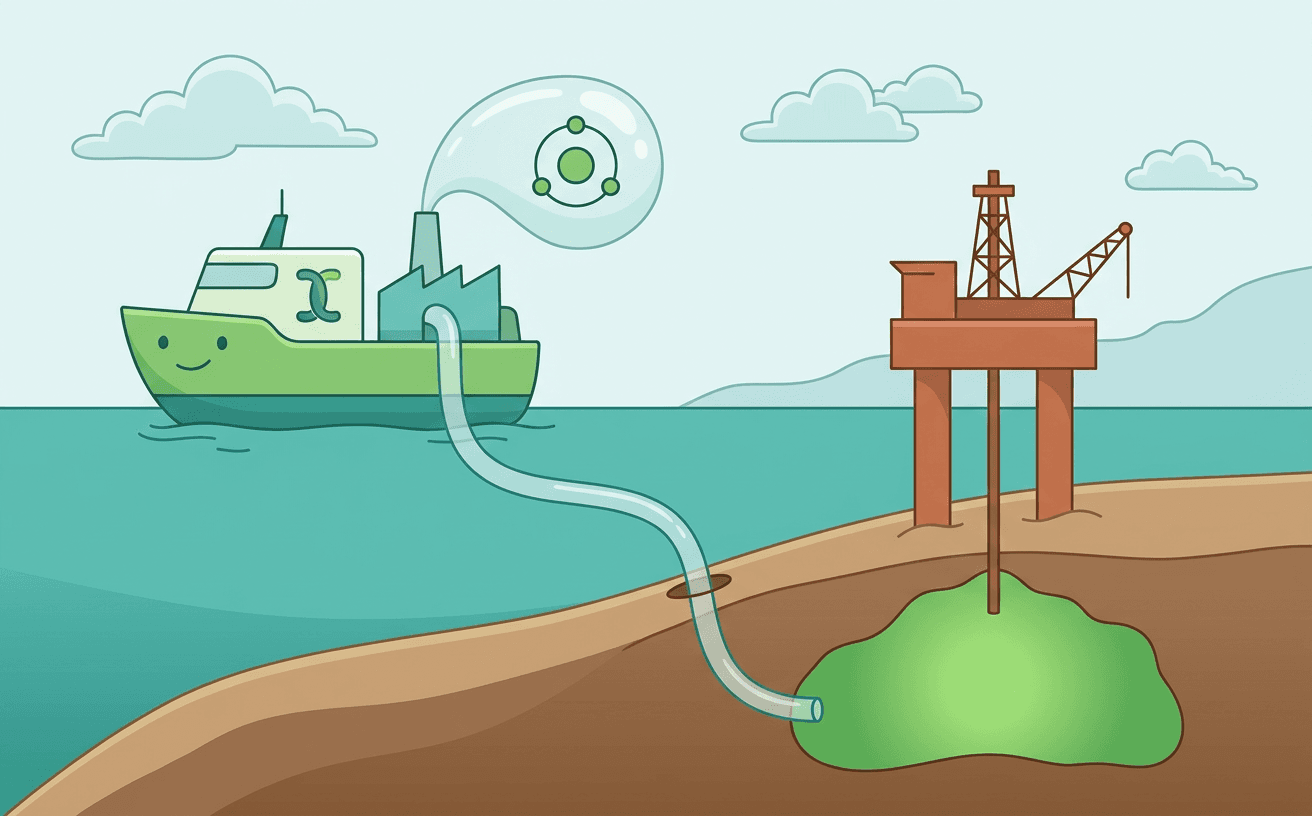
Energy group INEOS has inaugurated the Greensand Carbon Capture and Storage (CCS) project, storing carbon dioxide beneath an old oil platform in the North Sea off the coast of Denmark. This marks the European Union's first full-scale CO2 storage site, aiming to help decarbonize difficult industries like cement and steel. This project supports the EU's legally binding target under the to achieve a storage capacity of at least 50 million tonnes of CO2 per year by 2030.
Exam perspectives
The Greensand project represents a critical practical application of Carbon Capture and Storage (CCS), a technology recognized by the Intergovernmental Panel on Climate Change (IPCC) and the International Energy Agency (IEA) as essential for mitigating global warming. CCS involves capturing CO2 emissions from industrial processes, transporting it, and storing it underground, preventing it from entering the atmosphere. This is particularly crucial for hard-to-abate sectors like cement and steel production, where electrification or alternative fuels are currently not feasible at scale. The project demonstrates a transition from theoretical mitigation strategies to operational, large-scale carbon sequestration. UPSC candidates should understand the role of CCS within the broader framework of reaching net-zero emissions and fulfilling commitments under the Paris Agreement. The success of projects like Greensand could significantly influence future global climate policies and technological investments.
While CCS is environmentally promising, it is characterized by high capital and operational costs. The technological complexity of capturing, liquefying, transporting, and securely injecting CO2 deep underground requires substantial investment. The European Union is driving this market through regulatory frameworks like the Net-Zero Industry Act (NZIA), which sets legally binding storage targets, effectively creating a market for carbon storage services. This regulatory push is designed to foster a low-carbon economy while maintaining industrial competitiveness and employment in Europe. The economic viability of CCS often depends on carbon pricing mechanisms (like the EU Emissions Trading System) and government subsidies. For UPSC, analyze the tension between the high costs of CCS and the long-term economic necessity of decarbonization, especially for developing nations like India where such capital-intensive technologies may be difficult to adopt without significant international financial support.
The geographical choice for the Greensand project is highly strategic. The North Sea provides an ideal location due to its vast, depleted oil and gas reservoirs, like the one beneath the Nini West platform. These geological formations have proven capable of securely holding hydrocarbons for millions of years, making them highly suitable for long-term CO2 storage. Furthermore, the region's existing infrastructure, such as pipelines and platforms developed during the oil and gas boom, can be repurposed, significantly reducing the initial capital expenditure for CCS projects. The proximity to industrial hubs in Northern Europe also minimizes transportation costs. This highlights how historical geographical exploitation (oil extraction) is being repurposed for environmental mitigation. For UPSC geography, understanding the geological requirements for safe carbon storage (e.g., porous rock formations capped by impermeable layers) and the strategic importance of regions like the North Sea in Europe's energy transition is essential.
Key references
AI-generated study notes, sourced from The Hindu. Verify facts and figures with standard sources.