
DFCs: The backbone of India’s logistics push
Context
The Western Dedicated Freight Corridor (WDFC) has become operational, joining the Eastern DFC (EDFC) in forming a 2,843-km dedicated rail backbone for freight. This completion is a significant milestone for the initiative, aiming to create a multimodal logistics grid that enhances freight productivity, reduces logistics costs, and integrates with port-led development projects like .
Exam perspectives
The operationalization of the WDFC and EDFC represents a critical shift in India's logistics paradigm. Historically, high logistics costs (estimated at nearly 8% of GDP) have hampered the global competitiveness of Indian exports. By segregating freight from passenger traffic, the Dedicated Freight Corridors (DFCs) drastically improve the speed, volume (using double-stack containers), and reliability of freight movement. This modal shift from road to rail not only lowers the unit transport cost but also reduces inventory holding requirements for manufacturers, thereby improving their working capital cycles. The integration of DFCs with port infrastructure, particularly through the Sagarmala Project, creates a seamless multimodal logistics network. This synergy is essential for export-oriented industries in states like Gujarat and Maharashtra, as it reduces transit times and enhances supply chain predictability. The success of these corridors will likely be a core topic in Mains GS Paper 3, particularly concerning infrastructure financing, the economic impact of reduced logistics costs on manufacturing (like the automobile and textile sectors), and the overall competitiveness of the Indian economy.
The development of these corridors highlights the transformative potential of PM GatiShakti, a GIS-based national master plan launched to break inter-ministerial silos in infrastructure planning. By onboarding various Central Ministries and State/UT departments and utilizing geospatial data, PM GatiShakti facilitates coordinated planning and execution of multimodal connectivity projects. This approach addresses the historical problem of uncoordinated infrastructure development, which often led to delays and cost overruns. The planning of future DFCs (like the East-West and North-South corridors) will heavily rely on the Network Planning Group (NPG) established under GatiShakti to evaluate projects holistically. For UPSC, understanding the institutional framework of GatiShakti—how it leverages technology for cooperative federalism in infrastructure planning—is crucial. Aspirants should be prepared to analyze how this integrated approach mitigates challenges related to land acquisition, environmental clearances, and interoperability across different transport modes.
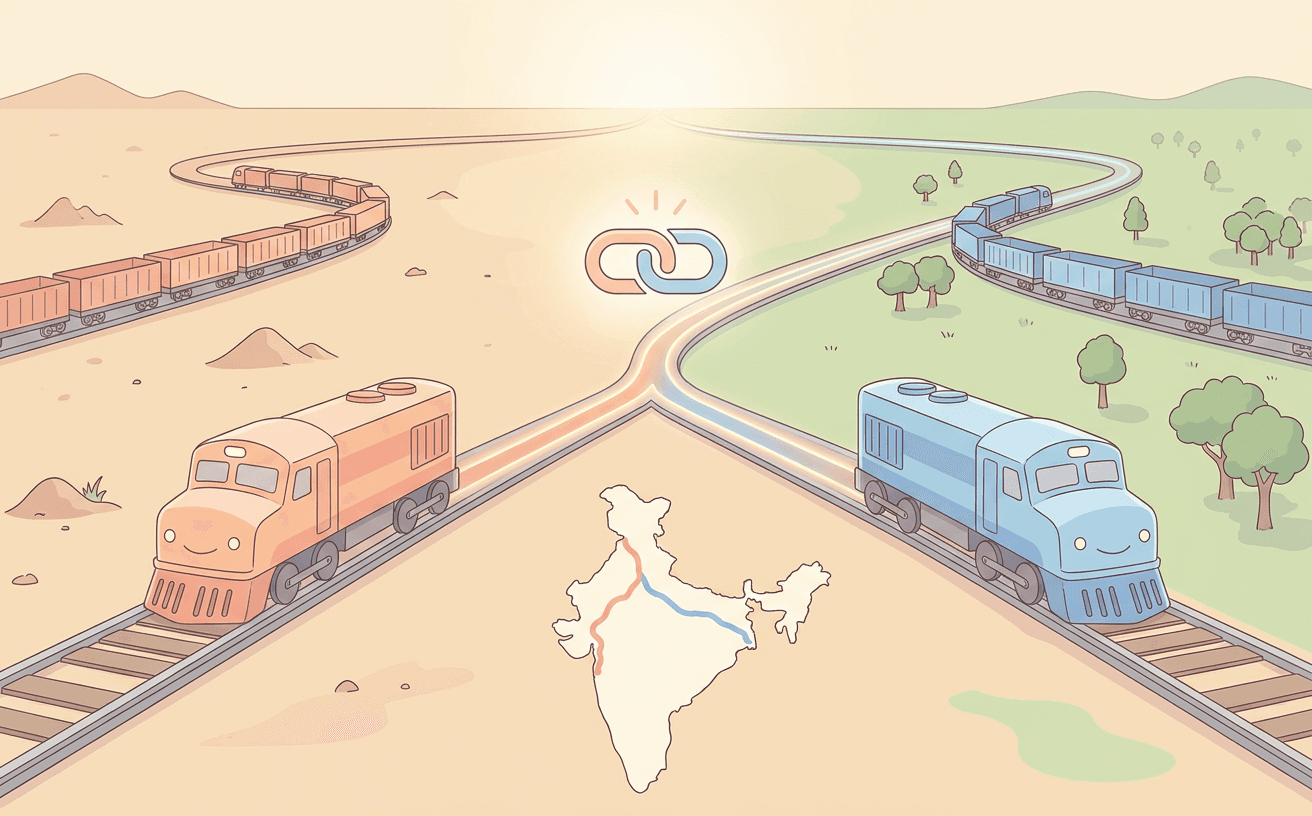
The DFCs act as economic arteries that reshape India's economic geography. The EDFC (Ludhiana to Sonnagar) primarily serves as a mineral-industrial axis, facilitating the movement of coal, iron ore, and other raw materials from the eastern hinterland to northern industrial hubs. Conversely, the WDFC (Dadri to JNPT) functions as a manufacturing-export axis, linking northern consumption centers and manufacturing zones with western ports. The proposed new corridors, such as the East-West DFC (Dankuni to Surat), aim to further integrate the mineral-rich eastern states (Jharkhand, Odisha) with the industrial and port infrastructure of Gujarat and Maharashtra. This spatial integration promotes regional development by unlocking the economic potential of hinterland areas and reducing regional disparities. For Prelims, mapping the alignment of these corridors, the states they traverse, and the major ports they connect (e.g., Jawaharlal Nehru Port Trust, Mundra, Kandla) is a high-probability area. Additionally, linking these domestic corridors with international maritime trade routes (as seen in the transformation of WDFC into a North-West India maritime trade corridor) provides a broader geopolitical context for India's trade strategy.
Key references
AI-generated study notes, sourced from The Hindu. Verify facts and figures with standard sources.