
EAM Jaishankar warns of ‘major food crisis’ in coming months
Context
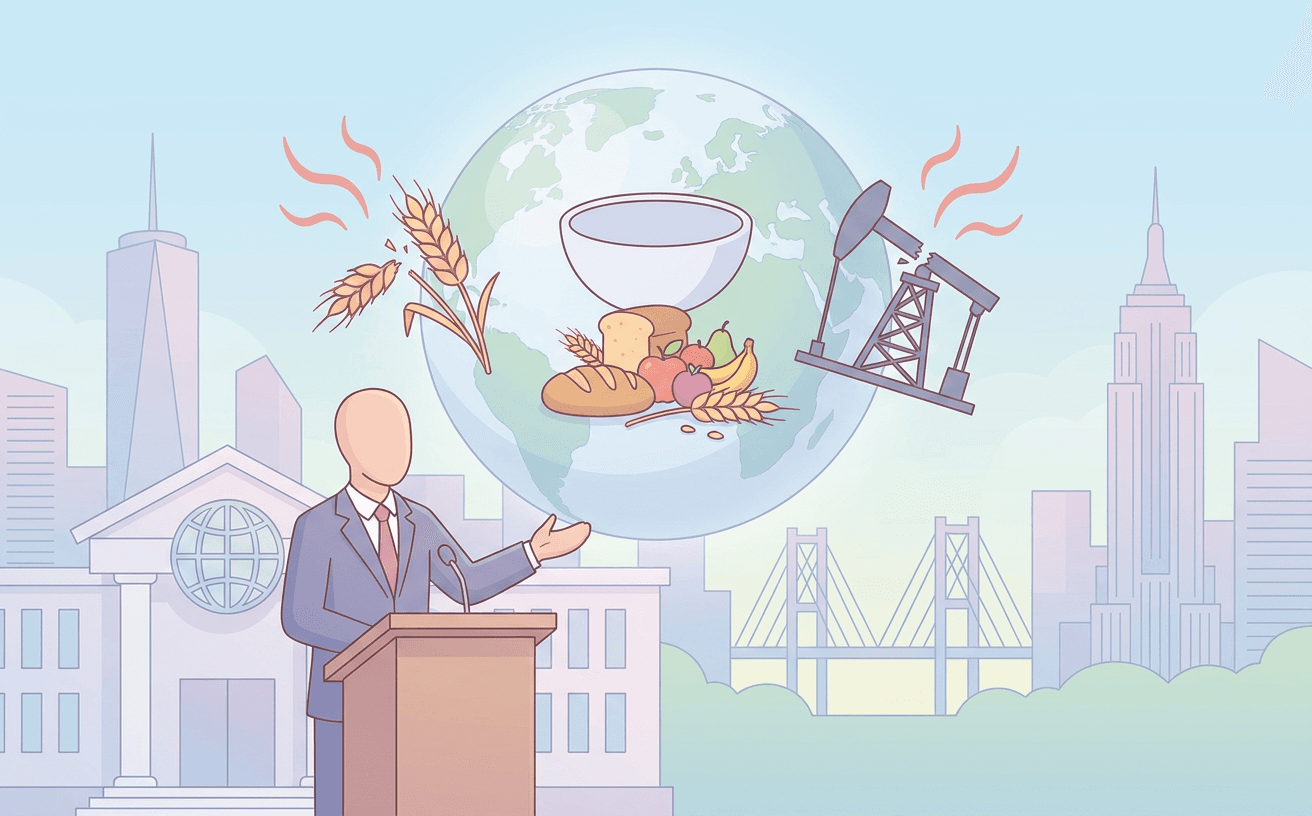
External Affairs Minister , speaking at the in New York, warned of a looming global food crisis exacerbated by conflicts in and the (Iran-Gulf region). He highlighted the compounded pressure on the due to interconnected shortages in food grains, fertilizers, and energy, alongside climate challenges like .
Exam perspectives
The interconnectedness of global supply chains means regional conflicts have disproportionate impacts on the Global South. The Ukraine conflict disrupted grain shipments through the Black Sea, while the Iran-Gulf tensions threaten energy security and fertilizer production (with Russia and West Asia being key producers). Mr. Jaishankar emphasized the politicization of resources, where dominant nations leverage energy and food supplies, creating an 'aggravated crisis' for developing nations. This highlights the vulnerability of the Global South and India's role as a potential voice for these nations in multilateral forums like the UN. UPSC questions may focus on India's strategic autonomy in navigating these crises and its leadership role within the Non-Aligned Movement or the broader Global South context.
The convergence of food, fertilizer, and energy shortages creates a poly-crisis for developing economies. High energy prices increase transportation and production costs, which in turn drive up food and fertilizer prices, leading to imported inflation. Furthermore, geopolitical instability triggers capital flight, where investments move away from emerging markets to 'safe harbors' (like US treasury bonds), exacerbating financial stress and debt burdens for the Global South. This situation underscores the critical need for resilient supply chains and the diversification of imports to mitigate external shocks. For the UPSC, understanding the economic impact of global events on India's Current Account Deficit (CAD) and inflation targeting by the RBI is crucial.
The geopolitical crisis is compounded by environmental factors, notably the super El Niño phenomenon. El Niño typically leads to disrupted rainfall patterns, potentially causing droughts in key agricultural regions, further straining global food production. The simultaneous occurrence of a climate event and geopolitical supply chain disruptions highlights the complex, multi-dimensional nature of modern food security challenges. This scenario demonstrates the urgent need for climate-resilient agriculture and robust early warning systems. In the context of UPSC, the integration of climate change impacts with geopolitical and economic vulnerabilities is a key analytical framework for assessing global resilience.
Key references
AI-generated study notes, sourced from The Hindu. Verify facts and figures with standard sources.