
El Nino threatens rabi crops in rainfed areas, may affect foodgrain output: Agri Secy
Context
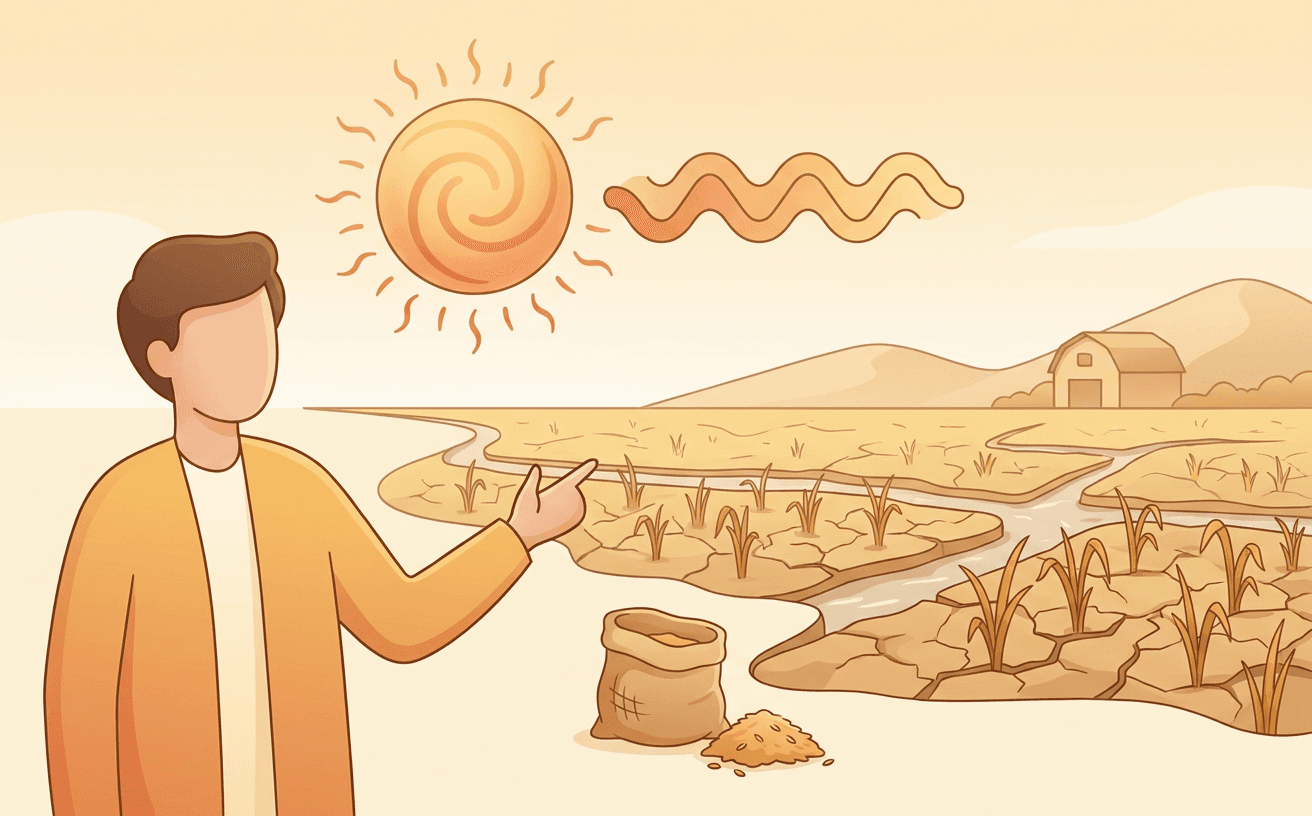
The Agriculture Secretary has warned that the upcoming rabi (winter) season will be challenging for rainfed areas due to the impending El Nino weather pattern, potentially impacting foodgrain production. The government is emphasizing crop diversification, climate-resilient agriculture, infrastructure development, and digital integration (like the Farmer ID initiative) to mitigate these risks.
Exam perspectives
This issue highlights the critical influence of the El Nino Southern Oscillation (ENSO) on Indian agriculture. El Nino (the warming of the central and eastern Pacific Ocean) is traditionally associated with deficient monsoon rainfall and widespread droughts in India. The article notes that the impact will be felt in both the kharif (monsoon) and rabi (winter) seasons. The rabi crop, primarily dependent on residual soil moisture from the monsoon and winter rains (often influenced by Western Disturbances, which can also be affected by global climate patterns), is highly vulnerable. UPSC candidates must understand the mechanism of El Nino and its contrasting counterpart, La Nina. The syllabus frequently covers the geographical distribution of crops in India; the article provides specific data on rabi crop acreage (wheat, pulses, oilseeds, coarse cereals), which is essential for Prelims. The geographical vulnerability of rainfed agriculture (areas lacking irrigation infrastructure) is a key theme, demonstrating how climate anomalies disproportionately affect these regions.
The economic implications of a poor harvest are profound, directly affecting food security and inflation. A reduction in foodgrain output can lead to supply-side constraints, driving up prices (food inflation). The article points out India's self-reliance in cereals but its continued dependence on imports for pulses and oilseeds; an El Nino year could exacerbate this reliance, impacting the import bill and the Current Account Deficit. The government's push for crop diversification—shifting from water-intensive cereals to pulses and oilseeds—is crucial for both economic stability (reducing imports) and ecological sustainability. Furthermore, the mention of inadequate pre- and post-production infrastructure highlights the need for investment in the agriculture value chain to minimize post-harvest losses. The growth of the horticulture sector outpacing cereals is a significant economic trend, yet the lack of a formal procurement mechanism (unlike Minimum Support Price for cereals) presents a market failure that needs addressing.
The government's response to these challenges involves several key governance initiatives. The promotion of sustainable agriculture is operationalized through schemes like Per Drop More Crop (a component of the Pradhan Mantri Krishi Sinchayee Yojana focusing on micro-irrigation) and soil health programs (like the Soil Health Card Scheme). The Agriculture Secretary stressed the need to focus on outcomes (improving farmer income) rather than just subsidy disbursal, reflecting a shift towards performance-based governance. A major focus is on Digital Agriculture, specifically the creation of Farmer IDs. This digital infrastructure aims to build a comprehensive registry by linking farmer data with land records, facilitating targeted policy interventions, efficient subsidy delivery (Direct Benefit Transfer), and better planning based on accurate land-coverage data. This aligns with the broader push towards e-governance in agriculture (like AgriStack) to resolve data asymmetry and improve decision-making at both macro and micro levels.
Key references
AI-generated study notes, sourced from Economic Times. Verify facts and figures with standard sources.