
Five crore Indian children still lack access to sanitation service in their schools, says UN report
Context
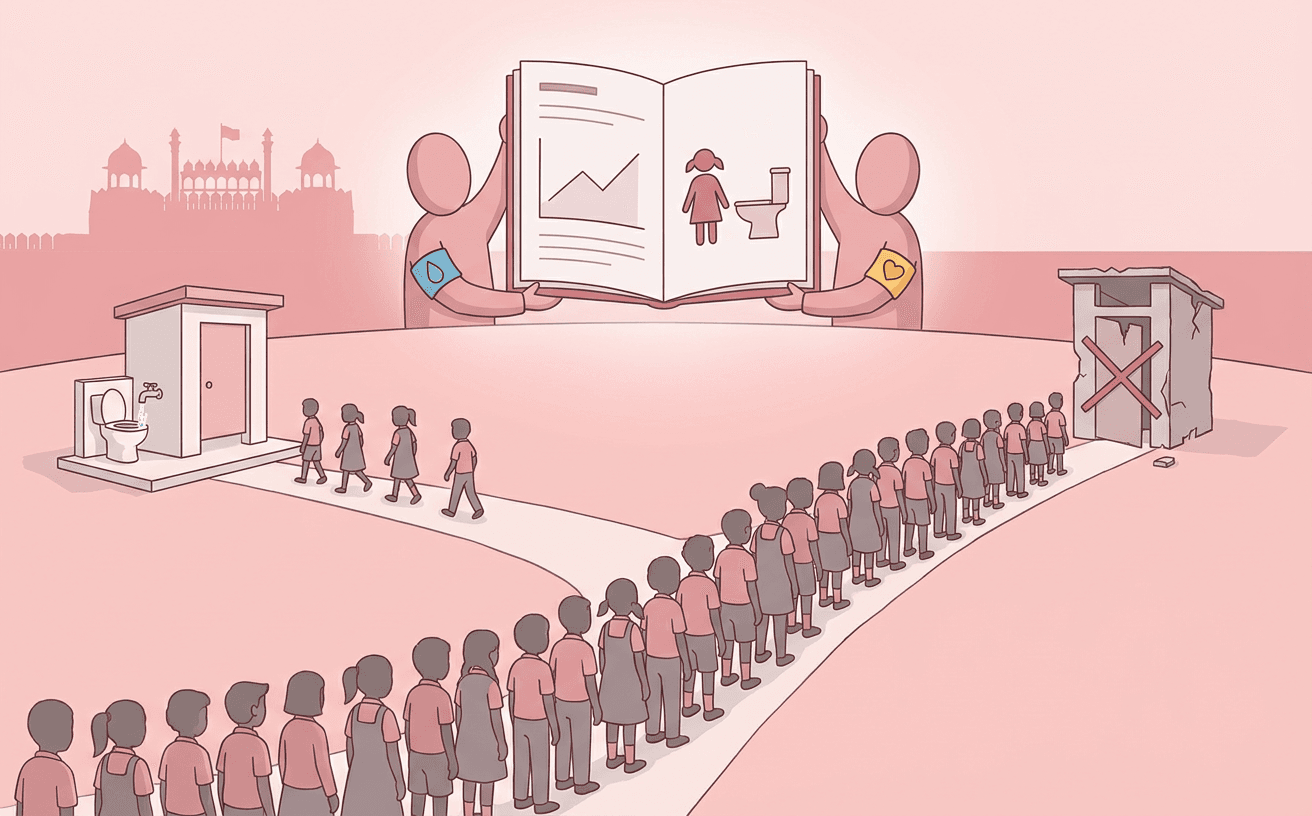
A new joint report by and titled ‘Progress on drinking water, sanitation and hygiene in schools 2015-2025’ reveals that 50 million Indian schoolchildren lack access to basic sanitation services. While India has made significant strides in providing drinking water in schools and reduced the number of schools without sanitation by 14%, it still accounts for the highest absolute number of children without sanitation globally, highlighting ongoing challenges in meeting the (SDG) for 2030.
Exam perspectives
The report underscores the critical intersection of education, health, and infrastructure, central to India's social development agenda. The lack of basic Water, Sanitation, and Hygiene (WASH) facilities in schools directly impacts children's health, school attendance, and learning outcomes, disproportionately affecting girls who often drop out upon reaching puberty due to inadequate sanitation. While the Swachh Bharat Mission (SBM), launched in 2014, has significantly improved household sanitation, this data highlights a persistent gap in institutional sanitation. For UPSC, this connects to the broader theme of human capital formation and the challenges in achieving inclusive growth. Questions could focus on evaluating the effectiveness of WASH programs, the impact of inadequate sanitation on educational outcomes, and the structural impediments to universalizing basic services in schools.
From a governance perspective, the report presents a mixed picture of state capacity and policy implementation. The positive finding that India is on track to achieve universal coverage of basic drinking water in schools by 2030, with over a 4% annual increase in coverage, demonstrates effective policy targeting and execution in this specific area. However, the lag in sanitation and hygiene services points to challenges in comprehensive WASH integration. Furthermore, the report flags significant gaps in data for Central and Southern Asia, including India, which hampers evidence-based policymaking and progress tracking. This highlights a critical governance challenge: the need for robust data architecture to monitor and evaluate social sector schemes. UPSC questions might explore the importance of data-driven governance in achieving Sustainable Development Goals or critically analyze the implementation hurdles of large-scale behavioral change campaigns like the Swachh Bharat Mission.
The provision of adequate sanitation and safe drinking water is inherently linked to the fundamental rights enshrined in the Indian Constitution. The Supreme Court of India has interpreted Article 21 (Right to Life) broadly to include the right to live with human dignity, which encompasses access to clean environment and sanitation. Furthermore, the Right to Education Act, 2009 mandates minimum infrastructure standards for schools, including separate toilets for boys and girls. The data indicating a shortfall in these basic amenities raises questions about the effective realization of these rights and statutory mandates. This issue touches upon the federal structure, as education and sanitation are concurrent and state subjects, respectively, requiring coordinated efforts between the Centre and States. Aspirants should be prepared to discuss the constitutional basis for demanding basic services and the mechanisms for holding the state accountable for realizing socioeconomic rights.
Key references
AI-generated study notes, sourced from The Hindu. Verify facts and figures with standard sources.