
From lab to life: Why translating AI advances to the real world is a major challenge
Context
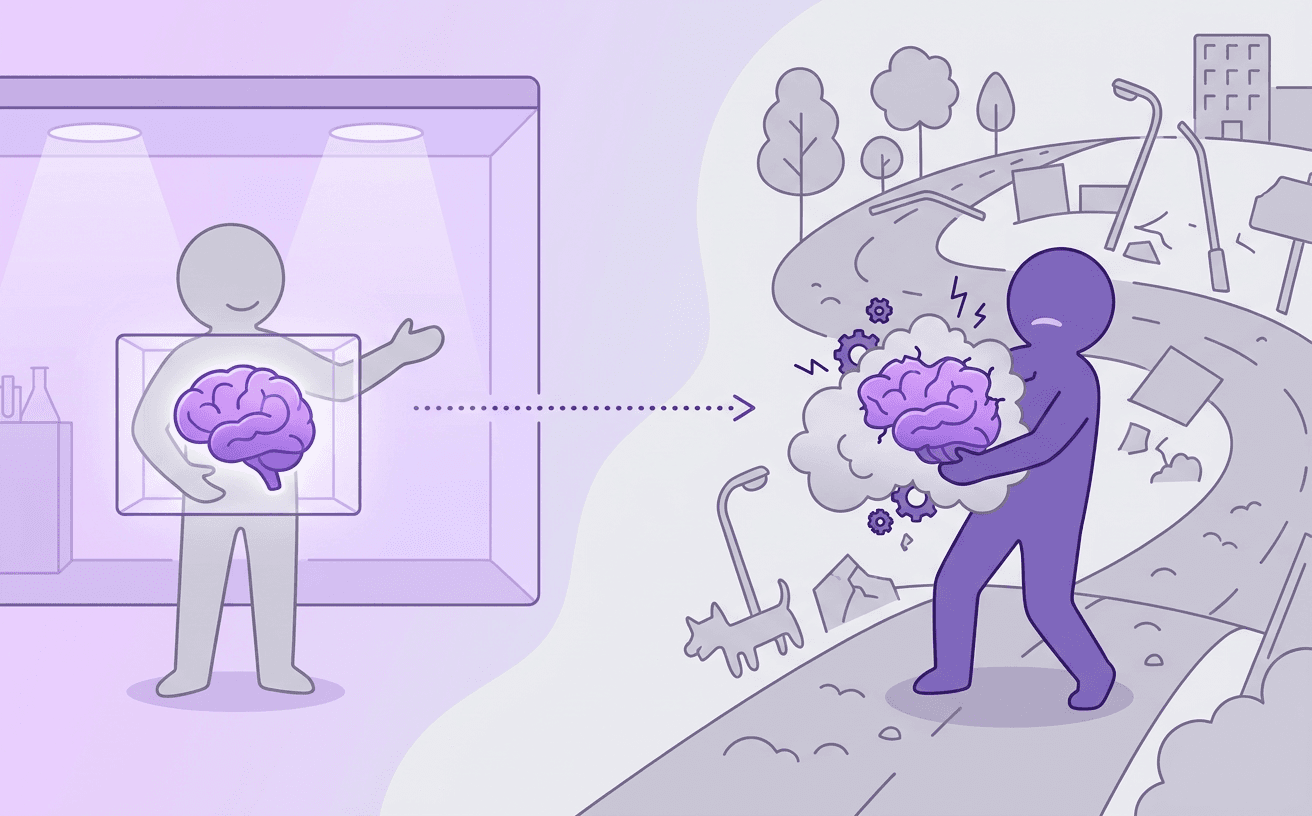
Despite significant advancements in artificial intelligence (AI), deploying these systems in real-world environments presents substantial challenges. An analysis highlights that AI models trained in controlled lab settings struggle to adapt to the unpredictable and variable conditions of real-life applications, raising concerns about reliability and safety.
Exam perspectives
The article highlights the technical hurdle of the generalisation gap in AI. Systems trained on clean, well-lit data often fail in real-world scenarios (like low light) because they cannot extrapolate beyond their training environment. This is a critical issue for applications like human pose estimation used in healthcare and assistive robotics. Researchers are exploring solutions like unsupervised domain adaptation, where models learn to handle new conditions without requiring extensively labeled data for those specific situations. The challenge is compounded when trying to teach AI to recognize novel human-object interactions. While foundation models (large-scale, adaptable AI models) and large vision-language models show promise, ensuring reliable performance across countless real-world variables remains a significant technical barrier.
From a governance perspective, the unreliability of AI in real-world settings raises critical concerns regarding safety and liability. If an AI-driven fall-detection system or an autonomous vehicle fails due to unanticipated conditions (e.g., poor lighting or unusual human behaviour), the consequences can be severe. This necessitates robust regulatory frameworks that mandate rigorous testing of AI systems across diverse, real-world scenarios before deployment. Policymakers must focus on establishing standards for AI robustness and generalisability, moving beyond simple accuracy metrics achieved in controlled environments. The focus should be on building trustworthy AI that prioritizes human safety and predictable performance in unpredictable settings.
The article underscores a significant resource gap in AI development. Training advanced models requires massive computational power and data centers, often dominated by large tech corporations (e.g., producing over 90% of notable models). This concentration of resources limits the ability of academic and public-sector researchers to develop and refine AI models for specialized or localized needs. Furthermore, there is a mismatch between the computing power required to train these massive models and the smaller hardware (like edge devices in homes or clinics) where they are deployed. Addressing this requires investment in more efficient algorithms and the promotion of open-source AI tools to democratize access and foster innovation beyond big tech monopolies.
Key references
AI-generated study notes, sourced from The Hindu. Verify facts and figures with standard sources.