
Global warming will exceed limit, UN says in a report that maps path to get back below danger zone
Context
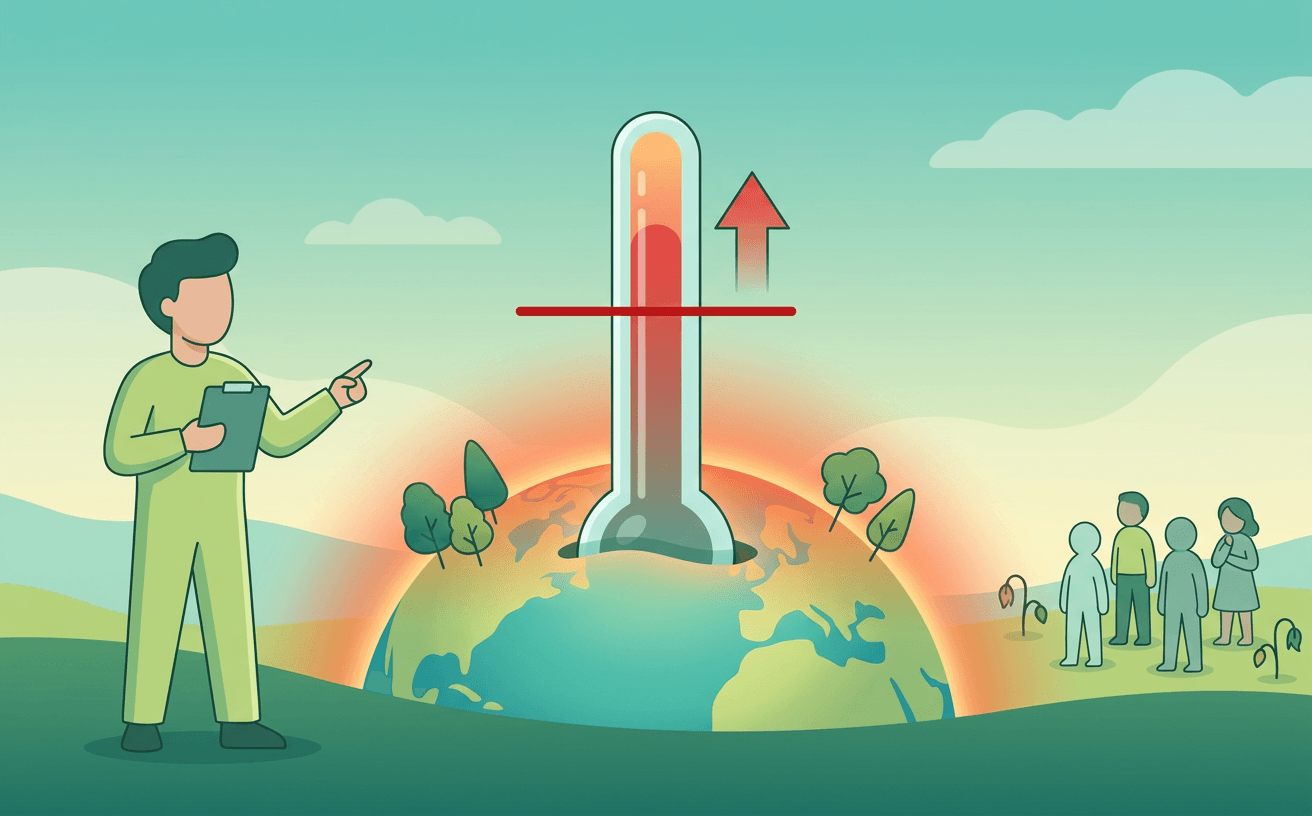
The released a report acknowledging that global temperatures will soon exceed the 1.5°C threshold established by the . The report introduces an 'overshoot' strategy, focusing on adapting to higher temperatures and utilizing carbon removal technologies to eventually bring the climate back to safer levels, highlighting the failure to mitigate emissions rapidly.
Exam perspectives
The report fundamentally shifts the global climate strategy from mitigation (preventing warming) to a complex scenario of overshoot. Overshoot means global temperatures will surpass the 1.5°C threshold agreed upon in the Paris Agreement, necessitating a period of intense adaptation before temperatures can theoretically be cooled back down. This relies heavily on Carbon Dioxide Removal (CDR) technologies, which are currently unproven at scale and expensive. The report warns of crossing critical tipping points, such as the collapse of the West Antarctic Ice Sheet and the Atlantic Meridional Overturning Circulation (AMOC), which could trigger irreversible global consequences regardless of later cooling efforts. For UPSC, understanding the shift from prevention to 'coping and containment' and the risks associated with tipping points is crucial for analyzing international climate commitments.
The economic implications of an overshoot scenario are profound, particularly concerning loss and damage. The report anticipates significant economic disruption due to increased frequency and severity of extreme weather events, impacting agriculture, infrastructure, and insurability. This 'coping and containment' phase will disproportionately affect developing nations with limited adaptive capacity, straining global financial resources. The reliance on novel carbon removal approaches introduces significant economic risks; these technologies demand massive investment and unproven economic viability compared to traditional mitigation strategies like ending fossil fuel dependence. Aspirants should connect this to the ongoing debates on climate finance, emphasizing the inadequacy of current funding mechanisms to address the anticipated economic fallout of an overshoot.
The failure to maintain the 1.5°C limit underscores significant weaknesses in global environmental governance and the enforcement mechanisms of the United Nations Framework Convention on Climate Change (UNFCCC). Despite the goals set by the Paris Agreement, the lack of binding enforcement for Nationally Determined Contributions (NDCs) has led to a trajectory of 2.6°C warming by 2100 based on current policies. The UNEP report acts as a critical evaluation of this governance failure, highlighting the gap between scientific recommendations and political action. The shift towards an overshoot strategy requires policymakers to navigate unprecedented challenges, prioritizing adaptation strategies and investing in unproven technologies while simultaneously attempting to phase out fossil fuels. This scenario highlights the need for stronger international cooperation and more rigorous accountability frameworks to ensure any future climate targets are met.
Key references
AI-generated study notes, sourced from The Hindu. Verify facts and figures with standard sources.