
Govt. mulls social security schemes for gig workers as their number could reach 2.5 crore by decade-end
Context
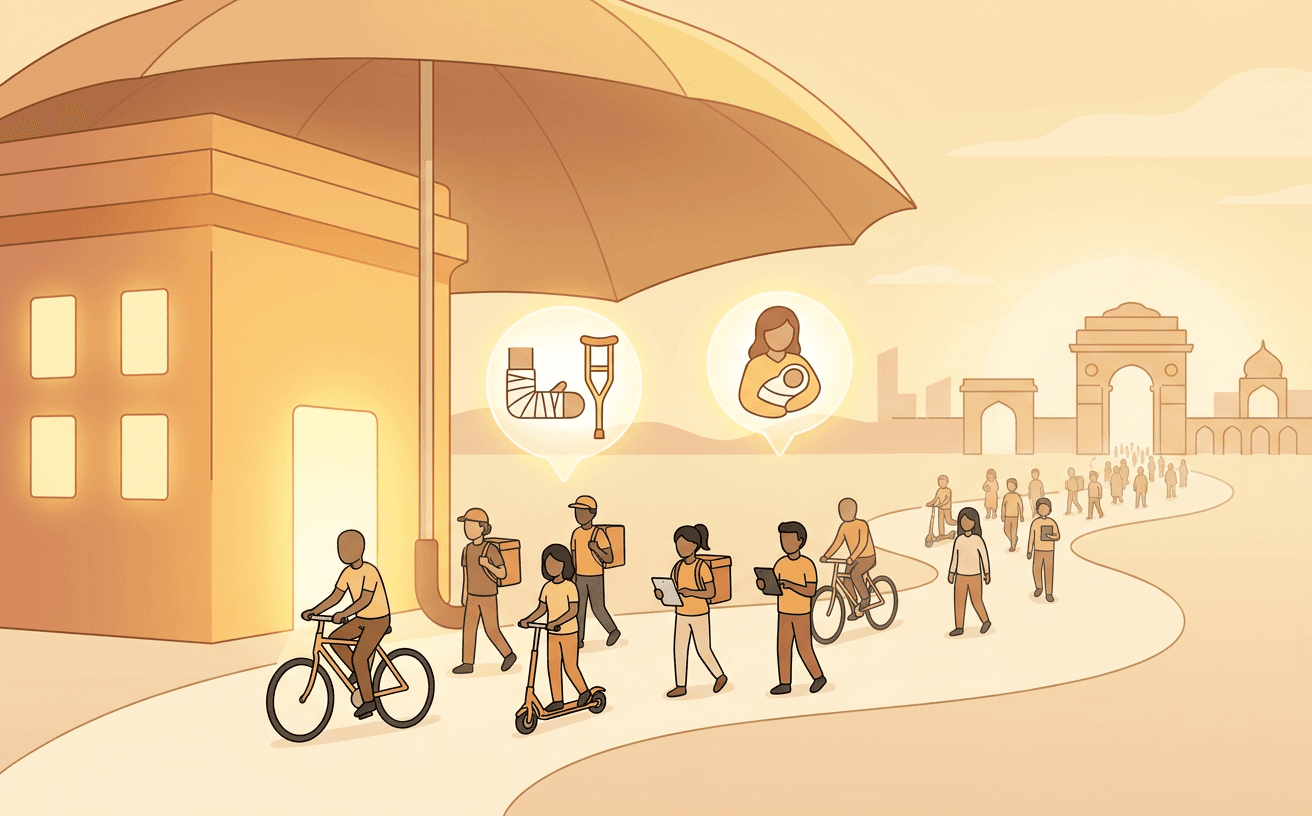
The Indian government is developing social security schemes (accident and maternity benefits) for gig and platform workers, expecting their numbers to reach 2.5 crore by 2030 (up from the current 1 crore). The Labour Ministry is using the to register these workers and is establishing a as mandated by the . This highlights a critical policy shift towards providing formal protections to the rapidly expanding, yet largely unregulated, gig economy.
Exam perspectives
The rise of the gig economy (a labor market characterized by short-term, freelance, or flexible work, often mediated by digital platforms) represents a significant structural shift in India's employment landscape. While it offers flexibility and income generation, contributing to the broader goal of a 'Viksit Bharat' (Developed India), it fundamentally alters traditional employer-employee relationships. Gig workers are typically classified as independent contractors rather than employees, depriving them of standard benefits like paid leave, provident fund, and minimum wage guarantees. The government's intervention aims to address this market failure by providing a safety net. This move is crucial for long-term economic stability, as a large, unprotected workforce can lead to increased poverty and reduced consumer spending during economic downturns. For UPSC, understanding the gig economy's contribution to GDP versus its impact on inclusive growth is essential.
The core governance challenge lies in the effective implementation of social security for a dispersed and highly mobile workforce. The operationalization of the Code on Social Security, 2020 is a landmark step, specifically its provision for a National Social Security Board dedicated to unorganized and gig workers. The reliance on the e-Shram portal to create a centralized database is vital; it acts as a digital infrastructure for targeting and delivering benefits, much like the Aadhaar system. However, the success of this initiative depends on overcoming hurdles related to registration (ensuring all aggregators comply by June 22) and the portability of benefits across different platforms and geographic regions. The government's collaboration with fund managers suggests a pragmatic approach to financing these schemes, likely involving contributions from aggregators (platform companies), the government, and perhaps the workers themselves. UPSC aspirants should focus on the mechanisms of the e-Shram portal and the specific provisions of the Code on Social Security, 2020 relating to platform workers.
From a social perspective, providing accident and maternity benefits to gig workers addresses a critical vulnerability. Platform workers, particularly in food delivery and ride-hailing, often face high occupational risks (accidents) and lack financial support during life events like childbirth. The absence of a social safety net pushes these workers into precariat conditions, exacerbating social inequality. The International Labour Organization (ILO) has emphasized the need for 'practical, portable and accessible' social protection, highlighting that workers in new forms of employment must be visible within protective systems. India's efforts, if successful, could set a precedent for the Global South in regulating the platform economy. This aligns with the Directive Principles of State Policy, particularly Article 41 (right to work, to education and to public assistance in certain cases) and Article 42 (provision for just and humane conditions of work and maternity relief). Aspirants must evaluate these schemes' potential to improve the quality of life and ensure dignity of labor for the unorganized sector.
Key references
AI-generated study notes, sourced from The Hindu. Verify facts and figures with standard sources.