
Govt rolls out GOBARdhan rules with assured CBG offtake, 10-year price support
Context
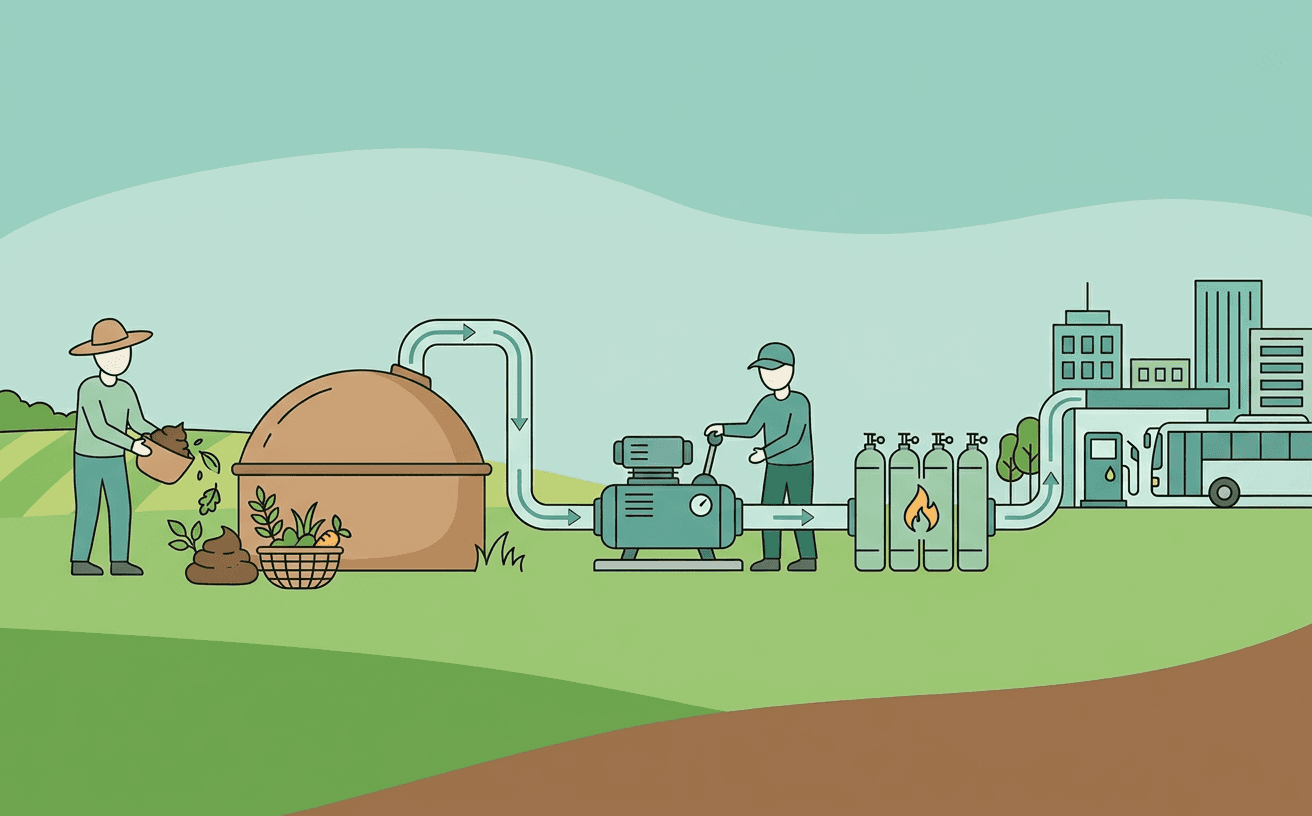
The has operationalised the ₹23,731-crore for **Compressed Biogas (CBG)**, which will run from 2026-27 to 2035-36. The scheme offers producers assured offtake (purchase guarantee) of up to 100% of their output, an administered price support for at least 10 years, and capital assistance to make waste-to-energy projects commercially viable. This initiative aims to spur private investment, achieve a ten-fold growth in domestic CBG production, and will subsume the earlier .
Exam perspectives
The economic design of the GOBARdhan scheme addresses key market failures in the waste-to-energy sector, specifically revenue uncertainty and demand risk. The core issue for CBG developers was that building a plant did not guarantee a buyer for the gas. The government intervenes through assured offtake mechanisms, mandating City Gas Distribution (CGD) entities to procure CBG, introducing a phased obligation (3% in FY27, rising to 5% by FY29). This is coupled with an administered price mechanism (APM) set at ₹2,110 per MMBtu for ten years, providing long-term revenue visibility essential for securing project financing. To balance this, the government is providing affordability support (capped at ₹10/kg) to bridge the gap between the administered price and what downstream consumers can afford. For UPSC, this highlights the role of the state in creating a market (market making) for nascent renewable technologies, transitioning from mere capital subsidies to comprehensive ecosystem support involving pricing, demand mandates, and infrastructure.
From an ecological perspective, GOBARdhan is a critical component of India's energy transition and circular economy goals. It addresses multiple environmental challenges simultaneously: managing solid waste (cattle dung, agricultural residue, municipal solid waste), mitigating greenhouse gas (GHG) emissions, and reducing reliance on fossil fuel imports. By converting organic waste into Compressed Biogas (CBG) (primarily methane, similar to natural gas), the scheme prevents methane—a potent GHG—from being released into the atmosphere through natural decomposition. Furthermore, the byproduct of the anaerobic digestion process is organic manure, which promotes sustainable agriculture and reduces reliance on chemical fertilizers. This aligns with India's Panchamrit targets announced at COP26, specifically concerning increasing the share of non-fossil energy capacity and reducing the carbon intensity of the economy. UPSC candidates should connect this scheme to broader waste management policies and the Swachh Bharat Mission (Grameen) Phase II.
The governance framework of GOBARdhan demonstrates a shift towards integrated policy design, attempting to unify various aspects of the CBG ecosystem under a single umbrella, rather than relying on fragmented incentives. The scheme subsumes the earlier SATAT initiative (Sustainable Alternative Towards Affordable Transportation) starting September 2026, indicating an institutional evolution based on past implementation hurdles. The guidelines mandate strict compliance, where failure by a CGD entity to execute offtake agreements can result in the rationalisation of their natural gas allocation by the ministry. GAIL (India) Limited has been appointed as the synchro operator, centralising the procurement, pooling, and synchronisation between CBG producers and CGD networks. Crucially, the capital assistance (up to ₹30 crore per project) is not an upfront grant but is linked to performance milestones (e.g., commercial sale, assessed via SCADA systems), ensuring accountability and efficient use of public funds. This reflects a modern governance approach emphasizing measurable outcomes and robust monitoring.
Key references
AI-generated study notes, sourced from Economic Times. Verify facts and figures with standard sources.