
Houthis strike tankers in Red Sea; first since Saudi-linked shipping blockade via Bab el-Mandeb
Context
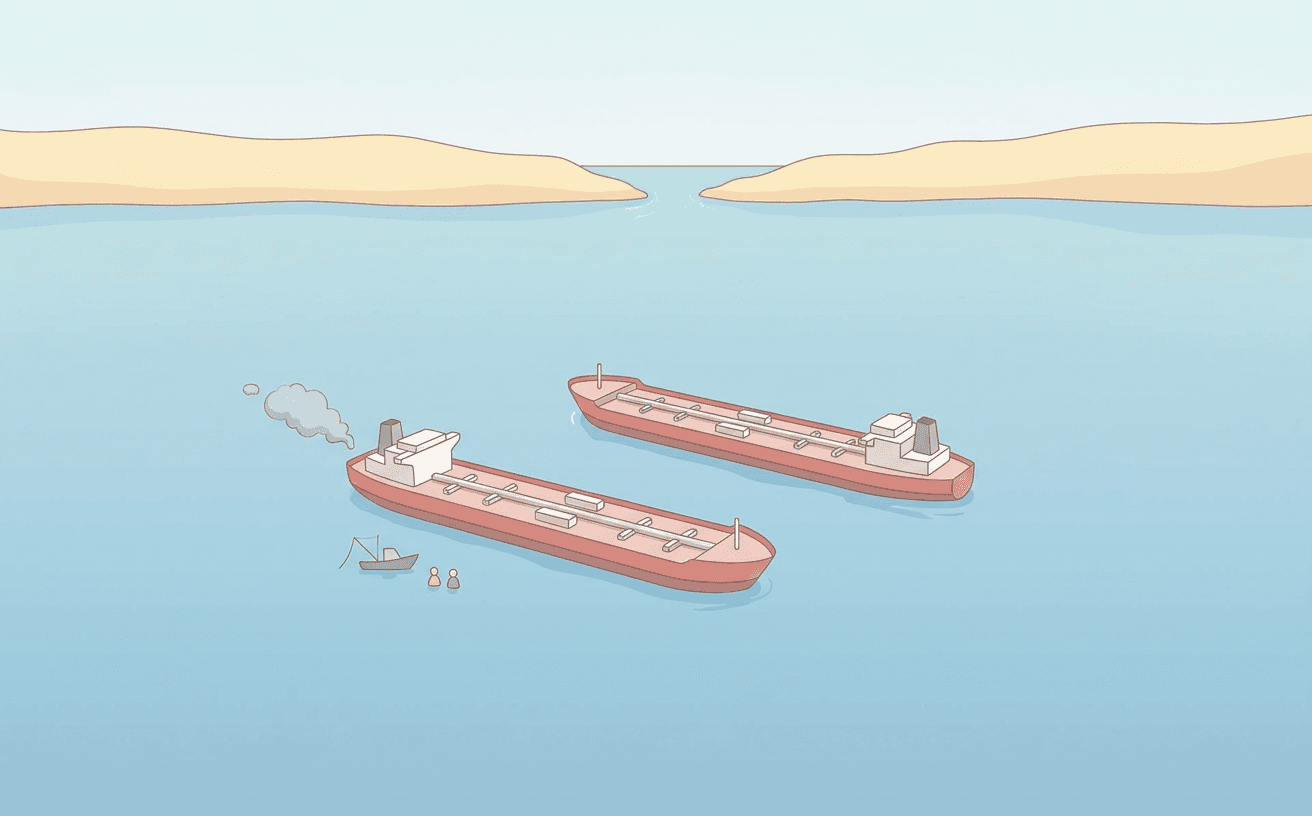
Yemen's Houthi rebels attacked Saudi oil tankers in the Red Sea, marking the first strike since announcing a blockade of Saudi-linked shipping via the . Concurrently, the U.S. continues airstrikes in Iran over control of the , with both conflicts severely impacting global shipping and energy markets.
Exam perspectives
The article highlights two critical maritime chokepoints (narrow channels along widely used global sea routes) essential for global trade and energy security. The Bab el-Mandeb Strait, connecting the Red Sea to the Gulf of Aden, facilitates roughly 12% of global trade and a quarter of container traffic, primarily routing between Europe and Asia via the Suez Canal. The Strait of Hormuz, located between the Persian Gulf and the Gulf of Oman, is vital for energy transit, historically handling a fifth of globally traded oil and gas. For UPSC Prelims, mapping these straits, the countries bordering them (Yemen, Djibouti, Eritrea for Bab el-Mandeb; Oman, Iran, UAE for Hormuz), and the adjacent water bodies is crucial. Disruption in these areas directly impacts India's energy security and trade costs.
The ongoing conflicts illustrate complex regional power dynamics in West Asia, often characterized by proxy wars. The Iran-backed Houthi rebels in Yemen are fighting a Saudi-led coalition, while the U.S. and Iran are directly engaged over control of the Strait of Hormuz. This demonstrates a multifaceted security dilemma where actions taken by one state to increase its security cause reactions from other states, leading to a decrease in the original state's security. The targeting of civilian infrastructure (bridges, power plants, desalination plants) and commercial shipping violates established norms of international conflict. For Mains GS-2, this requires analyzing the implications of instability in West Asia on India's strategic interests, particularly concerning energy security, diaspora safety, and regional connectivity projects like the International North-South Transport Corridor (INSTC).
The military actions in the Red Sea and the Strait of Hormuz have immediate and profound economic consequences. The disruption of these vital shipping lanes causes a supply shock (an unexpected event that suddenly changes the supply of a product or commodity), leading to surging global fuel and commodity prices. This phenomenon is known as cost-push inflation (inflation caused by an increase in prices of inputs like labor, raw material, etc.). For India, which relies heavily on imported oil, this translates to a widening Current Account Deficit (CAD) (when a country's total imports of goods, services, and transfers are greater than its exports) and increased inflationary pressures. UPSC candidates should connect these geopolitical events to their macroeconomic impact, understanding how geopolitical risks factor into global energy markets and domestic inflation.
Key references
AI-generated study notes, sourced from The Hindu. Verify facts and figures with standard sources.