
How is ethanol used in Sustainable Aviation Fuel?
Context
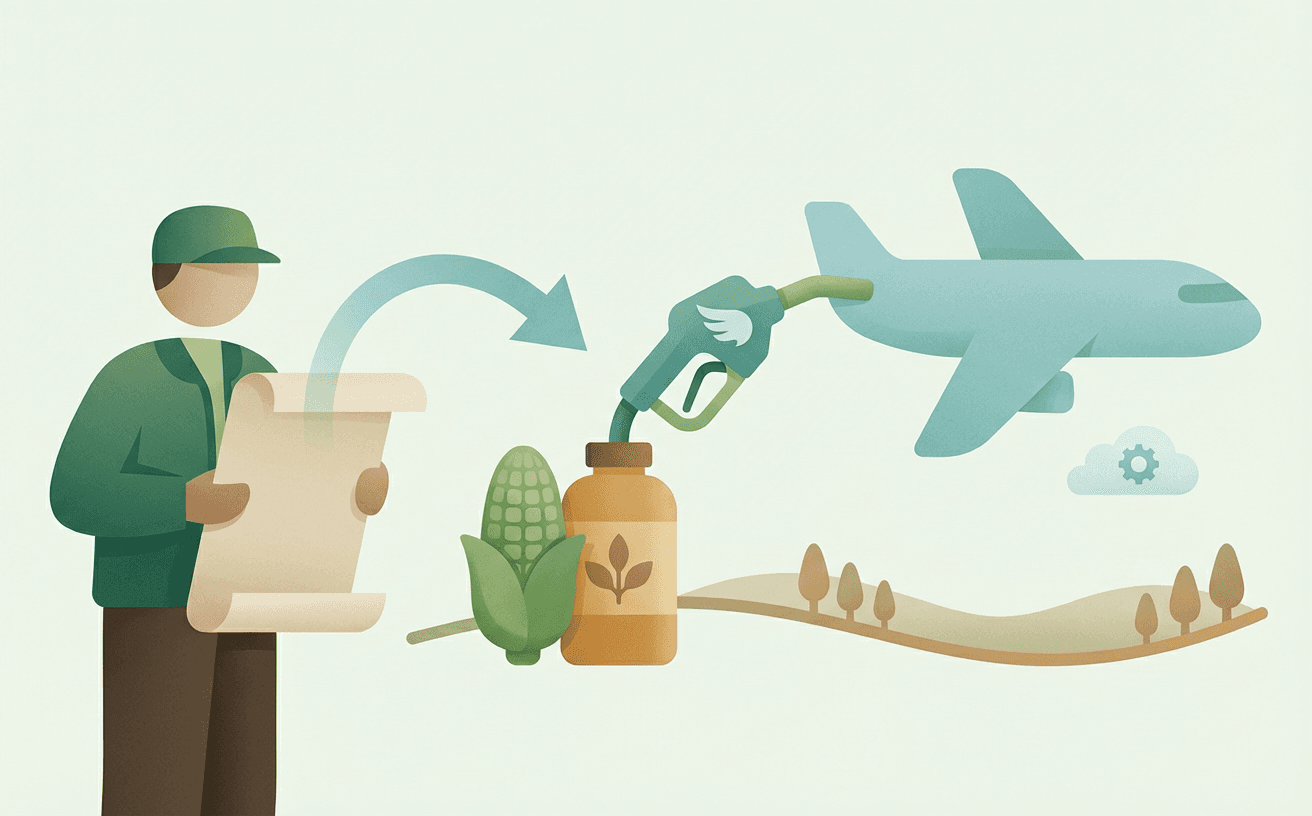
The Indian government issued a notification in April 2024 to promote the use of ethanol for producing Sustainable Aviation Fuel (SAF). The aviation sector faces significant challenges in decarbonization due to the current commercial unviability of batteries or hydrogen for aircraft, making SAF crucial for meeting international emissions targets. To be utilized in jet engines, ethanol undergoes a specific chemical process called alcohol-to-jet (ATJ), which involves dehydration, lengthening of hydrocarbon chains, and hydrogenation.
Exam perspectives
The aviation industry is a significant and notoriously difficult-to-abate sector concerning global greenhouse gas (GHG) emissions. Since electric batteries are too heavy and hydrogen fuel cells are not yet commercially viable for long-haul flights, Sustainable Aviation Fuel (SAF) remains the most viable near-term solution for decarbonization. SAF can be produced from various feedstocks, including waste oils, agricultural residues, and, as highlighted here, ethanol. By substituting conventional jet fuel with SAF, the industry aims to significantly reduce its carbon footprint, which is essential for complying with frameworks like the Carbon Offsetting and Reduction Scheme for International Aviation (CORSIA), established by the International Civil Aviation Organization (ICAO). UPSC candidates should understand that while SAF reduces net carbon emissions (as the feedstocks absorb CO2 during their growth phase), the combustion still releases emissions; the 'sustainability' lies in the lifecycle emission reductions.
The conversion of ethanol into aviation fuel relies on a crucial chemical pathway known as the alcohol-to-jet (ATJ) process. This process is necessary because ethanol, in its raw form, lacks the energy density and specific chemical properties required for jet engines. The ATJ process involves three key steps: first, dehydration, where water is removed from the ethanol to form ethylene; second, oligomerization, where the short hydrocarbon chains of ethylene are linked together to create longer chains (resembling the complex hydrocarbons found in jet fuel); and third, hydrogenation, where hydrogen is added to stabilize these longer molecules, making them suitable for combustion in aircraft. For Prelims, understanding these basic chemical transformations—dehydration, chain lengthening, and hydrogenation—is essential, as questions often test the fundamental science behind emerging renewable technologies.
India's push to utilize ethanol for SAF aligns with broader economic and energy security strategies, particularly the Ethanol Blended Petrol (EBP) Programme. Historically focused on blending ethanol with petrol to reduce crude oil import bills and support the domestic agricultural sector, the expansion into SAF represents a strategic diversification of ethanol use. This move can stimulate investments in advanced biorefineries and create new economic opportunities within the agricultural supply chain, as ethanol in India is primarily derived from sugarcane molasses and damaged food grains. However, this also raises the classic food vs. fuel debate. Policymakers must carefully manage feedstock allocation to ensure that the increased demand for ethanol to produce SAF does not adversely impact food security or lead to land-use changes that negate the environmental benefits of the biofuel.
Key references
AI-generated study notes, sourced from The Hindu. Verify facts and figures with standard sources.