
India and Australia must move decisively to build resilient energy supply chains
Context
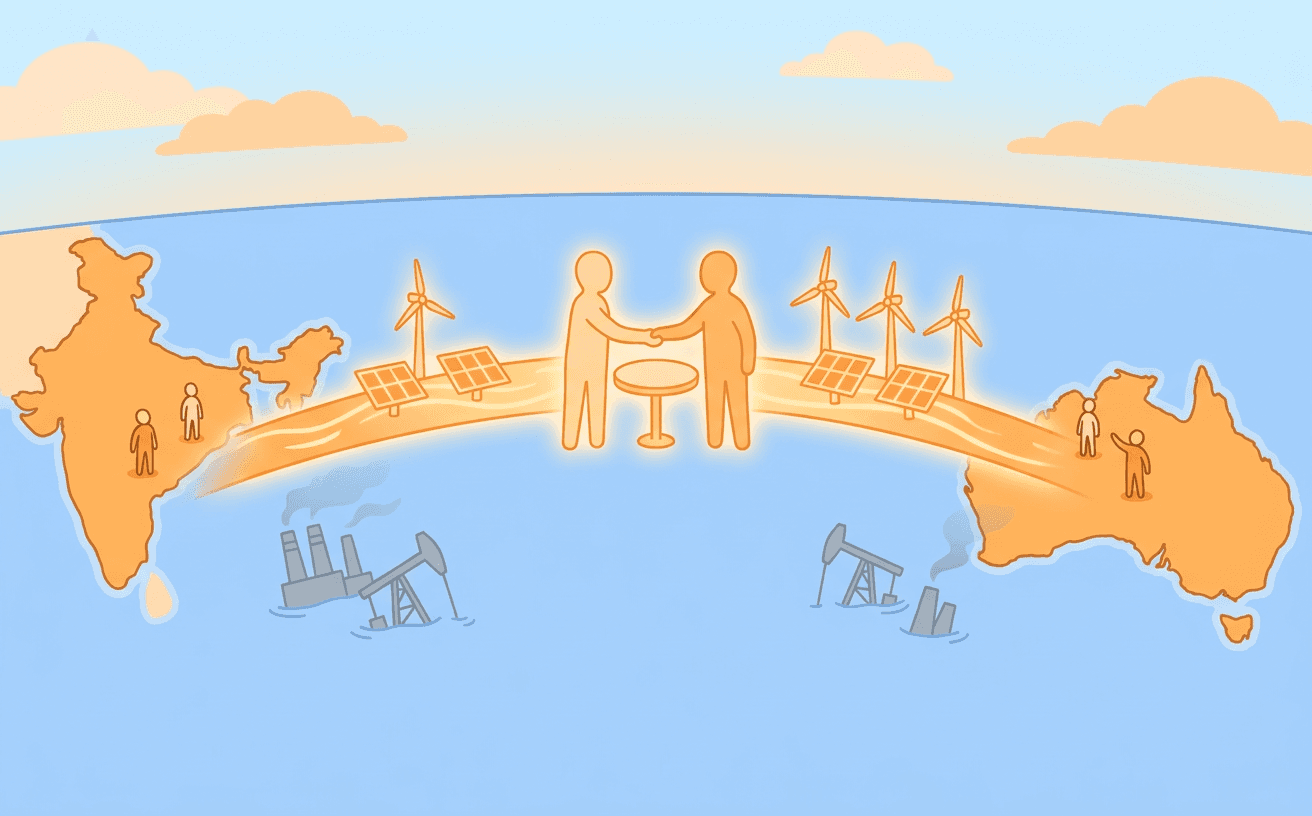
A policy dialogue organised by highlighted the strategic imperative of building an India-Australia Energy Security Corridor. The discussions emphasized moving beyond traditional buyer-seller dynamics to establish resilient supply chains encompassing critical minerals, clean energy technologies, and advanced manufacturing, aiming to enhance energy security and geopolitical resilience across the .
Exam perspectives
The proposed India-Australia Energy Security Corridor reflects a paradigm shift in Bilateral Relations, evolving from transactional trade to a comprehensive strategic partnership. Geopolitical uncertainties, particularly supply chain vulnerabilities exposed by global conflicts, have underscored the need for resilient, diversified supply networks. The Indo-Pacific region, a focal point of global geopolitics, requires robust partnerships to counter concentrated supply chains, specifically concerning critical minerals. India's strategy involves expanding energy partnerships 'Eastward', signifying a departure from historical reliance on Western or Middle Eastern sources. This aligns with broader strategic frameworks like the Quad, emphasizing the complementary roles of nations like Japan and Singapore in bolstering regional resilience through technology and investment.
The economic rationale for this partnership is grounded in the complementary strengths of both nations. Australia possesses significant reserves of critical minerals (lithium, cobalt, nickel), essential for the clean energy transition, while India offers a rapidly expanding manufacturing base and ambitious targets for renewable energy and National Green Hydrogen Mission. The dialogue highlights the need to transition towards long-term industrial partnerships, focusing on joint processing, battery manufacturing, and technology exchange. This approach mitigates the risks associated with over-reliance on concentrated global supply chains, fostering domestic value addition and enhancing the resilience of India's manufacturing sector against external shocks.
The core of the proposed corridor is facilitating a secure and sustainable Energy Transition. Traditional definitions of energy security, primarily focused on fossil fuels, are being redefined to include access to critical minerals, the bedrock of clean energy technologies like EVs and battery storage. Expanding collaboration under the Australia-India Renewable Energy Partnership is crucial for achieving climate goals. The inclusion of uranium supply agreements following reforms to India's Civil Liability for Nuclear Damage Act, 2010 also points towards a diversified energy mix. Developing secure supply chains for these resources is not just an economic imperative but a fundamental requirement for realizing long-term climate resilience and sustainable development objectives.
Key references
AI-generated study notes, sourced from Economic Times. Verify facts and figures with standard sources.