
India gains wider EU steel access, but carbon levy remains
Context
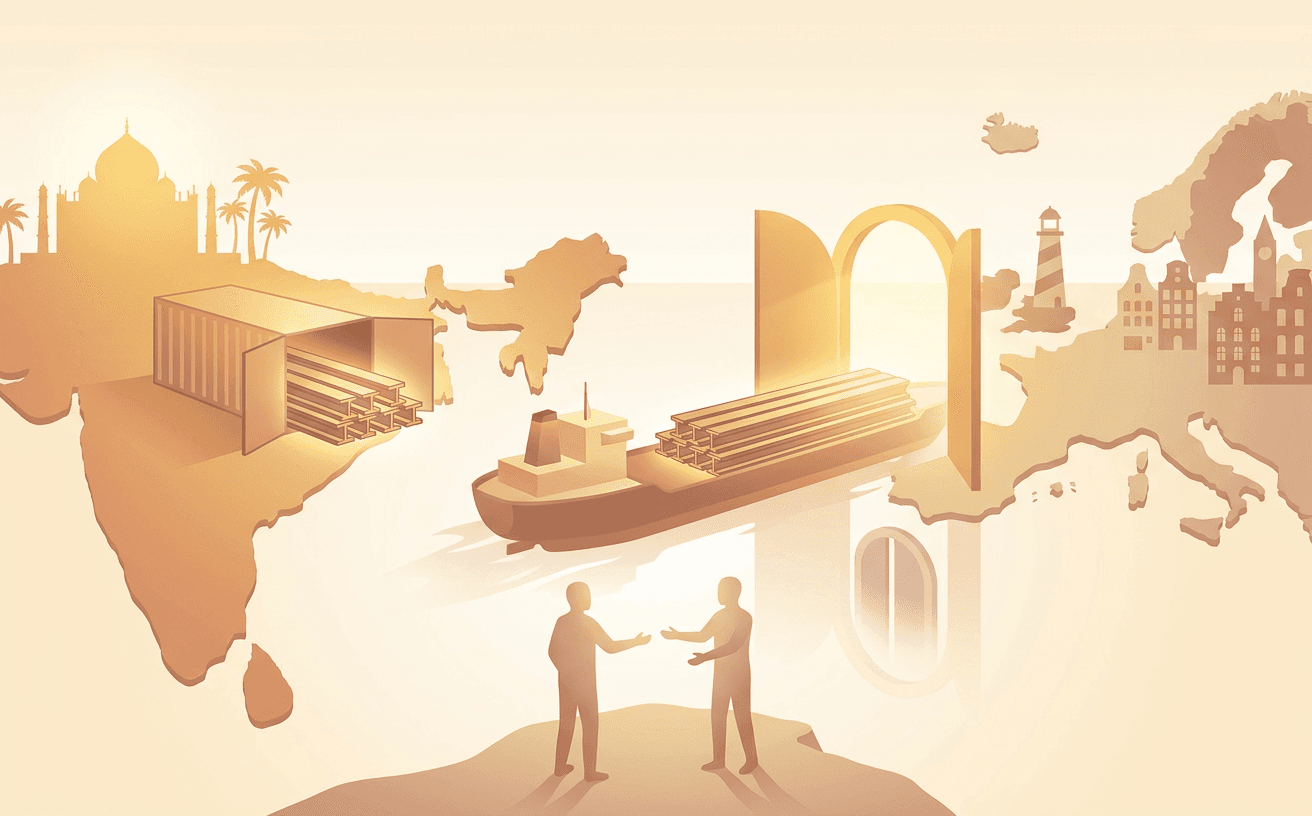
The draft legal text of the anticipated India- Free Trade Agreement (FTA) reveals that India has secured an increased preferential quota for steel exports. However, Indian exporters will still be subject to the EU's , a carbon tax on imports. This development highlights the complex interplay between trade liberalization and climate change mitigation policies in modern international agreements.
Exam perspectives
The proposed FTA significantly enhances India's market access to the EU by providing an additional preferential quota of 694,853 tons of steel, supplementing the existing 946,616-ton quota mandated by the World Trade Organization (WTO). This combined quota will cover approximately 68.4% of India's projected steel exports to the EU, a substantial increase from the current 39.4%. The allocation is primarily directed towards flat-steel products, particularly hot-rolled sheets and strips. For UPSC, it is crucial to understand the implications of tariff rate quotas (TRQs), where imports within the quota face lower or zero tariffs, while quantities exceeding it are subject to significantly higher tariffs (in this case, 50%). While this improves the competitiveness of Indian steel within the quota limit, the overarching 50% tariff on excess volume acts as a strong protective measure for the European domestic industry.
The central environmental challenge highlighted in this agreement is the application of the EU's Carbon Border Adjustment Mechanism (CBAM). CBAM is a carbon tariff applied to carbon-intensive products, such as cement and some electricity, imported by the European Union. The goal is to prevent carbon leakage, a scenario where companies move production to countries with weaker climate rules to avoid carbon pricing in the EU. Even with the preferential trade quota, Indian steel will not be exempt from CBAM, which could add an estimated 35% to the value of the exports once fully implemented. For UPSC Mains, analyze how environmental regulations are increasingly being used as non-tariff barriers to trade. The CBAM essentially forces exporting nations to adopt domestic carbon pricing mechanisms to remain competitive, blurring the lines between domestic environmental policy and international trade rules.
This development reflects the evolving nature of bilateral trade negotiations and the broader geopolitical context of India-EU relations. The FTA, expected to enter into force by the end of the year, signifies a deepening economic partnership, yet it underscores the fundamental differences in approach to global issues. The World Trade Organization (WTO) framework typically focuses on reducing tariffs and quantitative restrictions. However, the integration of climate mechanisms like CBAM into trade structures is a relatively new paradigm. India has previously expressed concerns that CBAM violates the principle of Common but Differentiated Responsibilities (CBDR) under the United Nations Framework Convention on Climate Change (UNFCCC), arguing that developed nations should bear a greater burden of climate action. Students should prepare for questions assessing the friction between international trade obligations (free trade) and unilateral environmental mandates (CBAM) in the context of the Global South versus the Global North.
Key references
AI-generated study notes, sourced from The Hindu. Verify facts and figures with standard sources.