
India needs open trade, a stronger WTO and a more proactive global role: Experts
Context
A recent expert panel discussed India's role in the multilateral trading system, emphasizing the need for India to align its domestic economic priorities with its international trade positions. As a rising economic power, India must actively shape global trade rules, particularly at the (), rather than just reacting to proposals from developed nations. The discussion highlighted the importance of balancing bilateral () with a strong commitment to multilateralism to support India's growth ambitions, including the vision of .
Exam perspectives
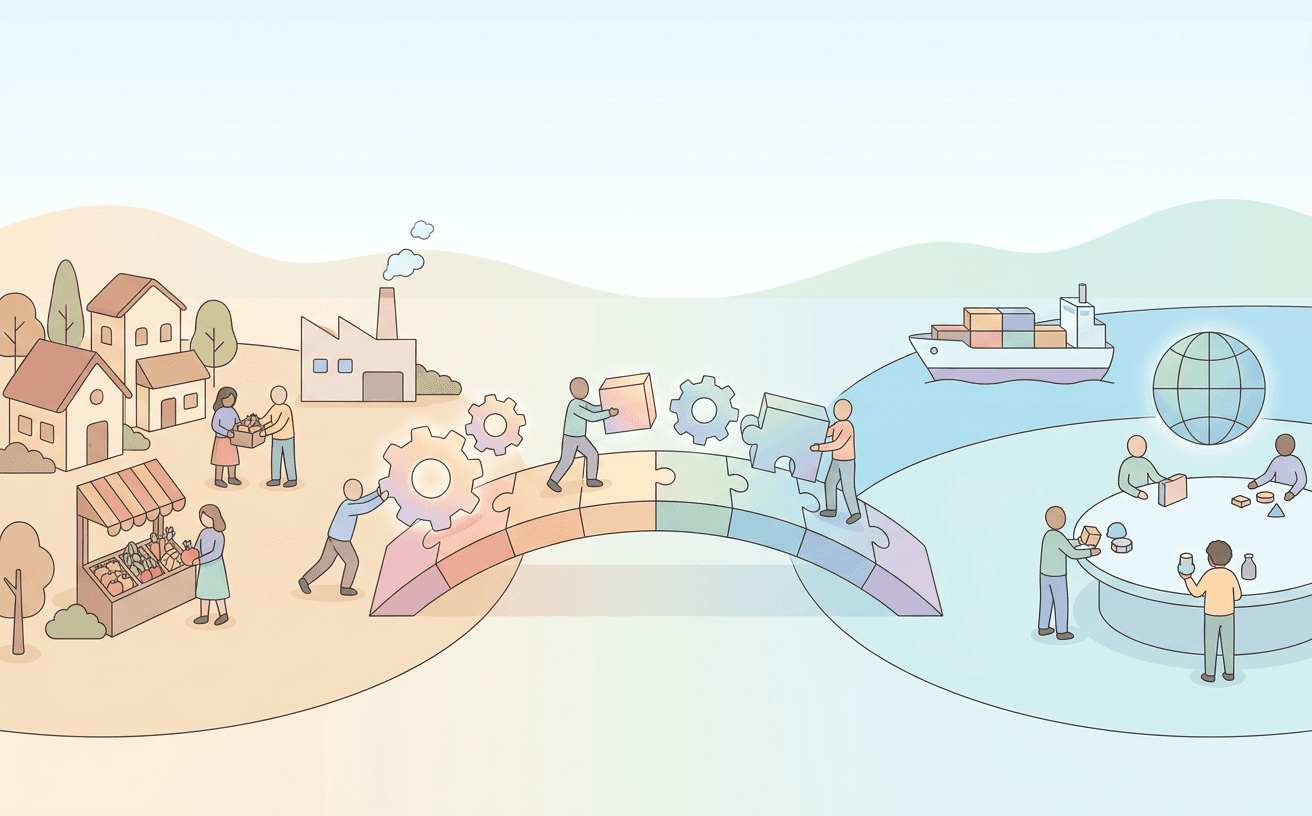
The core of the discussion centers on India's strategic approach to international trade. The World Trade Organization (WTO) represents a multilateral approach, where rules apply equally to all member nations, primarily through the Most-Favoured-Nation (MFN) principle (treating all WTO members equally). However, the WTO is currently facing challenges, such as a paralyzed Appellate Body and stalled negotiations. This has led countries, including India, to pursue bilateral or plurilateral Free Trade Agreements (FTAs)—such as those with the UK and EFTA—to secure immediate market access. The experts argue that India doesn't need to choose between FTAs and the WTO; rather, it must leverage both. FTAs provide specific market access, while the WTO offers a broader, predictable framework necessary for long-term economic resilience. For UPSC Mains (GS-3), understand the tension between multilateralism and regionalism (forming regional trade blocs) and how India balances these to boost its exports and integrate into Global Value Chains (GVCs).
The panel highlighted a critical gap: the need for coherence between India's domestic economic policies and its international negotiating stance. Often, domestic priorities (like protecting local farmers or MSMEs) can conflict with international pressures to open markets. A key governance challenge is ensuring that India's domestic reform agenda aligns with its positions at multilateral forums like the WTO. Furthermore, the experts emphasized that as India aspires to be a leader of the Global South, it must transition from a reactive posture (often seen as blocking consensus) to a proactive one, actively contributing to rule-making. This includes participating in initiatives like the Partners for Multilateralism (P4M), a coalition aimed at strengthening the rules-based global order. In GS-2, this relates to the 'Effect of policies and politics of developed and developing countries on India's interests,' requiring an understanding of how India navigates complex international negotiations to protect its domestic interests while fulfilling its global leadership aspirations.
A significant point of debate is the interpretation of Sustainability in international trade. The experts cautioned that developed nations (the West) often narrowly define sustainability in purely environmental terms, using it to impose non-tariff barriers (like the EU's Carbon Border Adjustment Mechanism or CBAM) on imports from developing countries. India, on the other hand, advocates for a holistic view of Sustainable Development, which, as recognized in the WTO's preamble, includes economic and equity dimensions—specifically the imperative of poverty eradication and raising living standards in the Global South. The panel suggested India should proactively articulate its own vision of sustainability in trade, rather than just defensively arguing against environmental measures as protectionist. For GS-3 Environment and GS-2 International Relations, understand how environmental regulations are increasingly intersecting with global trade rules and the resulting friction between developed and developing nations regarding the principle of common but differentiated responsibilities (CBDR).
Key references
AI-generated study notes, sourced from Economic Times. Verify facts and figures with standard sources.