
India's $40.8 billion Russian crude imports put it in Trump's 100% tariff line of fire
Context
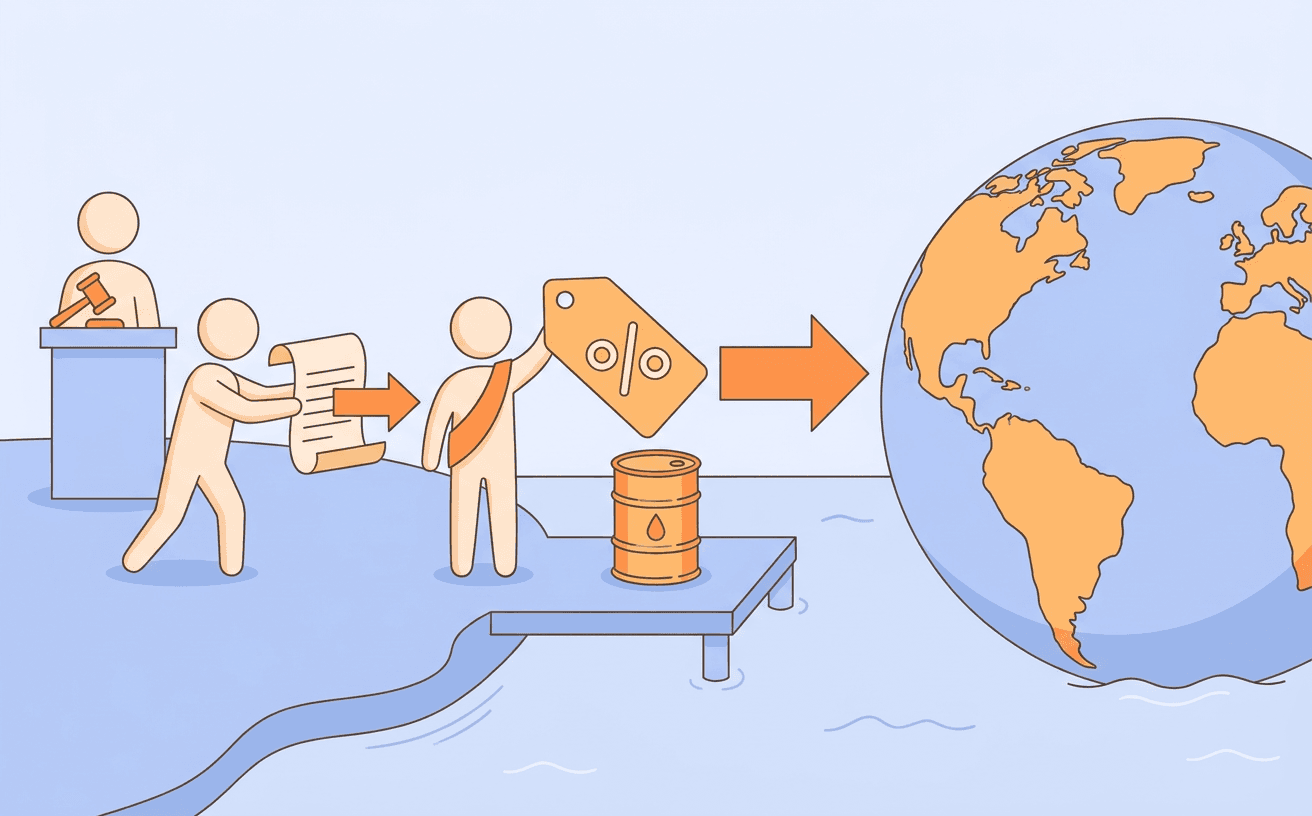
The US House of Representatives is advancing the , which could authorize the US President to impose up to 100% tariffs on countries purchasing Russian energy, significantly threatening India's vast crude oil imports from Russia. This potential legislation creates a complex diplomatic and economic situation for India, intertwining its energy security needs with ongoing bilateral trade negotiations with the United States.
Exam perspectives
This development highlights the complexities of strategic autonomy, a core principle of India's foreign policy where it seeks independent decision-making based on national interest rather than aligning completely with a single bloc. India has carefully balanced its historical ties and energy needs with Russia against its growing strategic partnership with the US. The potential application of secondary sanctions or tariffs by the US under domestic legislation like the Sanctioning Russia and Iran Act (if enacted) represents extraterritorial jurisdiction, forcing other nations to comply with US foreign policy objectives. This situation creates friction in the India-US Bilateral Relations, particularly as both nations are actively negotiating a Bilateral Trade Agreement. The US leveraging the threat of tariffs to influence India's energy sourcing and potentially extract favorable terms in trade negotiations demonstrates the concept of economic statecraft (using economic tools for geopolitical goals). The UPSC may ask candidates to analyze the impact of Western sanctions on India's energy security and foreign policy maneuverability, assessing how India can maintain its strategic autonomy while navigating pressure from key partners like the US.
The economic implications of this potential US legislation are profound for India's macroeconomic stability. India is highly dependent on imported crude oil to meet its domestic energy demands. Since the onset of the Russia-Ukraine conflict, India has strategically increased imports of discounted Russian crude, which accounted for over 50% of its imports by mid-2024. This strategy has crucially helped lower India's import bill, mitigate Current Account Deficit (CAD) pressures, and control domestic inflation by reducing the cost of fuel and related transportation expenses. However, the threat of 100% tariffs on Indian goods exported to the US (India's largest export destination) introduces significant risk to India's export competitiveness. The US strategy involves creating a dilemma for India: securing affordable energy versus maintaining unfettered access to a vital export market. Furthermore, this issue complicates the ongoing negotiations for an India-US Bilateral Trade Agreement. India seeks preferential market access, typically operating under Most-Favored-Nation (MFN) principles at the WTO, while navigating complex US executive tariff structures. The UPSC could frame questions around the vulnerability of India's economy to global geopolitical shocks and the role of diversified energy sourcing in ensuring economic resilience.
From a governance perspective, this scenario underscores the critical imperative of energy security, defined as the uninterrupted availability of energy sources at an affordable price. The Indian government has prioritized securing affordable energy for its vast population to sustain economic growth, which explains the substantial increase in Russian oil imports despite Western pressure. This policy choice reflects a pragmatic approach to governance, prioritizing domestic economic stability over geopolitical alignments in the context of the Ukraine conflict. The situation also highlights the challenges of trade diplomacy. The government must engage in complex negotiations to protect Indian exporters from potential retaliatory tariffs while simultaneously securing favorable terms in the prospective India-US Bilateral Trade Agreement. The potential use of US domestic trade laws (like Section 301 of the Trade Act of 1974, which allows the US to impose trade sanctions on foreign countries that violate trade agreements or engage in unfair practices) against Indian exports adds another layer of complexity. UPSC questions might focus on evaluating the government's strategy in balancing domestic energy needs with international diplomatic obligations and the effectiveness of its trade diplomacy in protecting national economic interests.
Key references
AI-generated study notes, sourced from Economic Times. Verify facts and figures with standard sources.