
India’s August exports rise 26.1%, trade deficit narrows to $26.9 billion
Context
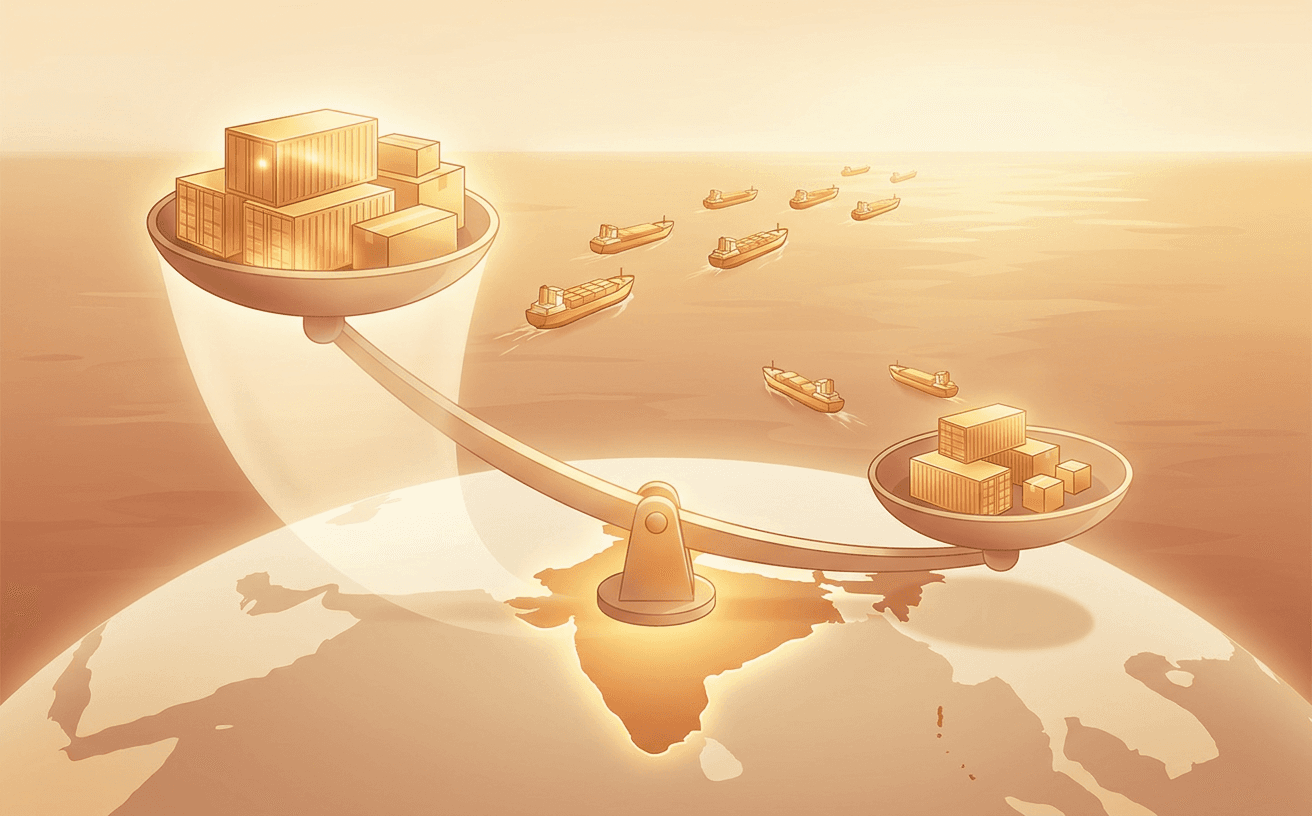
India's merchandise exports witnessed a significant increase of 26.1% in August, contributing to a narrowed trade deficit of $26.9 billion compared to the previous month. This positive trend was supported by broad-based growth across sectors like agriculture, pharmaceuticals, and engineering goods, while import growth moderated, particularly in gems and jewellery. Despite this improvement, the overall external sector remains vulnerable to global trade disruptions and higher crude oil prices.
Exam perspectives
The article highlights the dynamics of India's Balance of Payments (BoP), specifically the Current Account Deficit (CAD). The BoP is a systematic record of all economic transactions between a country's residents and the rest of the world. It comprises the Current Account (trade in goods, services, and unilateral transfers) and the Capital Account (foreign investment, loans). The narrowing of the merchandise trade deficit (the difference between goods imported and exported) directly impacts the CAD. The article notes that while the trade deficit narrowed in August, the CAD is projected to widen to 1.5% of GDP for the fiscal year due to higher crude oil prices, which increase the import bill. This scenario underscores India's vulnerability as a net importer of oil. Furthermore, the strong performance of services exports (software, IT, BPO) acts as a crucial buffer, generating a surplus that helps offset the merchandise trade deficit and stabilize the overall CAD. UPSC candidates should understand the components of BoP, the implications of a widening CAD on currency valuation (rupee depreciation), and the role of Foreign Exchange Reserves managed by the Reserve Bank of India in managing external shocks.
The data reveals interesting spatial patterns in India's international trade. The strong growth in exports to the US and several Asian markets like Malaysia, Singapore, and Japan indicates shifting trade dependencies and potential opportunities in the Indo-Pacific region. Conversely, the decline in exports to the UAE and Saudi Arabia, attributed to disruptions in West Asia, highlights the geopolitical sensitivity of trade routes and regional stability. This underscores the importance of diversifying export markets and securing supply chains to mitigate geopolitical risks. The vulnerability to global trade disruptions, as seen in the Red Sea crisis, emphasizes the need for alternative trade corridors like the proposed India-Middle East-Europe Economic Corridor (IMEC). For UPSC, the focus should be on analyzing trade patterns, the impact of geopolitical events on trade routes (like the Strait of Hormuz or the Suez Canal), and the economic rationale behind strategic trade partnerships.
The performance of various export sectors, from labor-intensive industries like textiles and gems to knowledge-intensive sectors like pharmaceuticals and engineering goods, reflects the impact of government policies. Interventions such as the Production Linked Incentive (PLI) scheme aim to boost domestic manufacturing capabilities and enhance export competitiveness. The recovery in labor-intensive sectors is vital for employment generation and inclusive growth. Furthermore, the role of agencies like the Directorate General of Foreign Trade (DGFT) in formulating and implementing the Foreign Trade Policy (FTP) is crucial in facilitating trade, reducing compliance burdens, and exploring new markets. The government's focus on improving logistics infrastructure (through initiatives like PM GatiShakti) and ease of doing business directly impacts the efficiency and cost-competitiveness of Indian exports. UPSC questions could center on evaluating the effectiveness of these policies in achieving the target of $2 trillion in exports by 2030.
Key references
AI-generated study notes, sourced from Economic Times. Verify facts and figures with standard sources.