
India’s bid to keep carbon cash home as Europe adds a new trade cost
Context
The ’s (CBAM), transitioning into its definitive phase in 2026, imposes a carbon tax on specific imports, prompting India to strengthen its domestic (CCTS). The will implement a similar mechanism in 2027 and has agreed to recognize India's CCTS, allowing domestic carbon payments to offset overseas charges. However, significant challenges remain as India's domestic carbon price is expected to be substantially lower than the EU's, requiring urgent industrial decarbonization to protect export competitiveness.
Exam perspectives
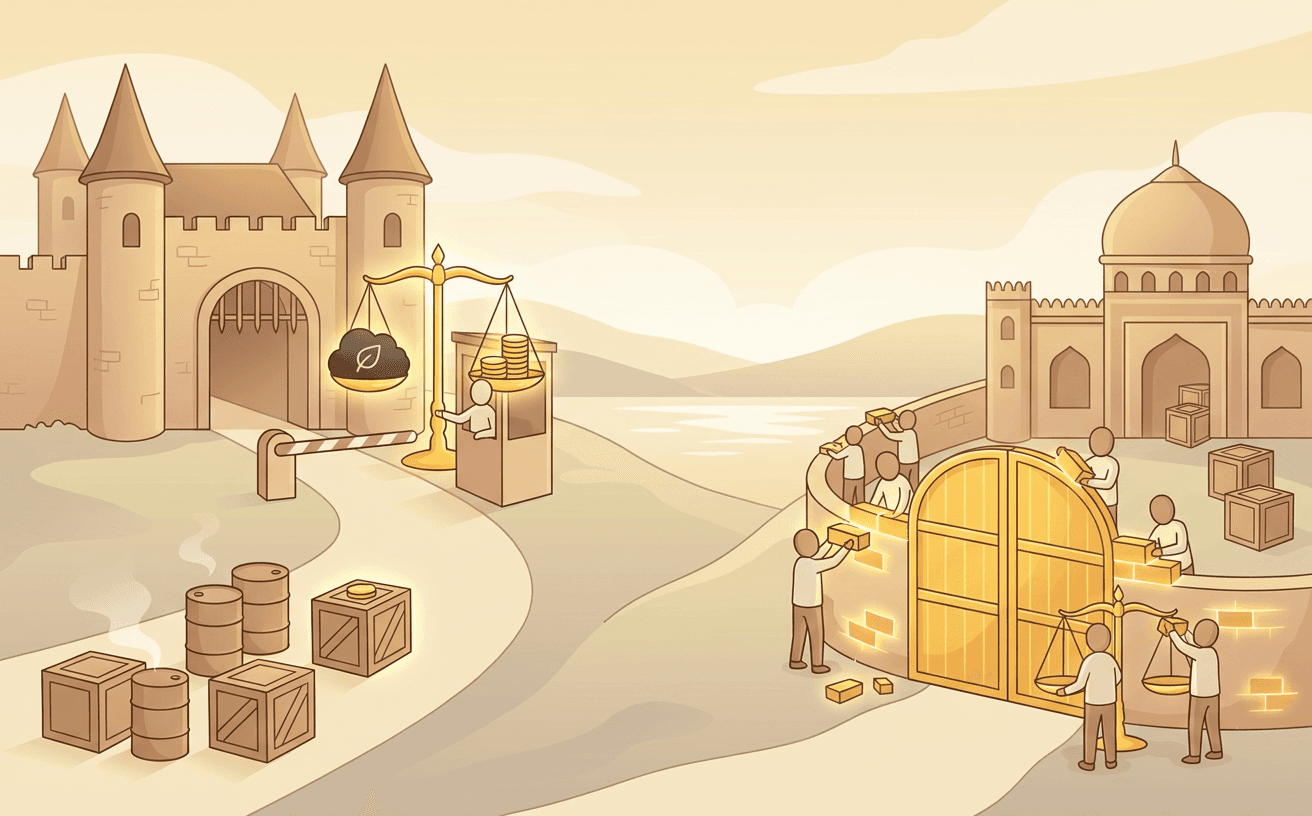
The Carbon Border Adjustment Mechanism fundamentally alters global trade dynamics by integrating environmental externalities into export pricing. For India, this represents a significant non-tariff barrier, particularly affecting carbon-intensive sectors like steel and aluminum, which have substantial exposure to the EU market (approx. 22% of combined exports). The ICRIER study simulating a 24% potential drop in steel exports under CBAM underscores the acute risk to India's merchandise export targets. To counter this, India's strategy under the Carbon Credit Trading Scheme aims to internalize the carbon cost. By establishing a domestic compliance carbon market overseen by the Bureau of Energy Efficiency, India attempts to ensure that the revenue generated from pricing emissions remains within the country as 'carbon cash' rather than being collected as border taxes by importing nations. However, the efficacy of this strategy is contingent upon bridging the vast pricing gap—currently around €75 per tonne in the EU versus significantly lower expected prices in developing markets—which threatens to leave Indian exporters liable for substantial residual payments.
The introduction of CBAM highlights the transition from voluntary climate action to coercive economic mechanisms, a shift that directly impacts developing economies. India's industrial sector, particularly primary steel production relying on coal-based processes (Blast Furnace–Basic Oxygen Furnace), exhibits higher carbon intensity than global averages. The Carbon Credit Trading Scheme represents India's pivotal shift towards an emissions-trading system based on intensity targets rather than absolute caps, a design choice meant to balance economic growth with decarbonization. This mechanism aligns with the Energy Conservation (Amendment) Act, 2022, mandating emissions-intensity targets for heavily polluting industries and penalizing non-compliance while rewarding over-achievement with tradeable Carbon Credit Certificates. The critical challenge, as highlighted by climate experts, is that while carbon pricing retains revenue domestically, it does not automatically reduce emissions; the true measure of success will be whether these revenues are effectively channeled into systemic decarbonization efforts, such as greening the electricity grid and adopting cleaner industrial technologies.
The unilateral imposition of CBAM by the EU and the impending UK mechanism create complex challenges within the framework of global trade and climate negotiations. These measures are often viewed by developing nations as protectionist, conflicting with the UNFCCC principle of Common but Differentiated Responsibilities (CBDR), which argues that developed nations should bear a larger burden for historical emissions. India's proactive diplomacy is evident in the UK's agreement to recognize the Indian CCTS, a crucial step in mitigating double taxation on carbon. However, the fundamental tension remains: the global north is setting the rules and pricing for carbon content, forcing the global south to adapt rapidly or face economic penalties. This scenario necessitates robust bilateral negotiations and active participation in multilateral forums like the World Trade Organization (WTO) to challenge unilateral trade barriers disguised as environmental policy, while simultaneously advancing domestic regulatory frameworks to align with emerging global standards.
Key references
AI-generated study notes, sourced from Economic Times. Verify facts and figures with standard sources.