
Lok Sabha grants extension to panel on ‘One Nation One Election’ till Winter Session
Context
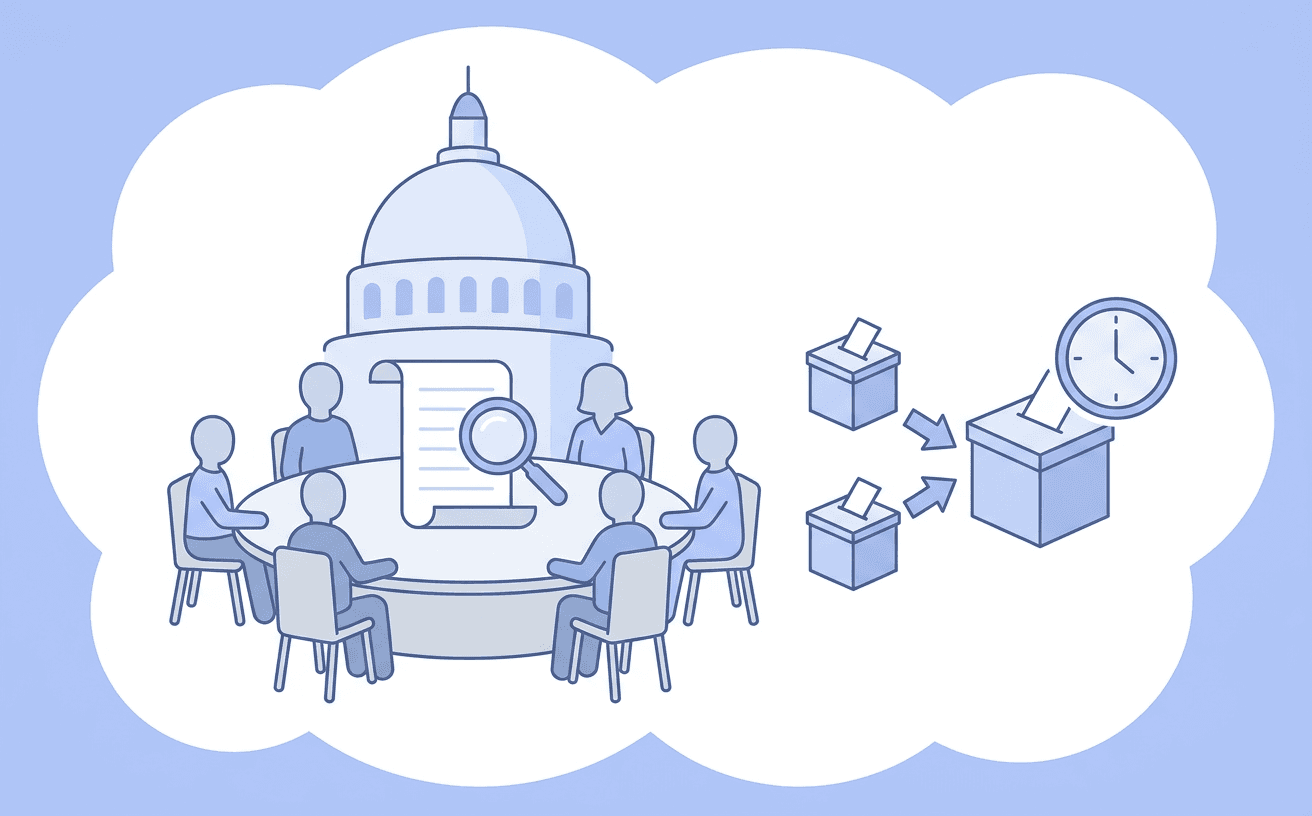
A examining the , which aims to implement the 'One Nation, One Election' framework, has been granted an extension until the Winter Session of Parliament. The committee is conducting nationwide consultations to explore the feasibility of holding simultaneous elections for the , State assemblies, and local bodies by 2029.
Exam perspectives
The 'One Nation, One Election' (ONOE) proposal represents a significant structural change to India's electoral cycle, which currently sees elections happening almost every year across different states. Implementing ONOE requires amending several parts of the Constitution, notably Article 83 (duration of Houses of Parliament), Article 85 (sessions of Parliament, prorogation and dissolution), Article 172 (duration of State Legislatures), Article 174 (sessions of the State Legislature, prorogation and dissolution), and Article 356 (President's Rule). Because these changes affect the federal structure—specifically the powers of State legislatures—the Constitution (One Hundred and Twenty-Ninth Amendment) Bill, 2024 would likely require not just a special majority in Parliament, but also ratification by at least half of the State Legislatures under Article 368. The role of the Joint Parliamentary Committee (JPC) is crucial here; it acts as a mechanism for detailed scrutiny and building political consensus before the bill is debated on the floor of the House.
From a governance perspective, the argument for ONOE centers on the disruption caused by the Model Code of Conduct (MCC). Proponents argue that continuous elections lead to 'policy paralysis' as governments avoid tough decisions and focus on populist measures to win immediate votes. Furthermore, synchronizing elections could significantly reduce the immense financial and administrative burden on the Election Commission of India (ECI), security forces, and government personnel who are repeatedly deployed for election duty. However, opponents argue that ONOE undermines federalism. Regional issues might be overshadowed by national narratives if state and national elections are held simultaneously. There are also practical challenges regarding mid-term collapses of governments. If a state government falls before its five-year term ends, would a new election be held only for the remainder of the term (as suggested by some committees like the Kovind Committee), or would President's Rule be imposed? These governance intricacies are what the JPC must resolve.
The economic rationale for simultaneous elections is often highlighted as cost-saving. Currently, the expenditure on elections by both the government and political parties is astronomical. By holding elections simultaneously, the cost of logistics, security deployment, and election management by the Election Commission of India (ECI) could theoretically be reduced. Additionally, frequent elections often lead to a focus on short-term populist schemes (freebies) rather than long-term capital investment and structural reforms, potentially hindering economic growth. However, the initial capital expenditure to shift to ONOE would be massive. The ECI would need to procure millions of new Electronic Voting Machines (EVMs) and Voter Verifiable Paper Audit Trails (VVPATs) because machines used for Lok Sabha cannot be immediately reused for simultaneous State assembly elections due to the time required for post-election dispute resolution. The JPC will need to weigh these long-term potential savings against the immediate massive capital outlay.
Key references
AI-generated study notes, sourced from The Hindu. Verify facts and figures with standard sources.