
Non-tariff barriers are biggest hurdle in India-China trade, says Nirmala Sitharaman
Context
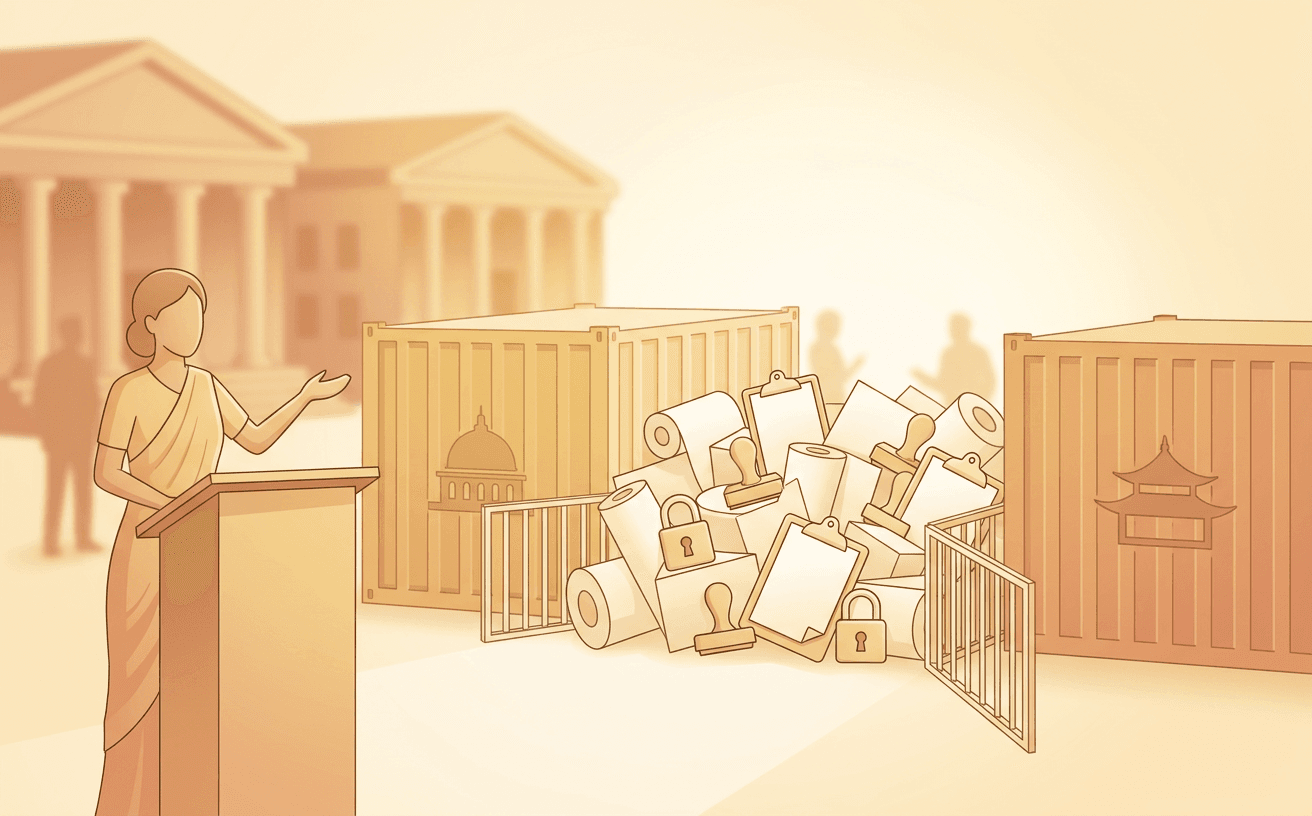
Union Finance Minister Nirmala Sitharaman, speaking on the sidelines of the IMF-World Bank annual meetings, highlighted **Non-Tariff Barriers (NTBs)** as the primary obstacle in India-China trade, leading to persistent trade imbalances. She also discussed ongoing negotiations for an India-U.S. trade pact, the role of , and India's economic strategy focused on infrastructure-led capital expenditure.
Exam perspectives
The Finance Minister emphasized the issue of Non-Tariff Barriers (NTBs) in trade with China. While tariffs are direct taxes on imports, NTBs are indirect measures used to restrict imports, such as phytosanitary measures (standards for plant and animal health), licensing requirements, or complex customs procedures. India argues that China uses these to block Indian exports like generic medicines and agricultural products, despite India seeking market access through negotiations rather than punitive tariffs. The article also highlights India's fiscal strategy: prioritizing capital expenditure (Capex) on infrastructure over direct cash transfers. This aligns with the economic principle that Capex has a higher multiplier effect, creating long-term assets and employment, which eventually stimulates demand without exacerbating the fiscal deficit as severely as revenue expenditure would. Understanding the distinction between capital and revenue expenditure, and their respective impacts on debt-financed growth, is crucial for GS Paper 3.
The potential India-U.S. trade agreement is significant for bilateral ties and global supply chains. A formalized trade pact could enhance market access and reduce friction in sectors like IT, pharmaceuticals, and manufacturing. Regarding China, the growing trade deficit is a major strategic concern for India, exposing vulnerabilities in critical supply chains, particularly in active pharmaceutical ingredients (APIs) and electronics. The Minister also reiterated India's perspective on BRICS (Brazil, Russia, India, China, South Africa). She positioned it not as an anti-Western bloc, but as a platform for economic cooperation among developing nations, representing a significant portion of global trade and population. The expansion of BRICS (adding new members) increases its geopolitical weight, and India's role within it emphasizes reforming global governance structures rather than simply countering existing powers.
The government's approach to economic recovery post-COVID-19 reflects a deliberate policy choice towards fiscal prudence and supply-side interventions. By focusing borrowing on asset creation (infrastructure) rather than consumption, the government aims to ensure long-term debt sustainability. This strategy requires efficient implementation by institutions like the Ministry of Finance and coordination with state governments for infrastructure development. The success of this model depends on the actual realization of the anticipated multiplier effect and its ability to foster inclusive growth and skill development, as mentioned by the Finance Minister. For UPSC, analyzing the effectiveness of this Capex-led growth model versus direct demand stimulation is a key analytical point.
Key references
AI-generated study notes, sourced from The Hindu. Verify facts and figures with standard sources.