
SC tells States to furnish updated information on old-age homes, facilities for senior citizens
Context
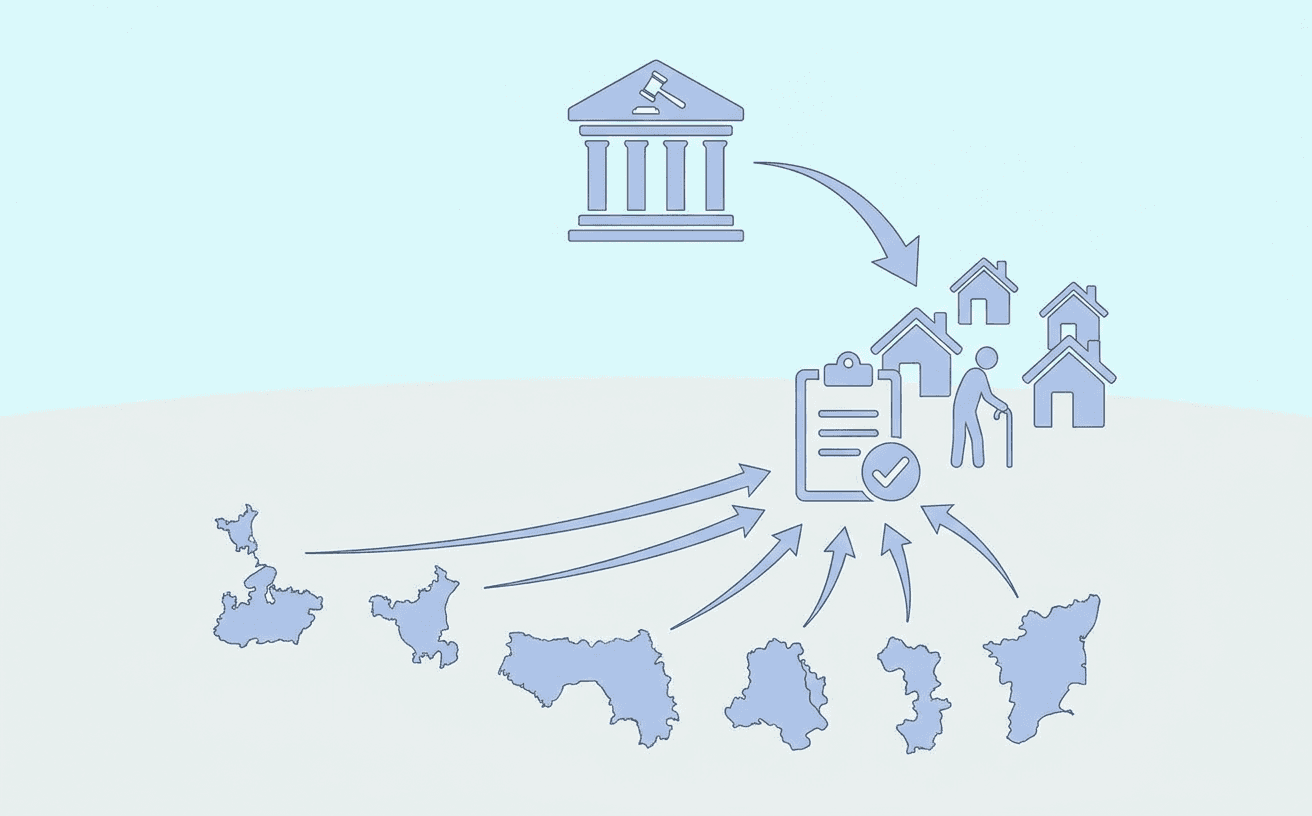
The has directed all States and Union Territories to submit updated status reports detailing the number of old-age homes and facilities available for senior citizens within four weeks. The directive was issued during the hearing of a public interest litigation (PIL) filed in 2016 by former Union Minister Ashwini Kumar, highlighting the plight of elderly individuals living in poverty without adequate shelter or medical care. The court aims to assess the current infrastructure before deciding on a comprehensive monitoring mechanism, potentially involving High Courts.
Exam perspectives
This development underscores the role of the Supreme Court in safeguarding fundamental rights, specifically Article 21 (Right to Life and Personal Liberty), which encompasses the right to live with dignity. The court's intervention highlights judicial activism—where the judiciary proactively steps in to address critical gaps in social welfare when the executive fails to ensure adequate protection. The debate over whether the Supreme Court or High Courts should monitor implementation reflects the nuances of judicial administration and the enforcement of court directives. The suggestion to transfer monitoring to High Courts highlights the Supreme Court's role as a constitutional court laying down broad guidelines, while relying on the decentralized structure of the judiciary for effective enforcement at the state level.
The case reveals significant implementation gaps in existing social welfare frameworks, pointing to structural weaknesses in public service delivery. The court explicitly noted deficiencies in the National Social Assistance Programme (NSAP), which provides financial aid to the elderly, indicating a disconnect between policy design and on-ground execution. Effective governance requires not merely establishing schemes but ensuring accessibility, adequacy, and accountability. The reliance on organizations like the National Legal Services Authority (NALSA) and State Legal Services Authorities to assist senior citizens highlights the need for robust institutional mechanisms to facilitate access to justice and entitlements for vulnerable populations.
India is experiencing a demographic shift with an expanding elderly population, necessitating robust social security mechanisms. The vulnerability of senior citizens, particularly those without financial support or family care, demands an urgent expansion of institutional support like old-age homes and geriatric medical care. The lack of updated data on old-age homes, as noted during the hearing, highlights a critical blind spot in evidence-based policymaking. Addressing the welfare of the elderly involves not just providing shelter but also ensuring comprehensive healthcare, pension adequacy, and protection against abuse, aligning with the objectives of the Maintenance and Welfare of Parents and Senior Citizens Act, 2007.
Key references
AI-generated study notes, sourced from The Hindu. Verify facts and figures with standard sources.