
Tuvalu: Barely above water
Context
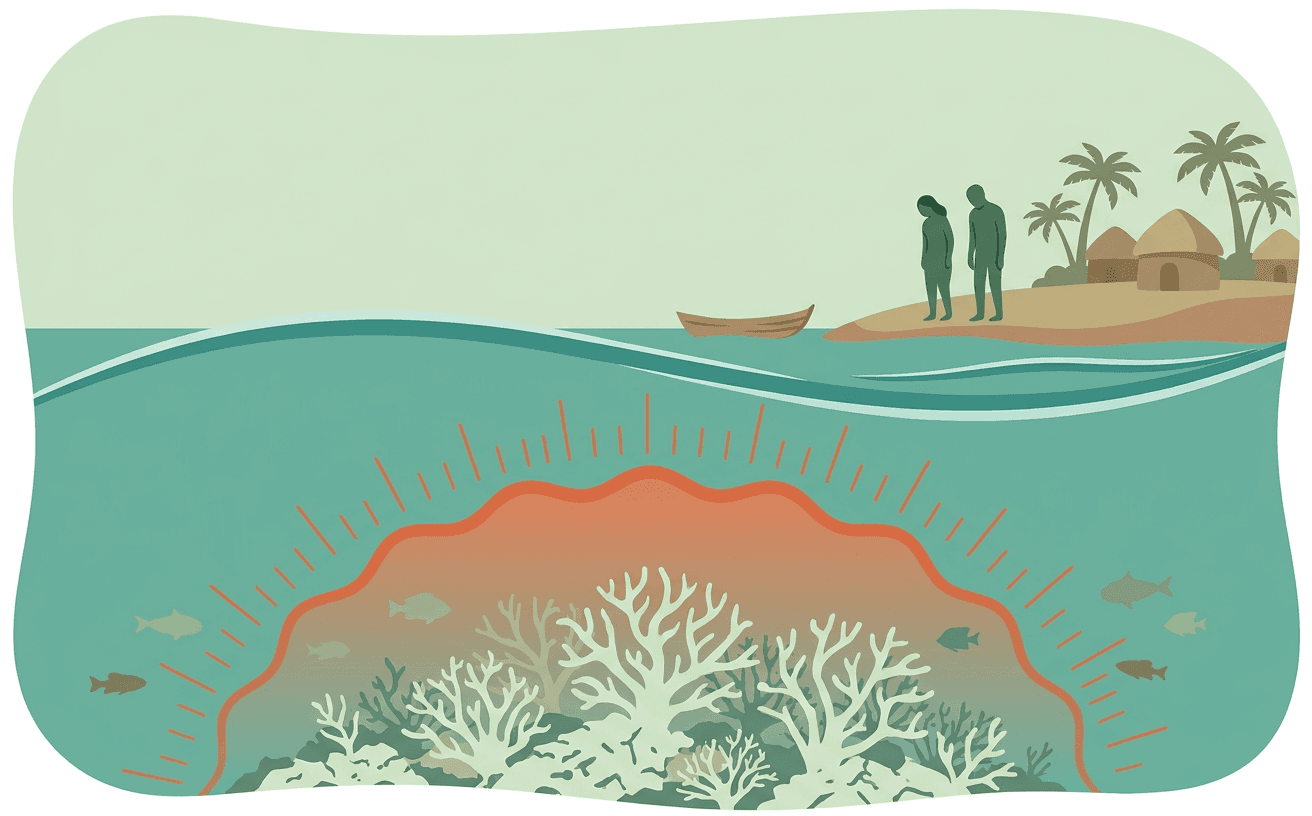
A marine heatwave in 2024 has reportedly wiped out an estimated 99.9% of the coral reefs surrounding the low-lying Pacific island nation of Tuvalu, highlighting the severe and immediate impacts of climate change on Small Island Developing States (SIDS). This devastation was documented ahead of a pre-COP gathering hosted by Fiji, which aims to showcase the regional damage prior to the annual UN climate conference.
Exam perspectives
The near-total destruction of Tuvalu's coral reefs underscores the vulnerability of marine ecosystems to marine heatwaves driven by global warming. Corals are highly sensitive to temperature changes; prolonged heat stress leads to coral bleaching, where they expel the symbiotic algae living in their tissues, causing them to turn white and often die. This event in Tuvalu is an extreme example of this phenomenon, threatening not just biodiversity but the very foundation of the atoll itself. The loss of reefs removes a critical natural barrier against storm surges and coastal erosion, exacerbating the risks posed by sea-level rise for low-lying island nations. For UPSC, understanding the mechanisms of coral bleaching, the ecological importance of reefs, and their role in coastal defense is crucial for GS Paper 3 questions on climate change and environmental degradation.
Tuvalu's geography makes it uniquely susceptible to climate change impacts. It is an atoll nation, meaning its islands are formed from coral reefs surrounding a lagoon. The destruction of the reefs, as the marine biologist noted, means "the very system that created the islands has died." Without healthy, growing coral reefs, the islands cannot naturally replenish their landmass to keep pace with rising sea levels, leading to subsidence and eventual inundation. This geographic reality fuels the projection that the archipelago could become unlivable by the end of the century. Candidates should be familiar with the formation of atolls, the geography of Oceania, and the specific vulnerabilities of low-lying coastal areas to sea-level rise, a topic relevant for GS Paper 1 Physical Geography.
The plight of Tuvalu serves as a stark example of the disproportionate impact of climate change on Small Island Developing States (SIDS), which contribute minimally to global greenhouse gas emissions but face existential threats. This reality drives the diplomatic strategies of SIDS in international climate negotiations, such as the upcoming United Nations Climate Change Conference (COP). They advocate strongly for ambitious emission reduction targets (mitigation), substantial climate finance for adaptation, and critically, a robust mechanism for Loss and Damage, a fund designed to compensate vulnerable nations for irreversible climate impacts. The pre-COP meeting in Fiji is a strategic move to build solidarity and pressure major emitters. In GS Paper 2, candidates must analyze the geopolitical dynamics of climate negotiations and the advocacy role of groupings like the Alliance of Small Island States (AOSIS).
Key references
AI-generated study notes, sourced from The Hindu. Verify facts and figures with standard sources.