
UN warns wildfires, heatwaves threaten air quality and health
Context
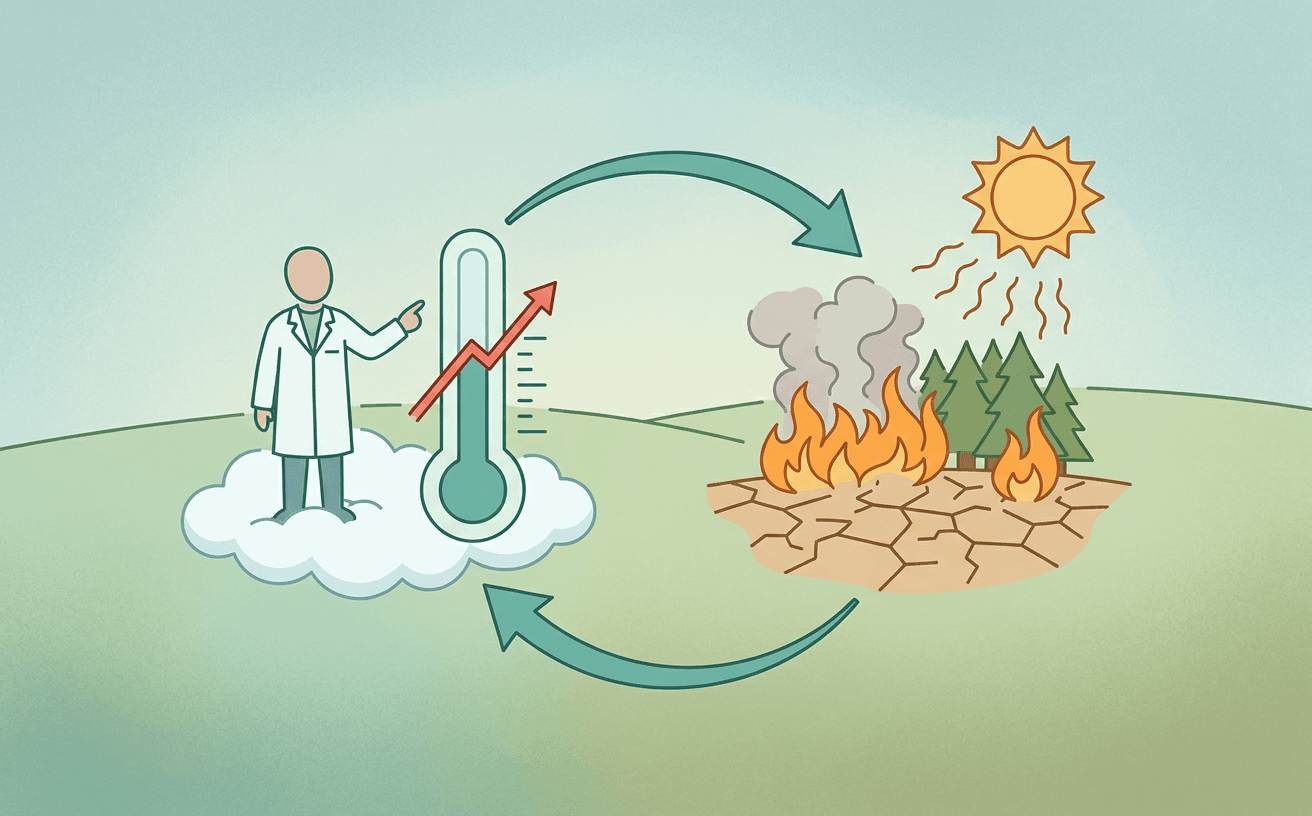
The (WMO) recently released its annual Air Quality and Climate Bulletin, highlighting a concerning cycle where climate change exacerbates wildfires and heatwaves, which in turn severely degrade air quality. The report emphasizes that microparticles from vegetation fires are highly toxic and conventional models likely underestimate wildfire-related mortality, calling for integrated climate and air quality policies.
Exam perspectives
The WMO report illustrates a critical positive feedback loop in environmental science: climate change leads to more extreme weather (heatwaves, droughts), creating conditions for intense wildfires, which then release massive amounts of pollutants and greenhouse gases back into the atmosphere. The report specifically flags the unique toxicity of wildfire-generated PM2.5 (particulate matter less than 2.5 micrometers), noting it is more harmful than exhaust emissions. It also highlights the role of aerosols—suspensions of fine solid particles or liquid droplets—like black carbon, which when deposited on snow or ice, reduce the albedo effect (reflectivity) and accelerate melting. Furthermore, the report underscores the growing, pervasive threat of microplastics—particles formed from plastic degradation—now ubiquitous in land, ocean, and atmosphere, emphasizing the urgent need for better tracking of these pollutants and coordinated policies.
From a geographical perspective, the report underscores how air pollution is a transboundary issue, unconfined by political borders. Pollutants like ozone, aerosols, and microplastics can travel vast distances via atmospheric circulation patterns. The phenomenon of ground-level ozone formation is a key geographical focus; unlike stratospheric ozone (which protects us), ground-level ozone is a secondary pollutant created by chemical reactions between oxides of nitrogen (NOx) and volatile organic compounds (VOC) in the presence of sunlight, a process amplified during heatwaves and stagnant atmospheric conditions common in regions like China, Europe, and parts of the US. This necessitates international cooperation, as localized efforts to reduce emissions (e.g., industrial regulations in Europe) can be offset by imported pollution from massive wildfire events elsewhere.
The governance challenge highlighted is the siloed approach to environmental management. Policymakers often treat air quality management and climate change mitigation as separate tracks. However, the WMO urges that these must be addressed simultaneously, as worsening one worsens the other. The inadequacy of current risk assessment models is a critical governance failure point; the report notes that models relying solely on total PM2.5 concentrations may drastically underestimate mortality linked specifically to wildfire smoke. This highlights the need for governments to invest in more sophisticated monitoring infrastructure capable of distinguishing pollutant sources and types (like specific aerosols and microplastics) to inform public health advisories and long-term environmental regulations effectively. In India, this aligns with the objectives of the National Clean Air Programme, which seeks a coordinated approach to tackling air pollution across various sectors.
Key references
AI-generated study notes, sourced from The Hindu. Verify facts and figures with standard sources.