
West Asia war LIVE: Iran's army says attacked U.S. bases in Kuwait, UAE
Context
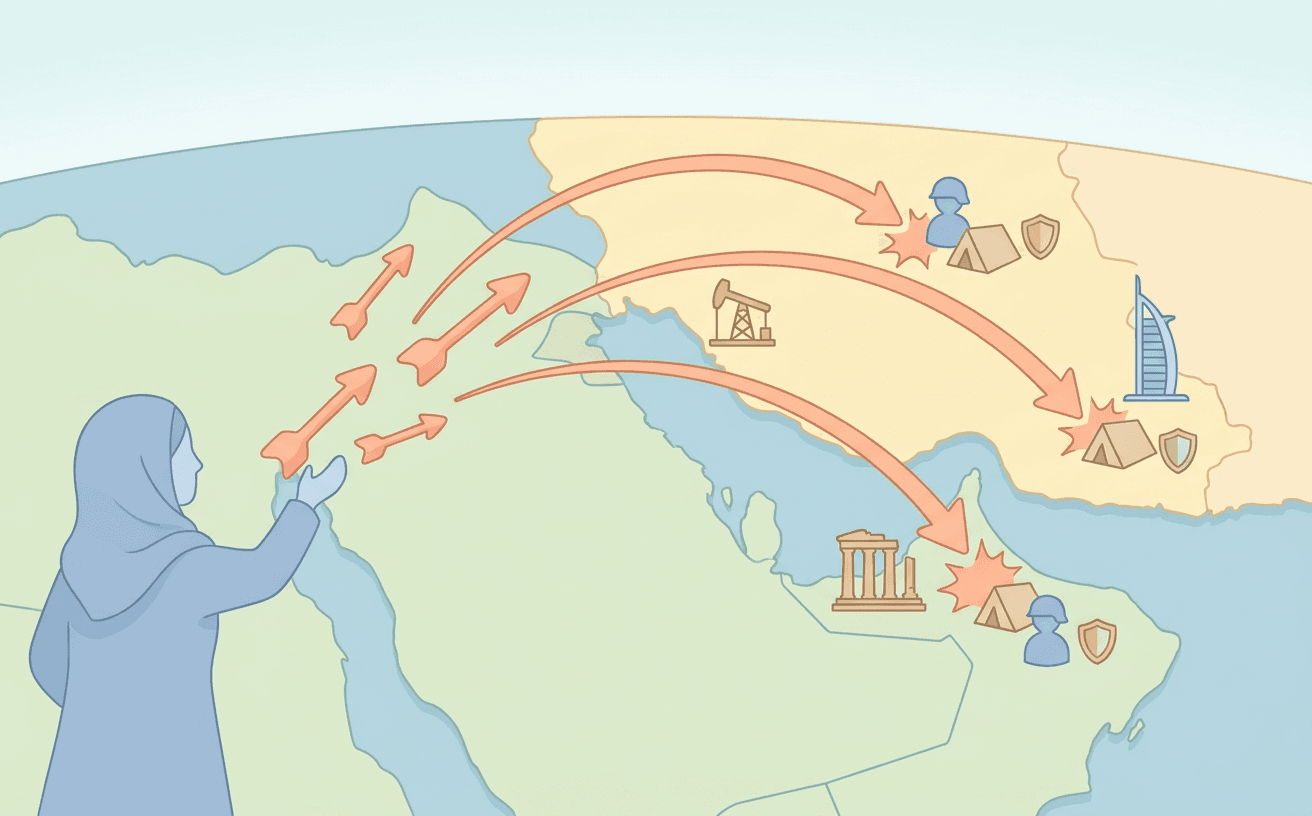
The ongoing conflict in West Asia has escalated significantly, with Iran launching attacks on United States military bases across multiple countries in the region, including Kuwait, the UAE, Jordan, Bahrain, and Iraq's Kurdistan region. This action comes as a direct retaliation to extensive U.S. bombardments within Iran, which resulted in significant casualties, amidst broader threats of further military action from the U.S. administration. The development marks a severe regionalization of the conflict, threatening broader geopolitical instability.
Exam perspectives
This escalation demands a thorough understanding of the strategic geography of West Asia, often referred to as the Middle East. The region is characterized by crucial choke points essential for global energy security, most notably the Strait of Hormuz. This narrow waterway between the Persian Gulf and the Gulf of Oman is the world's most important oil transit chokepoint. Any disruption here, as threatened by the escalating conflict, can cause immediate shocks to global oil prices and supply chains. Furthermore, the geographical spread of the Iranian attacks—Kuwait, UAE, Jordan, Bahrain, and Iraq—highlights the widespread presence of U.S. military infrastructure in the region, established under various defense agreements. For UPSC Prelims, candidates must be able to accurately map these nations, their capitals, surrounding water bodies (Persian Gulf, Red Sea, Mediterranean Sea), and key straits (Hormuz, Bab el-Mandeb). The geopolitical concept of the 'Shiite Crescent', a region of the Middle East where the majority population is Shia or where there is a strong Shia presence (spanning Iran, Iraq, Syria, and Lebanon), is also pertinent to understanding regional dynamics and Iranian influence.
The economic ramifications of a wider war in West Asia are profound, particularly for energy-dependent nations like India. The primary concern is energy security. India imports a significant majority of its crude oil requirements, heavily relying on suppliers in the Persian Gulf. A disruption in the Strait of Hormuz or damage to oil infrastructure in countries like the UAE or Saudi Arabia could lead to a sudden spike in crude prices. This directly impacts India's Current Account Deficit (CAD) (the difference between the value of imports and exports) and exacerbates imported inflation (inflation caused by an increase in the price of imported goods). To mitigate such risks, India has been pursuing strategies like building Strategic Petroleum Reserves (SPR) (large stockpiles of crude oil to deal with short-term supply disruptions) and diversifying its energy mix towards renewables. Moreover, the conflict could affect the millions of Indian expatriates working in the Gulf, whose remittances form a crucial component of India's foreign exchange reserves and domestic consumption. The disruption could also impact bilateral trade agreements, such as the Comprehensive Economic Partnership Agreement (CEPA) signed with the UAE.
From an International Relations and global governance perspective, this conflict exposes the limitations of existing multilateral institutions in preventing or managing regional crises. The escalation raises questions about the efficacy of international law and bodies like the United Nations Security Council (UNSC) in maintaining global peace and security. Furthermore, it highlights the complex interplay of alliances and strategic autonomy. India's foreign policy has traditionally aimed to maintain a delicate balance in the region, balancing strong economic and strategic ties with Arab nations (like the UAE and Saudi Arabia), strategic partnerships with Israel, and civilizational and energy ties with Iran. This 'Look West' policy, which has evolved into a more proactive engagement strategy, faces a severe test. A full-scale regional war forces a reassessment of diplomatic priorities, potentially requiring difficult choices to protect national interests, secure energy supplies, and ensure the safety of the diaspora. It also underscores the importance of regional groupings like the I2U2 (India, Israel, UAE, USA) and how conflicts test the cohesion and strategic objectives of such minilateral initiatives.
Key references
AI-generated study notes, sourced from The Hindu. Verify facts and figures with standard sources.