
What is the role of State government in appointment of High Court Chief Justice? | Explained
Context
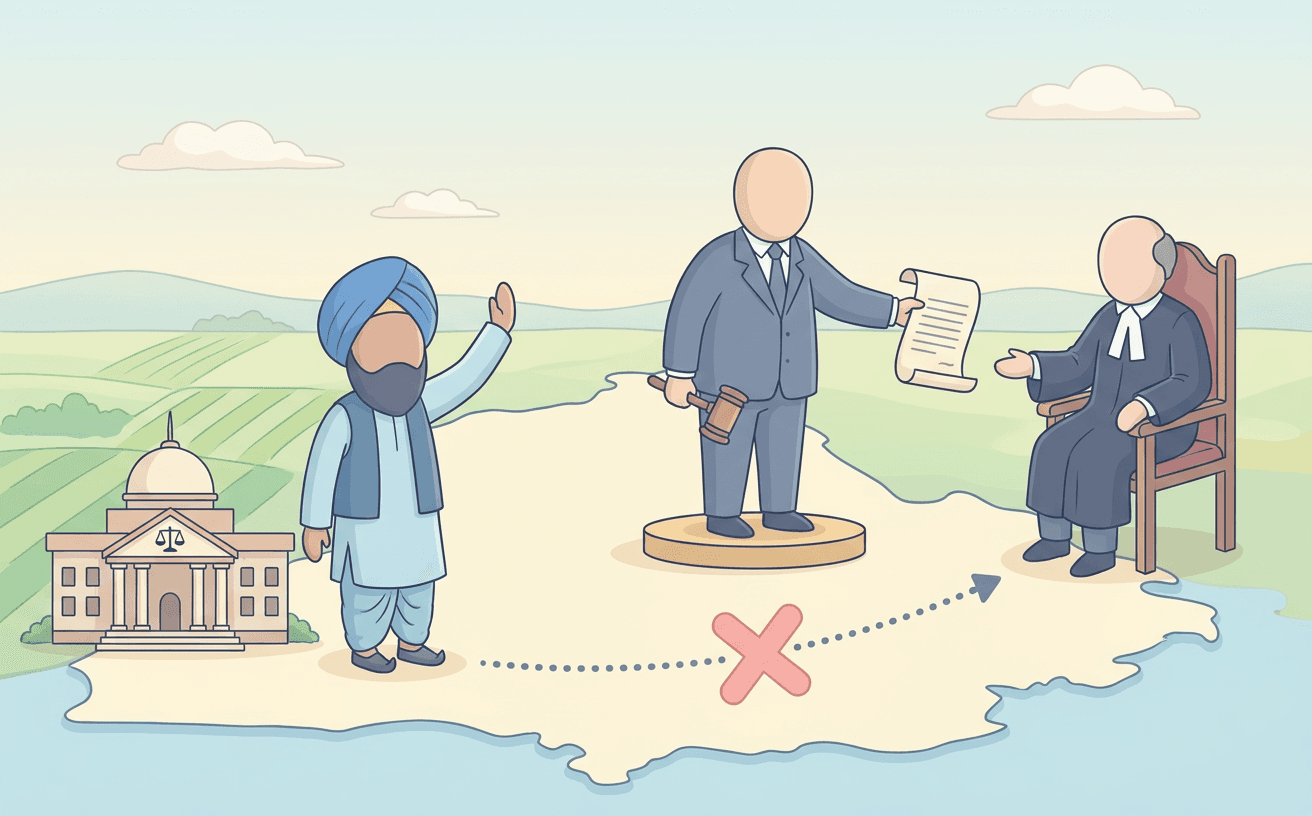
The Punjab government objected to the Centre's notification appointing Justice Ashwani Kumar Mishra as the Chief Justice of the Punjab and Haryana High Court, claiming it bypassed established procedures by not awaiting the State's views. This has reignited the debate over the exact role of State governments and the executive in the process of judicial appointments, specifically regarding the functioning of the Collegium system and Constitutional provisions like .
Exam perspectives
The appointment of High Court Chief Justices is governed by Article 217 of the Constitution, which states that a High Court judge is appointed by the President after consultation with the Chief Justice of India (CJI) and the Governor of the concerned State. The crucial distinction here is between the terms 'consultation' and 'concurrence'. While the State government's views are sought through the Governor, who acts on the aid and advice of the Council of Ministers under Article 163, their agreement is not a prerequisite for the appointment. The State holds a consultative role, not a veto power. This framework is essential for maintaining the independence of the judiciary, ensuring that executive preferences at the State level cannot dictate judicial leadership. UPSC candidates must understand the nuanced difference between consultation and consent in Constitutional appointments, particularly concerning the judiciary.
The current process of judicial appointments is a product of judicial evolution, shifting primacy from the executive to the judiciary through a series of landmark cases known as the 'Judges Cases'. The First Judges Case (1981) initially held that 'consultation' did not mean 'concurrence', giving the executive an upper hand. However, this was fundamentally altered by the Second Judges Case (1993), which established the Collegium system, asserting that the judiciary must have primacy in appointments to safeguard its independence. This was further refined in the Third Judges Case (1998). The attempt to introduce a greater executive role through the 99th Constitutional Amendment and the National Judicial Appointments Commission (NJAC) Act was struck down in 2015, with the Supreme Court ruling that executive interference compromises the Basic Structure of the Constitution. This ongoing tension highlights the delicate balance of power and the mechanisms designed to shield the judiciary from political influence.
The incident in Punjab highlights potential friction points within India's cooperative federalism concerning central appointments that impact States. While the judiciary is an integrated system in India, High Courts are the apex judicial bodies at the State level. The State government's argument that its views were ignored before the notification was issued touches upon the expectation of meaningful consultation in a federal setup, even if formal concurrence is not legally mandated. The controversy underscores the operational challenges of the Collegium system, where the lack of transparency can lead to misunderstandings or perceived slights by State executives. For UPSC Mains, analyzing how disputes over appointments can strain Centre-State relations and the debate over reforming the Collegium system to enhance transparency while preserving judicial independence is a crucial area of focus.
Key references
AI-generated study notes, sourced from The Hindu. Verify facts and figures with standard sources.