
Why ‘poverty is the only caste’ is a myth: From Telangana, a measure of caste inequality
Context
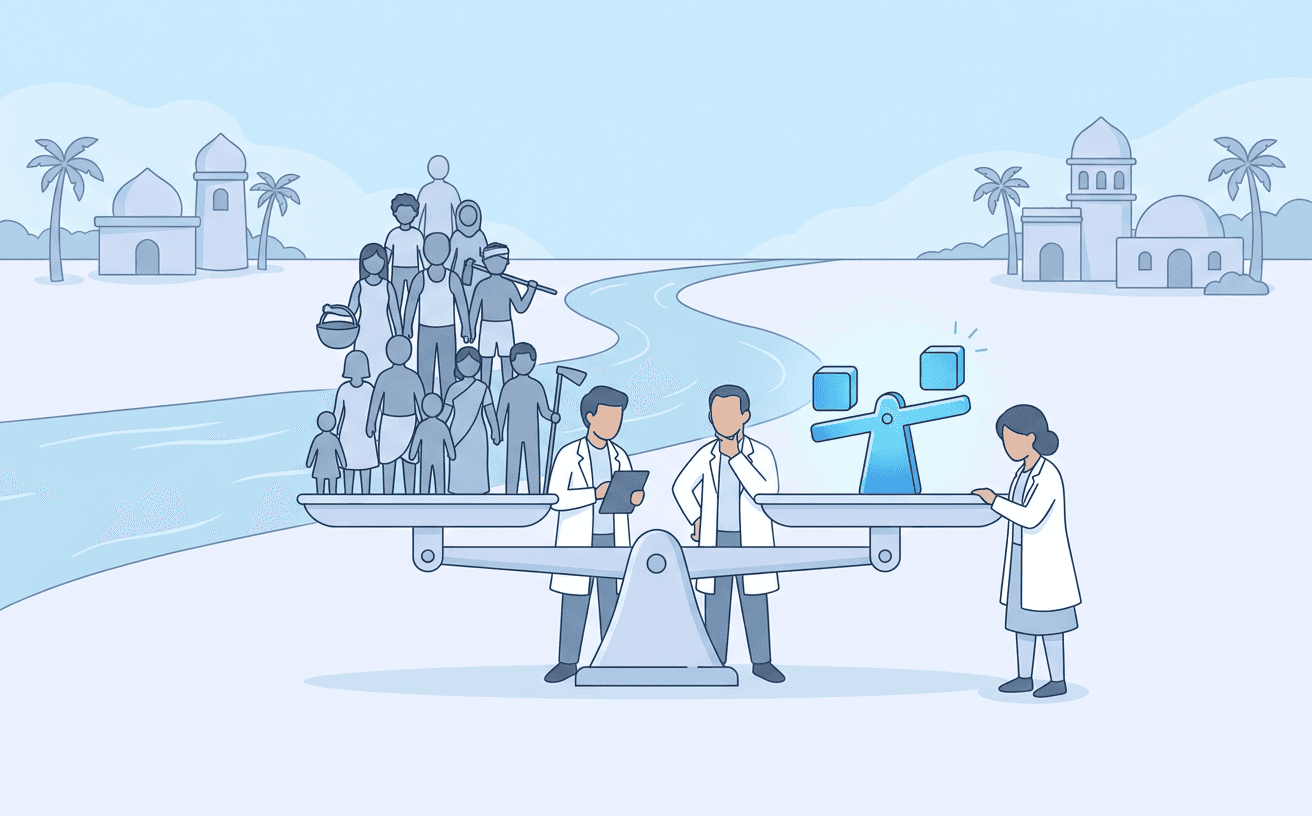
An independent expert committee constituted by the Government of Telangana has developed a **Composite Backwardness Index (CBI)** based on a recent caste survey of 35 million people. This index aims to empirically measure 'backwardness' across 242 caste groups using 42 parameters, challenging the notion that economic status (poverty) is the sole determinant of disadvantage and providing a data-driven framework for targeted social justice policies.
Exam perspectives
The article fundamentally challenges the argument that economic criteria alone should define backwardness, a debate central to India's affirmative action discourse, especially after the 103rd Constitutional Amendment Act which introduced Economically Weaker Sections (EWS) reservation. The Telangana data reveals that poverty intersects with caste, but does not override it; poor 'General Caste' children access private education eight times more than equally poor SC/ST children. This highlights the concept of intersectionality, where multiple forms of disadvantage compound. The findings also empirically validate the historical basis of reservations—that Scheduled Castes (SCs) and Scheduled Tribes (STs) face significantly deeper systemic deprivation compared to 'General' categories, and that 'backwardness' encompasses educational access, social networks, and discrimination, not just financial wealth. The data showing the 'casteless' population is concentrated in high-income, urban brackets further underscores that 'caste-blindness' is often a privilege afforded by existing social capital.
The development of the Composite Backwardness Index (CBI) represents a shift towards evidence-based policymaking and data-driven governance. Historically, defining backwardness for Other Backward Classes (OBCs) under Article 340 relied on commissions like the Mandal Commission, which used limited parameters. The Telangana CBI, using 42 parameters, offers a highly granular approach. This addresses a critical flaw in current welfare administration: the misallocation of resources. The report indicates 30% of state welfare benefits reach those who may not need them, highlighting issues of inclusion/exclusion errors in targetting. The proposal to allocate resources based on 'share proportional to backwardness' rather than a blanket approach for all marginalized groups advocates for a more nuanced Targeted Public Distribution System (TPDS) style approach applied to broader social justice initiatives, ensuring the state's resources reach the most acutely deprived sub-castes within larger categories.
The findings touch upon the constitutional mandate of achieving substantive equality rather than merely formal equality, as envisioned under Article 14, Article 15(4), and Article 16(4). The stark variations in backwardness within broad caste categories (e.g., between SC Malas and SC Madigas) directly inform the ongoing legal and political debate surrounding the sub-categorization of Scheduled Castes, which was recently upheld by a 7-judge Constitution Bench of the Supreme Court. The Court ruled that states have the legislative competence to sub-classify SCs to ensure reservation benefits reach the most marginalized. The Telangana CBI provides exactly the kind of empirical, quantifiable data required to justify such sub-categorization and defend it against legal challenges of arbitrariness, demonstrating how state-level data collection is vital for refining the constitutional framework of affirmative action.
Key references
AI-generated study notes, sourced from Indian Express. Verify facts and figures with standard sources.