
A case for joining the global carbon coalition
Context
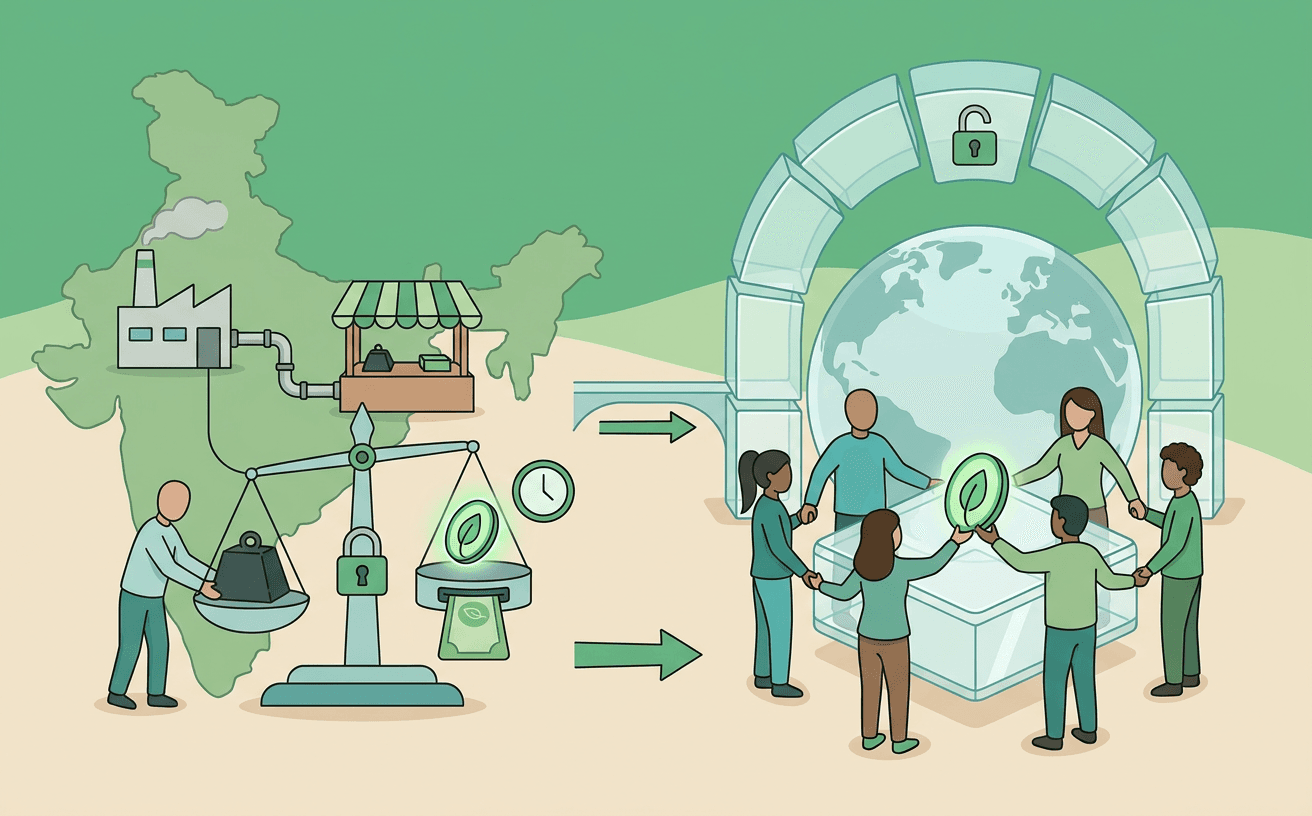
India recently launched its with binding targets, and the first credits are expected to be issued soon. Concurrently, an international group formed the to align global compliance carbon markets. The article argues that India should join this coalition to shape global carbon pricing rules and prepare for border carbon taxes like the EU's .
Exam perspectives
The transition to a low-carbon economy relies heavily on market-based mechanisms to incentivize emission reductions. India's Carbon Credit Trading Scheme is a domestic compliance market designed to help meet its Nationally Determined Contributions under the Paris Agreement and its 2070 net-zero goal. The Open Coalition on Compliance Carbon Markets aims to improve the interoperability of these domestic systems globally. By focusing on critical elements like Monitoring, Reporting, and Verification systems and high-integrity offsets, the coalition seeks to establish a more robust and unified global framework for carbon pricing. Joining this coalition could help India ensure its domestic efforts align with international best practices, thereby strengthening the credibility and environmental integrity of its carbon market. For UPSC, it is vital to understand how domestic carbon markets contribute to global climate goals and the challenges in aligning diverse national systems.
Carbon pricing is an economic tool designed to internalize the external costs of greenhouse gas emissions (the social cost of carbon). A global carbon price, or aligned domestic prices, can minimize the economy-wide cost of mitigation and drive innovation in green technologies. The article highlights that carbon pricing can also generate significant fiscal revenues, which are increasingly needed to combat the impacts of climate change. Furthermore, the interoperability of carbon markets could allow Indian entities to trade credits with jurisdictions having more stringent targets, potentially earning higher revenues. However, the looming threat of the EU's Carbon Border Adjustment Mechanism—a tax on carbon-intensive imports—presents a significant economic risk. The Carbon Border Adjustment Mechanism effectively acts as a tariff, potentially making Indian exports less competitive. Engaging with the Open Coalition on Compliance Carbon Markets could help India better understand and prepare for such mechanisms, mitigating potential economic shocks and protecting its export competitiveness.
The emergence of 'climate clubs' or coalitions like the Open Coalition on Compliance Carbon Markets reflects a shift in global climate governance, moving beyond the traditional United Nations Framework Convention on Climate Change negotiations, which are often stalled by geopolitical fractures. These coalitions aim to drive implementation through coordinated action among willing countries. India's decision to join or stay out of the Open Coalition on Compliance Carbon Markets is a strategic one. As a major developing economy, India's participation would add significant weight to the coalition. More importantly, being "in the room" allows India to shape the rules of global carbon pricing rather than having to adapt to rules set by others. This proactive engagement is crucial for defending its national interests, especially concerning mechanisms like the Carbon Border Adjustment Mechanism, which disproportionately impact developing nations. Understanding this dynamic is essential for UPSC Mains, as it illustrates the evolving nature of climate diplomacy and the necessity for strategic alignment in a fragmented geopolitical landscape.
Key references
AI-generated study notes, sourced from The Hindu. Verify facts and figures with standard sources.