
A greying population, a strained care system
Context
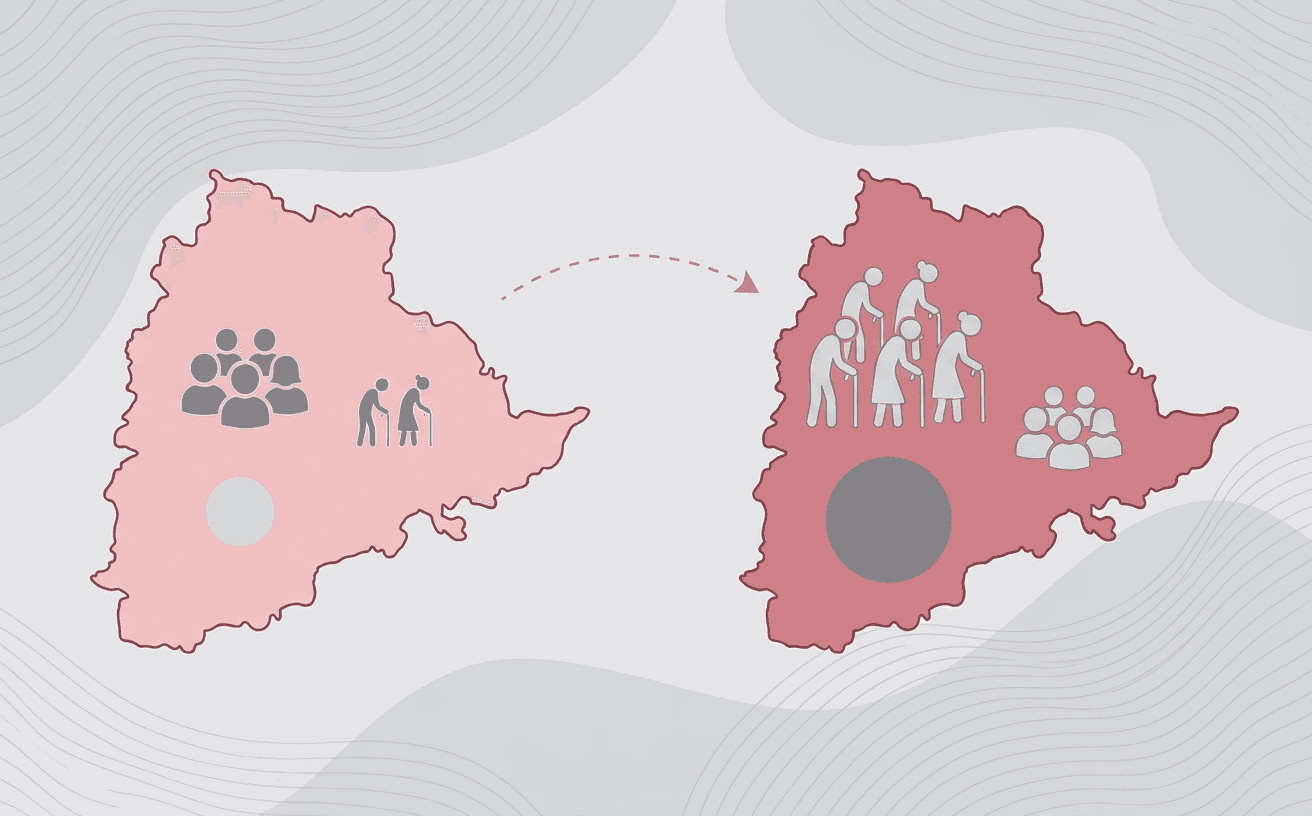
An RBI report projects that Telangana's elderly population (aged 60+) will increase from 12.5% in 2026 to 17.1% in 2036, pushing the state into the 'ageing' category. This demographic shift highlights significant gaps in healthcare accessibility, caregiving infrastructure, and mental health support for senior citizens, particularly those from low-income backgrounds and those living alone. The article underscores the need for localized community support systems and specialized geriatric care to manage the complex needs of an ageing population.
Exam perspectives
India is experiencing a profound demographic transition (the shift from high birth and death rates to low birth and death rates), leading to an ageing population. This shift creates complex social challenges, particularly regarding the care economy and family structures. As urbanization increases and traditional joint families break down into nuclear families, elderly individuals often face isolation, especially when children migrate for work. The article highlights the critical need for localized support structures, such as community centers analogous to Anganwadi Centers, to foster social interaction, provide basic amenities, and mitigate the isolation inherent in modern urban design. Furthermore, the rising demand for paid caregivers, which is financially prohibitive for many, necessitates the development of state-supported or subsidized caregiving frameworks to prevent neglect and abandonment of the elderly, ensuring their right to life with dignity as protected under Article 21.
The projected increase in the elderly population necessitates robust policy interventions and administrative mechanisms. The current healthcare infrastructure is inadequately equipped for geriatric care (healthcare focused on older adults), which requires a multidisciplinary approach beyond acute medical interventions. The governance challenge lies in integrating social and health services, such as expanding the role of Accredited Social Health Activists (ASHAs) to include home delivery of medicines and routine check-ups for the elderly. Additionally, the effective implementation of schemes like the National Programme for Health Care of the Elderly (NPHCE) needs to be strengthened, focusing on capacity building for healthcare professionals in geriatric medicine and establishing dedicated wards. Governance frameworks must also address the legal aspects of elder care, ensuring the enforcement of the Maintenance and Welfare of Parents and Senior Citizens Act, 2007, which mandates adult children or heirs to provide maintenance.
The economic implications of an ageing population are profound, often referred to as a demographic burden when the dependency ratio increases (the ratio of dependents, people younger than 15 or older than 64, to the working-age population). As highlighted by the Reserve Bank of India report, this transition will significantly impact state finances, requiring increased expenditure on healthcare, pensions, and social security nets. The lack of financial independence among the elderly, especially those from the informal sector who lack adequate pension coverage, exacerbates their vulnerability. Addressing this requires innovative financial models, such as expanding the coverage and quantum of the Indira Gandhi National Old Age Pension Scheme (IGNOAPS) and promoting affordable health insurance products tailored for senior citizens. Furthermore, the economic cost of informal caregiving, predominantly borne by women, represents a massive unrecognized contribution to the economy that needs to be formalized and supported.
Key references
AI-generated study notes, sourced from The Hindu. Verify facts and figures with standard sources.