
A shared disaster, beyond borders and geopolitics
Context
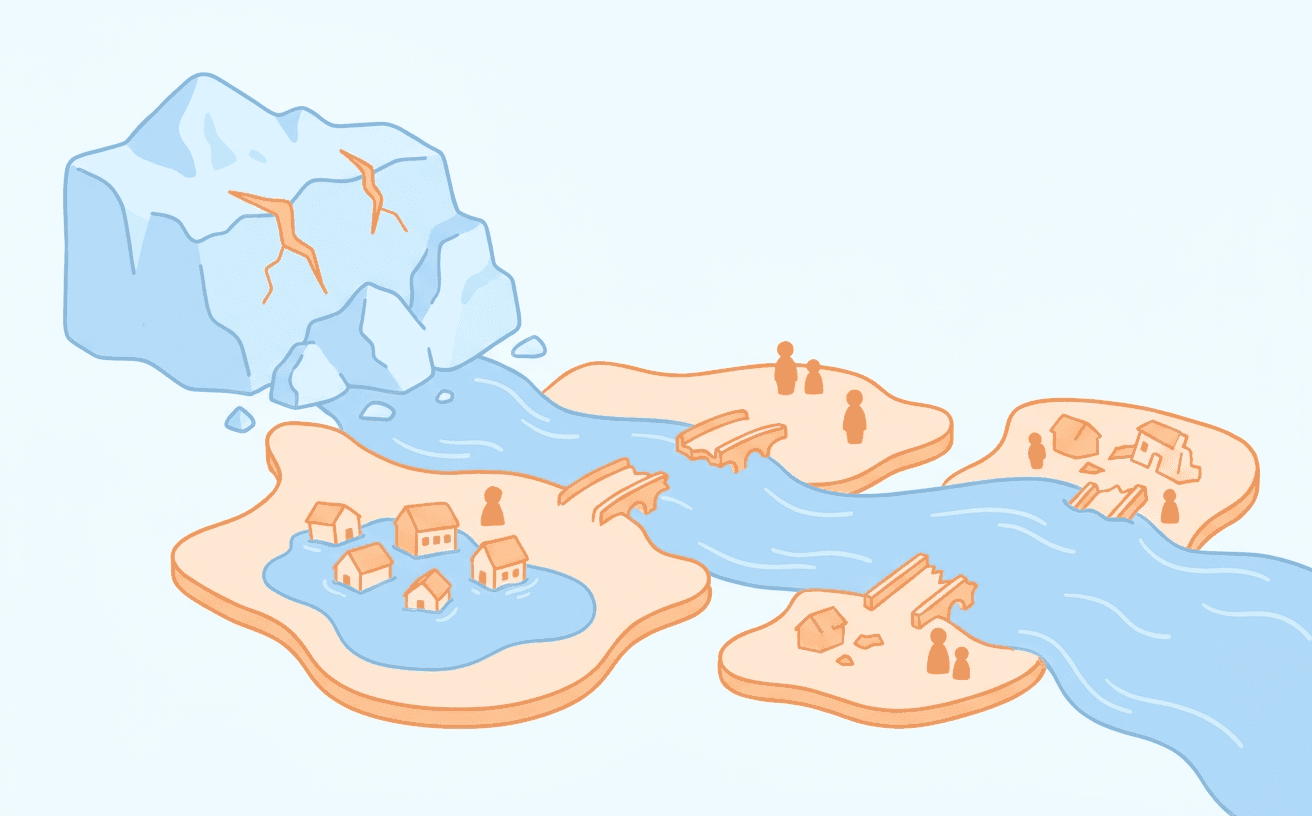
A catastrophic glacial collapse near the Nepal-China border in August 2026 caused devastating flash floods, resulting in significant loss of life and infrastructure damage in Nepal, India, and China. The disaster highlights the shared vulnerability of these countries to natural calamities and underscores the urgent need for transboundary cooperation in disaster management, transcending existing geopolitical tensions.
Exam perspectives
The disaster underscores the vulnerability of the Himalayan ecosystem to extreme events. The incident, initially mistaken for an earthquake, was a massive glacial collapse triggering a landslide and flash floods. This highlights the complex interplay of cryospheric (frozen water) and geological processes in the region. The event led to downstream flooding in major river systems like the Gandak, Kosi, and Ganga, directly threatening states like Bihar and Uttar Pradesh in India. This interconnectedness emphasizes the need for a comprehensive, transboundary approach to managing shared river basins and mountain ecosystems. For UPSC, understanding the physical geography of the Himalayas, the mechanics of Glacial Lake Outburst Floods (GLOFs), and the downstream impact on the Indo-Gangetic plain is crucial.
The editorial highlights a critical shift needed in the trilateral relationship between India, China, and Nepal. While often dominated by geopolitical contestations and strategic competition, the shared disaster emphasizes the necessity of transboundary cooperation in disaster management. The author argues for compartmentalizing political dynamics to create space for collaboration, as natural disasters do not respect national borders. The prompt deployment of National Disaster Response Force teams and India's Humanitarian Assistance and Disaster Relief (HADR) operations demonstrate the potential for immediate cooperative action. For the exam, this provides a compelling case study on how non-traditional security threats, like environmental disasters, can necessitate cooperation even amidst complex bilateral or trilateral tensions, particularly in the context of Neighborhood First Policy.
The disaster exposes the challenges of disaster management in a multi-jurisdictional context. The rapid downstream flow of floodwaters required immediate alert and action from authorities in Bihar and Uttar Pradesh, showcasing the critical need for robust early warning systems and real-time data sharing across borders. The destruction of vital infrastructure, including hydropower stations in Nepal and the Gyirong Port in China, highlights the economic toll of such events and the need for climate-resilient infrastructure planning. The swift response by Indian authorities and the deployment of relief materials underscore the role of national agencies in mitigating transboundary impacts. This event reinforces the importance of the Sendai Framework for Disaster Risk Reduction, which emphasizes the need for cross-border cooperation in reducing disaster risks.
Key references
AI-generated study notes, sourced from The Hindu. Verify facts and figures with standard sources.