
As Project Cheetah completes 4 years, big cat population in India rises to 52
Context
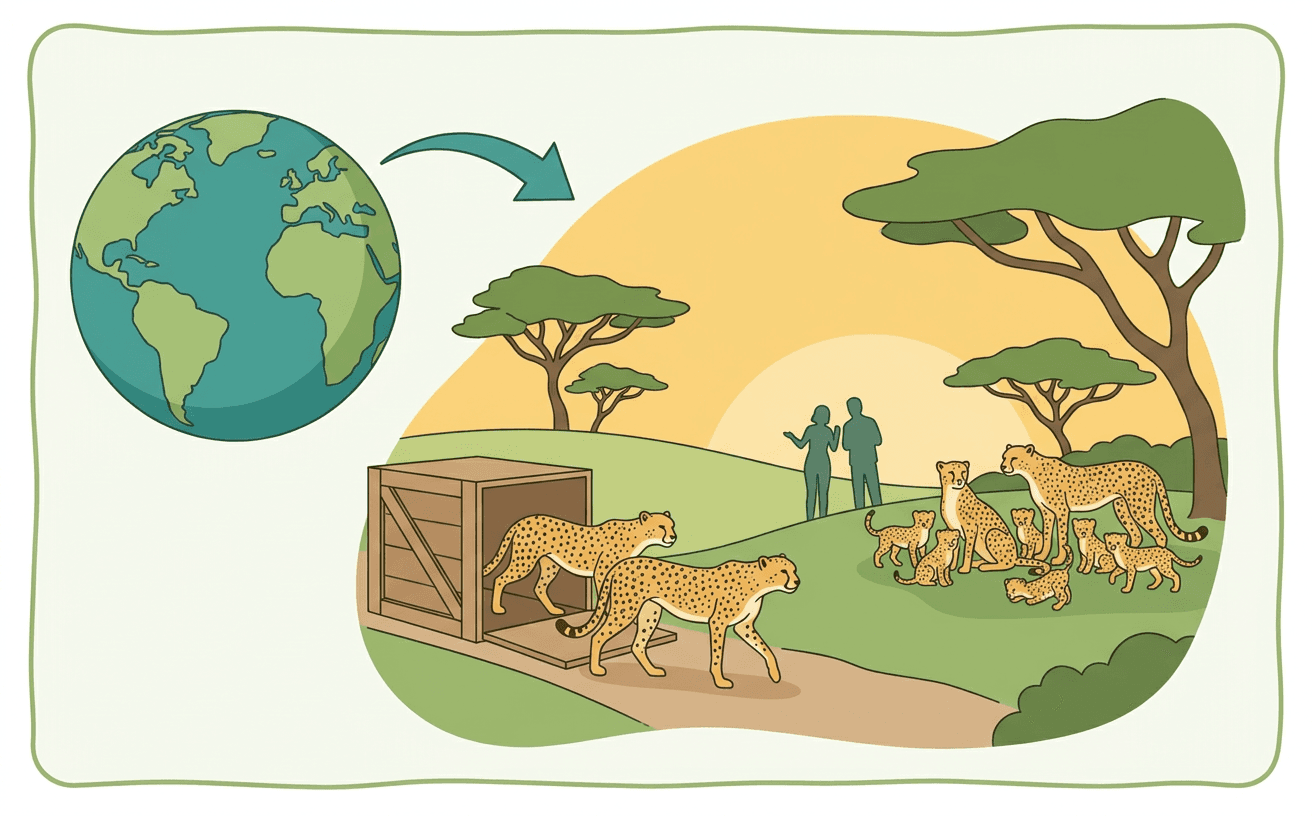
Project Cheetah, India's ambitious intercontinental cheetah translocation program, completes four years with the population rising to 52, including 32 cubs born in India. The project, which began with the introduction of cheetahs from Namibia and South Africa to , has expanded to include , focusing on establishing a viable meta-population and adapting the species to Indian open forest conditions.
Exam perspectives
This news highlights a critical component of Biodiversity & Conservation: species reintroduction and the establishment of a meta-population (a group of spatially separated populations of the same species that interact at some level). Project Cheetah is the world's first intercontinental large wild carnivore translocation project. The survival of the second generation of cubs and their adaptation to Indian open forests are significant indicators of ecological success. The project aims not just to bring back the cheetah, which went extinct in India in 1952, but also to restore open forest and grassland ecosystems. The expansion to Gandhi Sagar Sanctuary is a crucial step towards creating this meta-population, reducing the risk of localized extinction due to disease or natural disasters in a single location like Kuno National Park. UPSC often tests the ecological principles behind such projects, including carrying capacity, prey base requirements, and human-wildlife conflict management.
The geographical selection of habitats is central to this project's viability. Both Kuno National Park and Gandhi Sagar Sanctuary are located in Madhya Pradesh, characterized by dry deciduous forests and savanna habitats, which are considered suitable for cheetahs. The article notes that 17 cheetahs are currently in the open forest, monitored across an interstate landscape spanning 12 districts. This interstate monitoring underscores the vast territorial requirements of cheetahs and the necessity for contiguous habitats or corridors. For UPSC Prelims, mapping these locations, understanding their forest types, and recognizing the broader landscape (like the Chambal river basin near Gandhi Sagar) is essential. The shifting of cheetahs between different climatic zones (from Southern Africa to Central India) also raises questions about their physiological adaptation to different temperature regimes and seasonal variations.
The management of Project Cheetah involves complex international diplomacy and intensive domestic wildlife management. The project required negotiations with Namibia, South Africa, and later Botswana, reflecting soft power diplomacy in conservation. Domestically, the National Tiger Conservation Authority (NTCA) oversees the project, highlighting its expanded role beyond tigers. The continuous 24-hour monitoring and the phased release strategy (from enclosures to open forests) demonstrate a highly adaptive management approach. The project also necessitates coordination between central and state forest departments, particularly given the interstate movement of the animals. UPSC Mains questions could focus on the administrative challenges of large-scale conservation projects, including inter-agency coordination, international protocols (like CITES), and the balance between intensive management and natural ecological processes.
Key references
AI-generated study notes, sourced from The Hindu. Verify facts and figures with standard sources.