
Assam records world’s first-ever release of captive-bred slender-billed vultures
Context
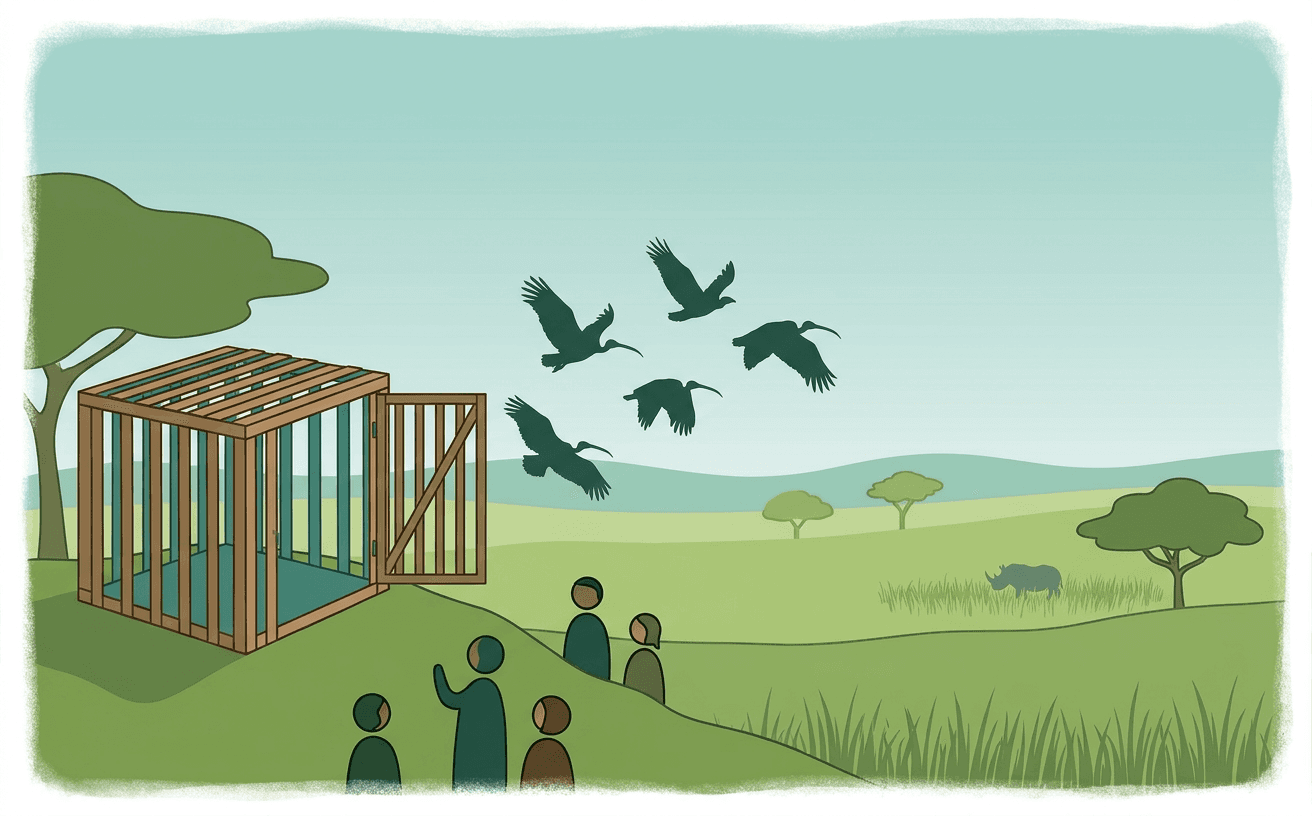
In a global first, five captive-bred slender-billed vultures (Gyps tenuirostris) were released into the wild at the in Assam. The release, coordinated by the (BNHS) and the Assam Forest Department, also included five white-rumped vultures (Gyps bengalensis). This milestone is crucial for India's vulture conservation efforts, which aim to rebuild populations decimated by a 99% decline over the past two decades due to veterinary drug toxicity.
Exam perspectives
This event highlights the critical role of ex-situ conservation (protecting an endangered species outside its natural habitat, often through captive breeding programs). The success of the Vulture Conservation Breeding Centre in Assam demonstrates how targeted scientific intervention can supplement wild populations. The release process itself is carefully managed; the birds were acclimatized in a 'soft release' aviary before being introduced to the wild, increasing their chances of survival. For UPSC Prelims, understanding the difference between in-situ (in natural habitat like National Parks) and ex-situ conservation is vital. The article also mentions the use of leg rings and tags for tracking, a standard practice in wildlife monitoring crucial for evaluating the success of such programs.
The catastrophic decline of India's Gyps vulture population, a near-extinction event, was primarily driven by diclofenac, a non-steroidal anti-inflammatory drug (NSAID) used in livestock. When vultures fed on carcasses treated with diclofenac, they suffered fatal kidney failure. The Indian government banned diclofenac for veterinary use in 2006, and later extended bans to other NSAIDs like aceclofenac, ketoprofen, and nimesulide. This illustrates a critical governance challenge: balancing agricultural/veterinary needs with ecological consequences. However, the article highlights an ongoing regulatory failure: accidental secondary poisoning from pesticides illegally used on carcasses to target stray dogs. This points to gaps in enforcement and the need for stronger local governance and awareness campaigns to protect scavengers, which are vital for ecosystem health.
The geographical context of this release is significant. The Kaziranga National Park and Tiger Reserve is located in the Brahmaputra Valley of Assam, a region historically important for vulture populations. The article specifically mentions three species: the Slender-billed Vulture (Gyps tenuirostris), the White-rumped Vulture (Gyps bengalensis), and the Himalayan Griffon (Gyps himalayensis). Aspirants must note their IUCN conservation status. Both the Slender-billed and White-rumped vultures are classified as Critically Endangered by the International Union for Conservation of Nature (IUCN), making this successful breeding and release program globally significant. Vultures act as nature's garbage disposal system; their decline has geographically broad consequences, including increased risks of diseases like rabies spreading through feral dog populations.
Key references
AI-generated study notes, sourced from The Hindu. Verify facts and figures with standard sources.