
Beyond Kudankulam’s fence, a cybersecurity challenge
Context
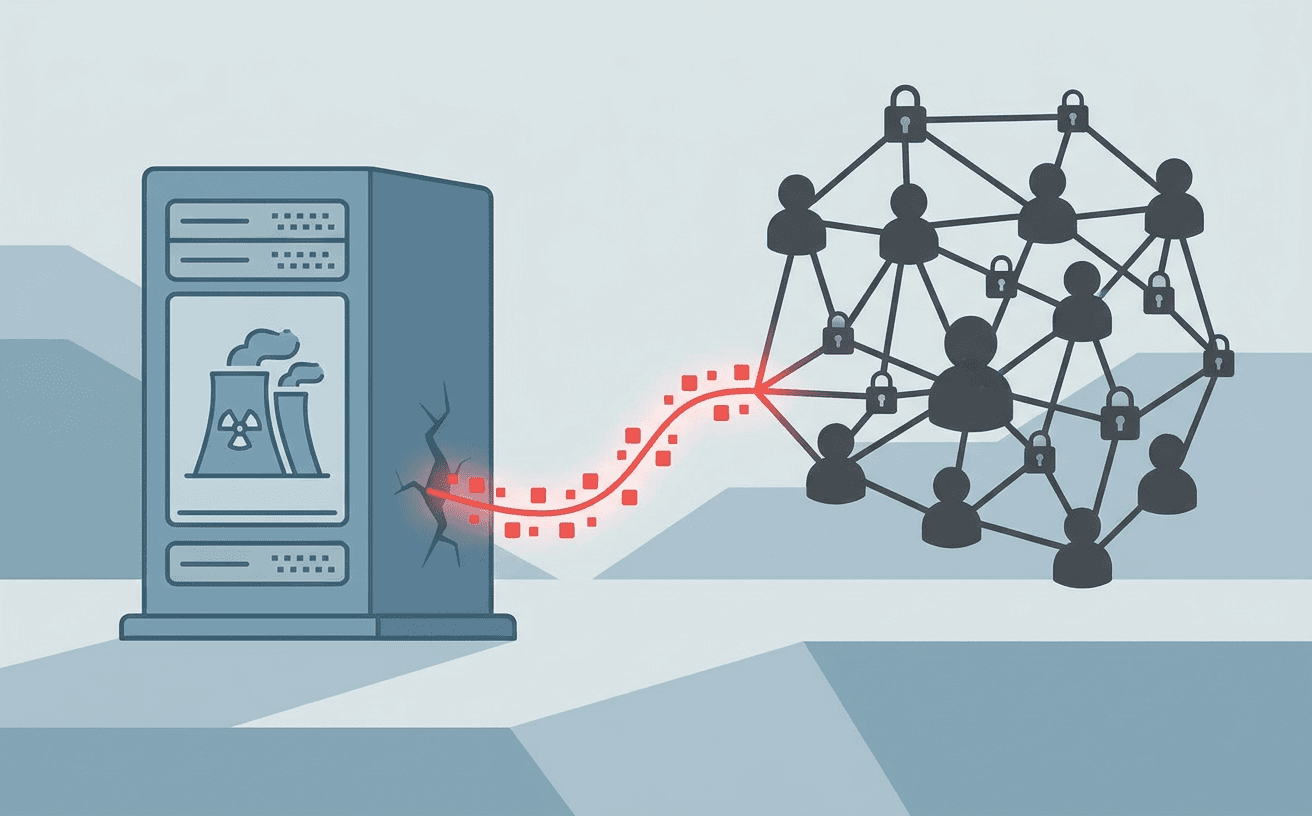
A data breach involving files related to the Kudankulam nuclear power project (KKNPP) in Tamil Nadu was reported on the dark web. The leak, originating from a third-party data centre hosting a contractor's server, highlights a critical gap in India's cybersecurity framework: sensitive information regarding critical infrastructure is increasingly vulnerable when held by private contractors outside the secure perimeter of the facility itself.
Exam perspectives
This incident exposes a significant vulnerability in protecting Critical Information Infrastructure (CII). Under Section 70A of the Information Technology Act, 2000, the government is responsible for protecting systems whose incapacitation would have a debilitating impact on national security, economy, or public health. While core facilities like nuclear reactors are typically air-gapped (isolated from external networks), this breach demonstrates that the 'ecosystem' around these facilities—contractors, suppliers, and data centres—holds operationally relevant data that is often less secure. The National Critical Information Infrastructure Protection Centre (NCIIPC) oversees CII, and CERT-In handles incident response, but current regulations struggle to enforce uniform security standards across complex supply chains. This creates a scenario where the security of a vital national asset is only as strong as the weakest link in its supply network, allowing sophisticated threat actors to gather intelligence for future attacks or exploit vulnerabilities through third parties.
The data breach underscores a growing challenge in cybersecurity governance, particularly concerning accountability and regulatory oversight. As India pursues initiatives like Atmanirbhar Bharat, digital public infrastructure, and the privatization of defence and space sectors, sensitive data increasingly flows into the hands of private entities. Current legal frameworks, primarily relying on contractual obligations rather than statutory mandates for third-party data protection, are insufficient. The Digital Personal Data Protection Act, 2023 focuses on personal data and generally does not cover technical information like engineering drawings. This legal lacuna leads to a situation where accountability is fragmented; the operator blames the contractor, who in turn blames the cloud provider. To address this, governance structures must evolve to ensure that security obligations follow the data itself, mandating defined standards, audits, and liability for all entities handling critical infrastructure information, regardless of their position in the supply chain.
The implications of such breaches extend beyond immediate data loss; they pose long-term strategic risks. While the Nuclear Power Corporation of India Limited (NPCIL) confirmed that the leaked data pertained to non-nuclear infrastructure, even seemingly benign information—such as engineering drawings, personnel details, and operational schedules—can be weaponized. Threat actors, potentially state-sponsored groups like the Lazarus Group (previously linked to a malware incident at Kudankulam in 2019), can use this 'metadata' to map networks, identify vulnerable targets for phishing, and discover indirect pathways into secure systems. This highlights the necessity for rigorous data classification protocols. Contractors should only possess the minimum necessary data for their specific tasks and for a limited duration. The evolving threat landscape demands a shift from perimeter-based defense to a holistic approach that secures the entire lifecycle and ecosystem of critical infrastructure projects.
Key references
AI-generated study notes, sourced from The Hindu. Verify facts and figures with standard sources.