
Bleached corals brought back to luminous life, in two lab experiments
Context
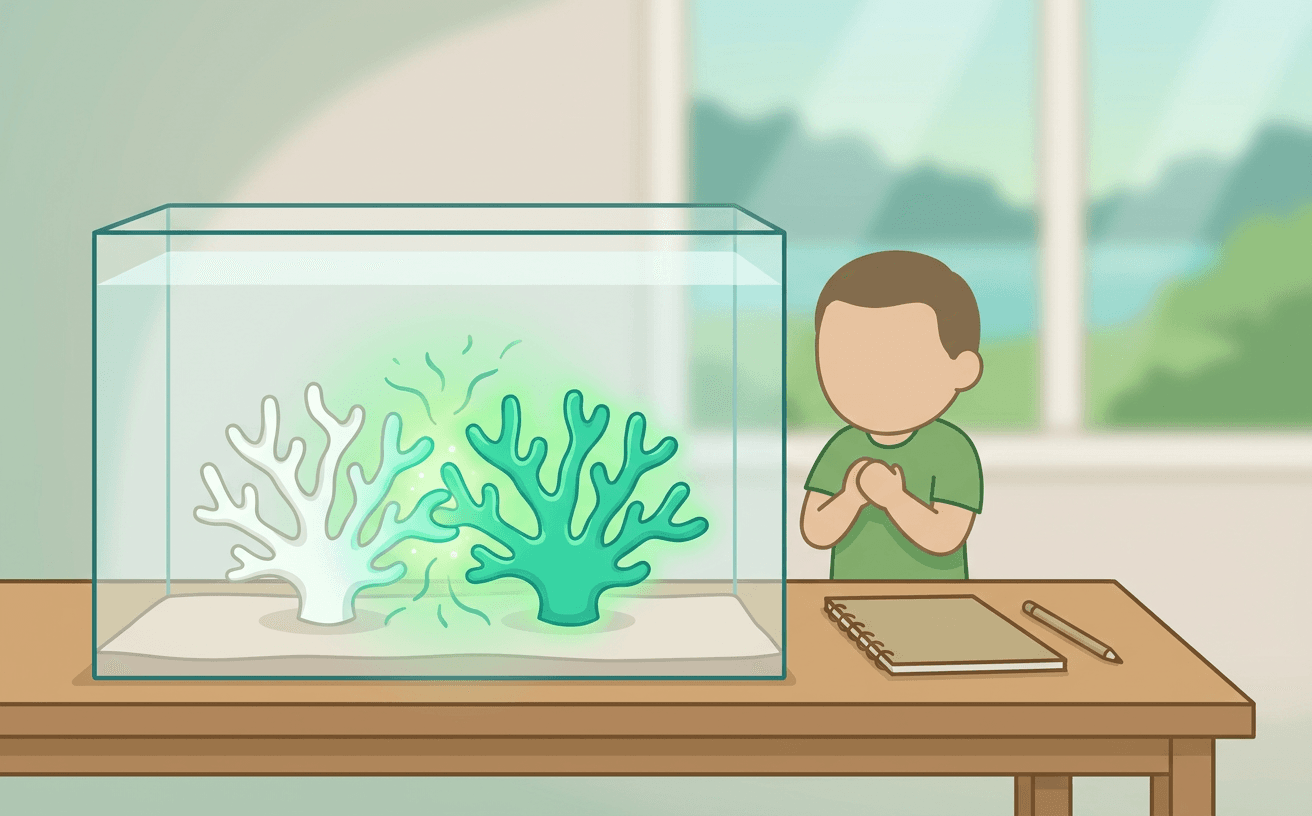
Recent laboratory studies published in Science and Environmental Microbiology Reports demonstrate that bleached corals can rapidly recover through direct contact with healthy corals. This contact facilitates the transfer of symbiotic algae, which are essential for coral survival and are expelled during heat stress, causing bleaching. The findings offer a potential, albeit challenging, mechanism for restoring coral reefs devastated by global warming and marine heatwaves.
Exam perspectives
The article highlights the severe impact of marine heatwaves, exacerbated by the 2023 El Niño, on global coral reefs, leading to the fourth mass coral bleaching event. Corals live in a symbiotic relationship with zooxanthellae (microscopic algae). The coral provides a protected environment, and the algae, through photosynthesis, supply most of the coral's nutrients and its vibrant color. Under thermal stress caused by warming oceans, corals expel these algae, turning white or 'bleached.' While bleaching doesn't mean immediate death, it significantly weakens the coral, making it susceptible to disease and mortality if heat stress persists. The recent experiments reveal a natural process where healthy corals can transfer these symbiotic algae back to bleached corals through physical contact or even through water, initiating rapid recovery. This process, however, is currently limited to corals of the same genetic background. For UPSC, this underscores the vulnerability of marine ecosystems to Climate Change and the urgent need to understand natural resilience mechanisms to mitigate Biodiversity Loss.
The geographical context of coral bleaching in India is crucial. The article specifically mentions Lakshadweep and the Mahatma Gandhi Marine National Park in the Andamans. Lakshadweep, an archipelago of atolls (ring-shaped coral reefs), is particularly vulnerable. Coral reefs are often termed the 'rainforests of the sea' due to their immense biodiversity, supporting a quarter of all marine life despite covering less than 1% of the ocean floor. The structural integrity of these reefs is vital. As corals die, the complex reef architecture simplifies, reducing habitat for marine life and diminishing the reef's ability to produce calcium carbonate. This structural degradation severely compromises the reef's function as a natural barrier, increasing the vulnerability of low-lying atoll islands to coastal erosion, storm surges, and Sea Level Rise. This represents an existential threat to the population of Lakshadweep. UPSC questions could link the physical geography of coral atolls to the socio-economic impacts of climate change on island communities.
The studies showcase innovative scientific approaches to marine conservation. One key experiment involved injecting a lab-created, heat-tolerant algal strain (SS8) into chemically bleached corals. Once these corals recovered, they acted as 'donors,' successfully transferring this heat tolerance to other bleached corals through physical contact and even through the surrounding water. This demonstrates a potential pathway for assisted evolution or assisted gene flow, where scientific interventions aim to accelerate the adaptation of species to rapidly changing environments. However, the article notes the massive challenge of scaling up these lab successes to reef-wide interventions. Therefore, while these scientific advancements offer hope, experts emphasize that they must be coupled with systemic efforts to reduce local stressors, such as pollution and overfishing, to build overall ecosystem resilience. For the exam, understanding the distinction between preventative measures (like shading or genetic engineering) and recovery interventions (like algal transfer) is important, along with the ethical and practical limitations of large-scale bio-interventions in open marine systems.
Key references
AI-generated study notes, sourced from The Hindu. Verify facts and figures with standard sources.