
China border has become 'more alive,' India enhancing frontier infrastructure: Jaishankar
Context
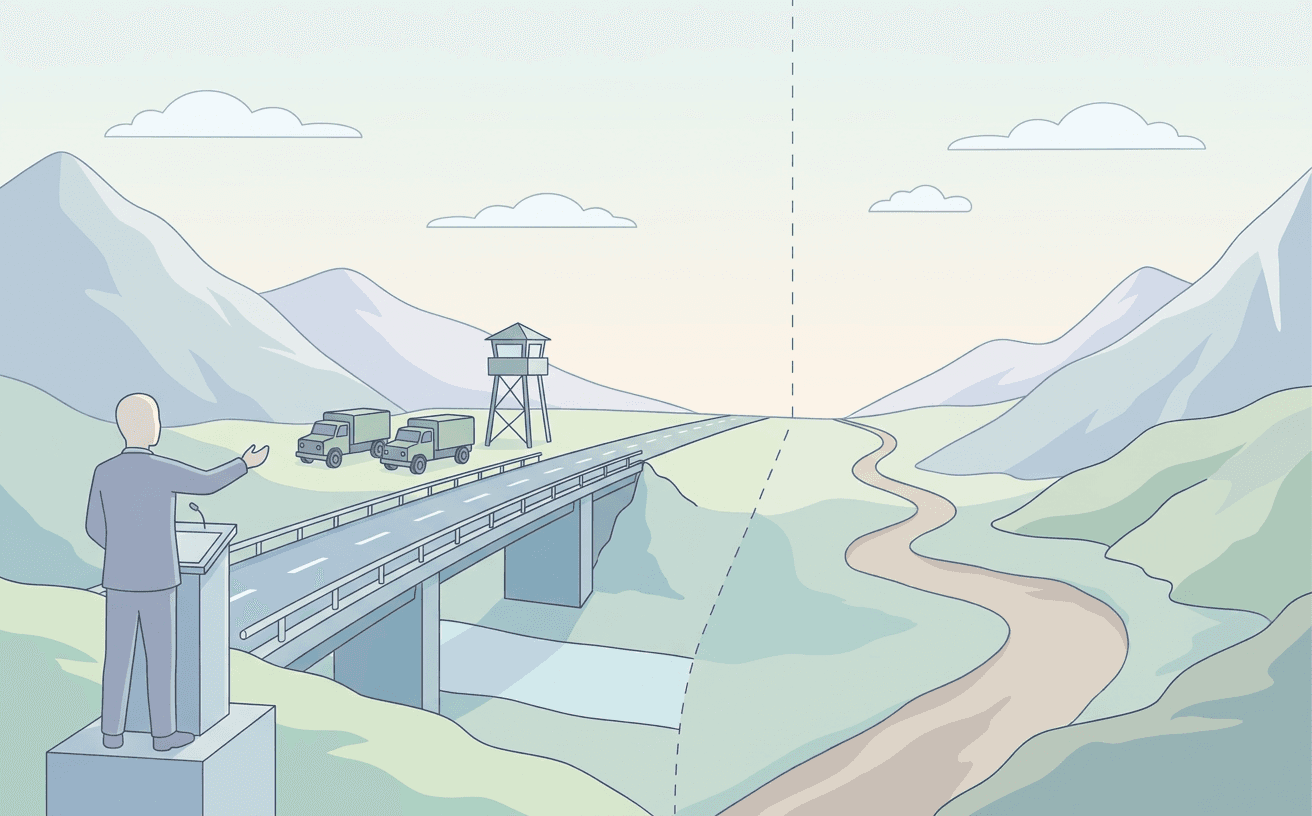
External Affairs Minister S. Jaishankar emphasized India's enhanced border infrastructure and military capabilities along the (LAC) following the 2020 Galwan Valley clash. He noted a significantly increased and sustained troop commitment to the border, highlighting a shift in India's strategic approach towards China. This follows recent efforts to normalize relations between the two nations after their meeting at the Kazan summit.
Exam perspectives
Border Management is a crucial component of India's internal security architecture, primarily governed by the Ministry of Home Affairs in coordination with the Ministry of Defence. The article highlights a strategic shift from the historical policy of 'neglect'—where lack of infrastructure was seen as a defensive measure—to an active build-up of border infrastructure. This involves the construction of roads, tunnels, and bridges by agencies like the Border Roads Organisation, facilitating rapid troop deployment and logistical support. The ongoing standoff and subsequent infrastructure push underscore the transition from a relatively peaceful frontier to a 'live' border requiring sustained military presence. UPSC often tests the challenges in managing the Line of Actual Control (LAC) compared to the Line of Control (LoC), specifically focusing on differing perceptions of the boundary and the difficult terrain.
The India-China bilateral relationship is currently defined by an intricate balance between geopolitical competition and the need for diplomatic engagement. The Galwan Valley clash marked an inflection point, leading to a prolonged military standoff and strained ties. While diplomatic efforts are ongoing to disengage and normalize relations, as seen in the recent Kazan summit, the core issue of boundary resolution remains intractable. The EAM's comments emphasize that normalization cannot occur in a vacuum; peace and tranquility on the border remain a prerequisite for broader engagement. Furthermore, India is addressing the economic asymmetry between the two nations by focusing on domestic manufacturing and 'leap-frogging' strategies rather than attempting to match China symmetrically across all sectors. This involves building specific national strengths and mitigating dependencies, aligning with policies like Atmanirbhar Bharat.
The narrative surrounding economic asymmetry touches upon the historical divergence in economic trajectories of India and China since the 1980s. While both economies were comparable in size during that period, China's early adoption of modernization and industrialization policies propelled it significantly ahead. India's post-1991 economic reforms, while transformative, did not sustain the comprehensive sector-by-sector growth required to match China's manufacturing dominance. The strategy to address this gap, termed 'leap-frogging,' involves bypassing intermediate stages of development to adopt advanced technologies or practices directly. For UPSC, understanding this involves analyzing the structural differences between the two economies, the persistent trade deficit in China's favor, and India's current policy interventions aimed at boosting manufacturing, such as the Production Linked Incentive (PLI) schemes, to enhance self-reliance and global competitiveness.
Key references
AI-generated study notes, sourced from The Hindu. Verify facts and figures with standard sources.