
Commerce ministry sets up committee for better utilisation of RELIEF initiative for exporters
Context
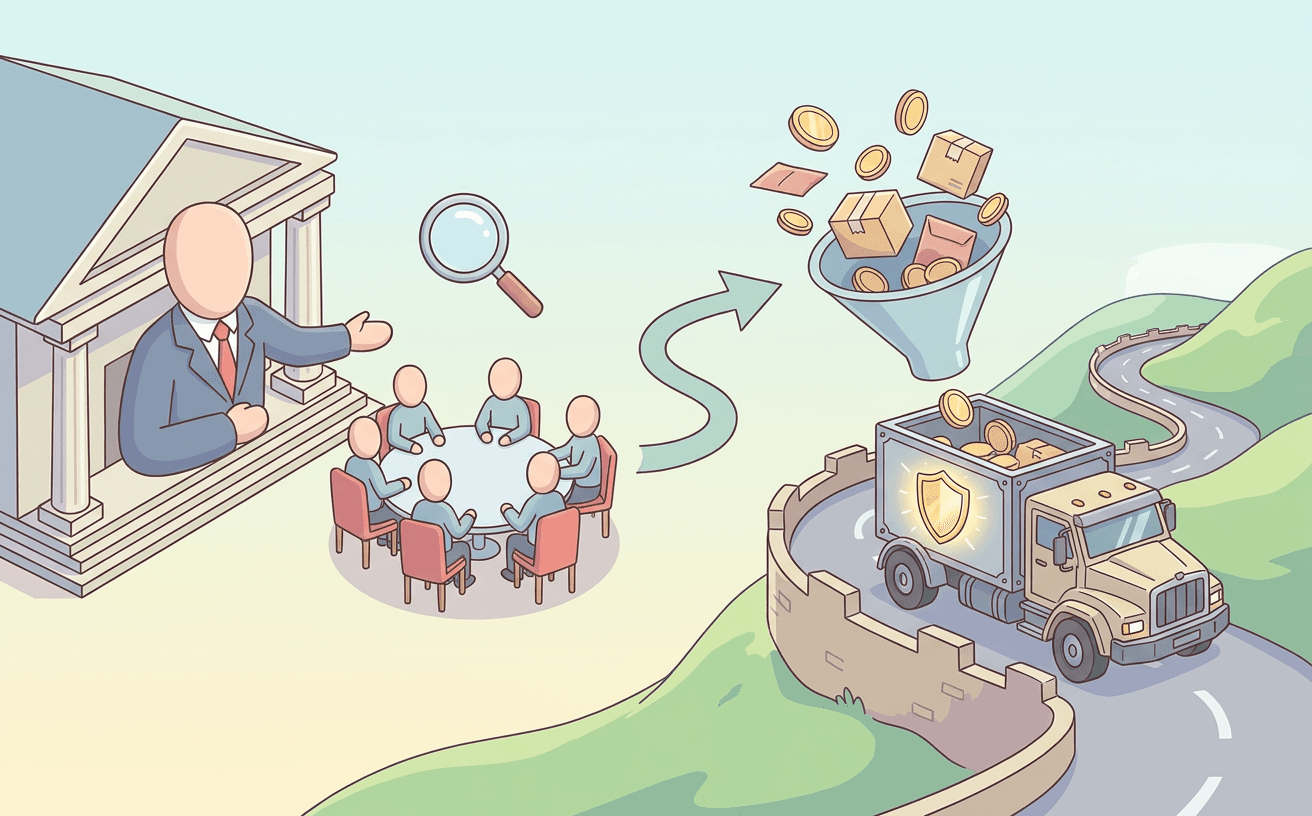
The has constituted a six-member sub-committee to improve the utilization of funds and uptake of the (RELIEF) initiative. This initiative, part of the broader (EPM), is designed to protect Indian exporters from the financial impact of rising freight costs, higher insurance premiums, and maritime trade disruptions, particularly in the Gulf and West Asian regions. The committee will review implementation progress, identify barriers to fund utilization, and recommend measures for better uptake.
Exam perspectives
This development highlights the critical role of government intervention in mitigating exogenous shocks (external factors negatively impacting the economy) that threaten India's export competitiveness. The Resilience and Logistics Intervention for Export Facilitation (RELIEF) initiative is a direct response to global supply chain vulnerabilities, specifically maritime trade disruptions in crucial corridors like the Gulf and West Asia (e.g., the Red Sea crisis). These disruptions lead to soaring freight costs and increased insurance premiums, significantly squeezing exporters' margins and making Indian goods less competitive globally. By establishing a dedicated sub-committee to ensure the effective utilization of funds allocated under the Export Promotion Mission (EPM), the government aims to provide targeted financial support to exporters, thereby stabilizing the export sector and contributing to broader macroeconomic stability. UPSC aspirants must understand how geopolitical tensions impact supply chain resilience and the mechanisms governments use to shield domestic industries from global volatility.
The formation of the sub-committee reflects a proactive approach to administrative efficiency and scheme optimization. Often, government schemes suffer from under-utilization of funds due to complex procedures, lack of awareness, or systemic bottlenecks. The Directorate General of Foreign Trade (DGFT) has acknowledged this potential issue with the RELIEF initiative by constituting a committee specifically tasked with examining factors affecting its uptake. The inclusion of officials from the Department of Commerce, the Department of Financial Services, and the Export Credit Guarantee Corporation of India (ECGC) demonstrates an inter-departmental approach to problem-solving. This ensures that different aspects of the issue—from trade policy (DGFT) to financial backing (DFS) and risk mitigation (ECGC)—are addressed comprehensively. The committee's mandate to review claims processed and recommend corrective measures exemplifies evidence-based policymaking and the continuous monitoring necessary for the successful implementation of public policy. This is relevant for GS Paper 2 questions on governance transparency, accountability, and the mechanisms for effective scheme implementation.
The RELIEF initiative is a domestic policy response inextricably linked to international geopolitics. The article explicitly mentions maritime trade disruptions in the Gulf and West Asian corridors. This refers to the ongoing instability in regions like the Red Sea, where attacks on commercial shipping have forced vessels to reroute, drastically increasing transit times and costs. This highlights the vulnerability of global chokepoints (strategic narrow waterways essential for global trade). India's heavy reliance on these maritime routes for both energy imports and merchandise exports makes it particularly susceptible to such geopolitical shocks. The RELIEF initiative underscores the intersection of economic policy and foreign affairs; as India seeks to expand its global trade footprint, it must simultaneously develop domestic mechanisms to buffer against international instability. This connects directly to GS Paper 2 (International Relations), where understanding the economic fallout of geopolitical conflicts is crucial.
Key references
AI-generated study notes, sourced from Economic Times. Verify facts and figures with standard sources.