
COP31 outcome reality check for process not delivering at pace climate crisis demands: Scientists
Context
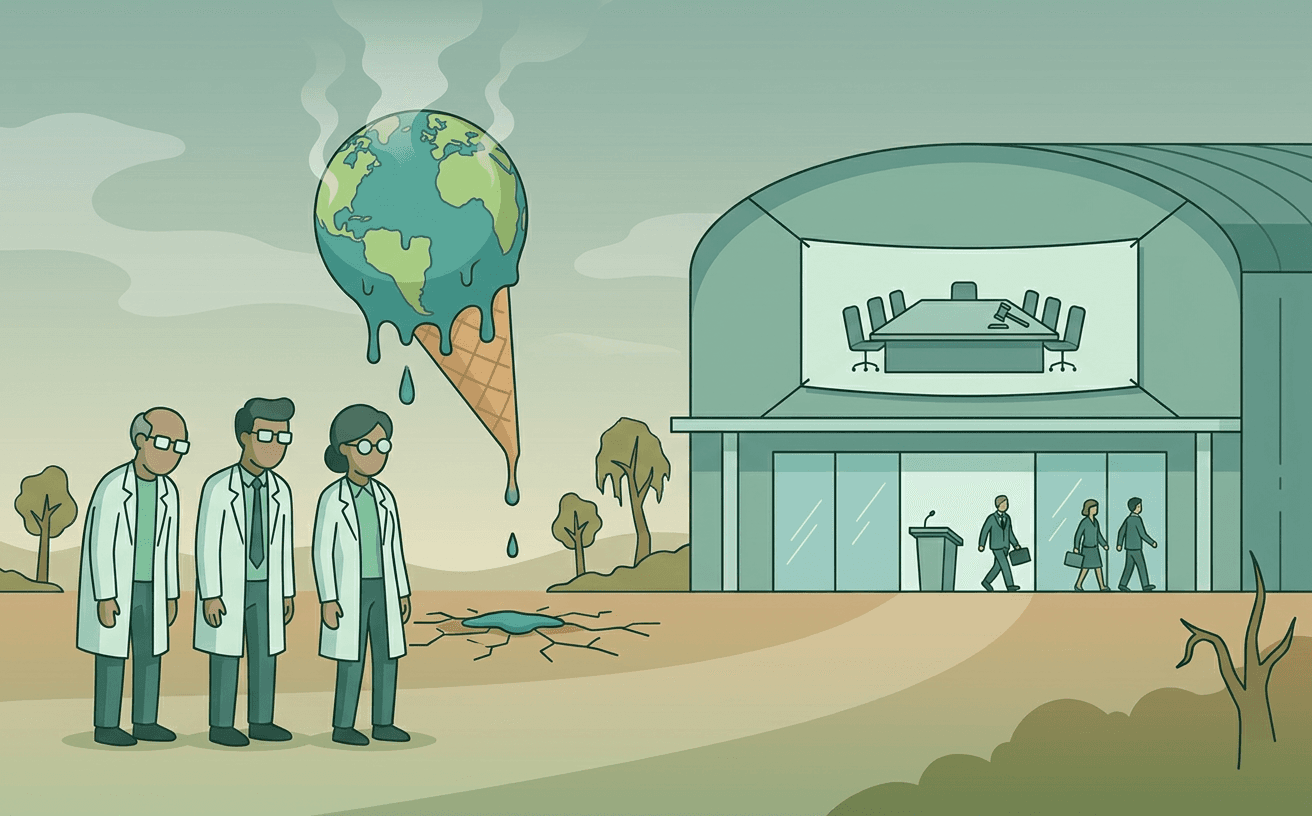
Scientists are expressing deep concern over the perceived failure of the UN Climate Change Conference to deliver urgent climate action commensurate with the escalating climate crisis. The summit concluded without strong consensus on critical issues like fossil fuel phase-out and adequate climate finance, despite mounting evidence of accelerating climate impacts such as rapid glacier melt, increasing cyclone frequency, and rising global temperatures.
Exam perspectives
The article underscores the critical disconnect between escalating climate impacts and the slow pace of international negotiations under the UNFCCC. Scientists point to compounding events like increasing post-monsoon cyclones in India, rapid melting of Himalayan glaciers, and global temperature anomalies as evidence of an accelerating crisis. The dilution of strong language on fossil fuel phase-out at COP31, contrary to the commitment made at COP28 in Dubai to 'transition away' from fossil fuels, highlights the challenge of achieving consensus among diverse national interests. For UPSC Mains (GS-3), this illustrates the tension between the principle of Common But Differentiated Responsibilities and Respective Capabilities (CBDR-RC) and the urgent need for universal, ambitious mitigation efforts to limit warming to 1.5°C as per the Paris Agreement.
A significant concern raised is the potential disruption to the IPCC process, specifically the timeline and budget for the Seventh Assessment Report (AR7). The IPCC provides the crucial scientific foundation for global climate policy. Blocking its budget is viewed by some scientists as an 'attack on science.' The timely delivery of AR7 is vital for informing the second Global Stocktake (GST) scheduled for 2028, a mechanism established under the Paris Agreement to assess collective progress toward its long-term goals. UPSC aspirants should understand the role of the IPCC as a consensus-based scientific body and how its reports influence international negotiations and national climate action plans (Nationally Determined Contributions - NDCs).
The article highlights specific geographical vulnerabilities, particularly for India and mountainous regions (the cryosphere). India's susceptibility to extreme weather is emphasized due to its long coastline bordered by a warming ocean, which triggers more frequent and intense cyclones, particularly in the post-monsoon season. The rapid melting of Himalayan glaciers poses severe threats to water security and increases the risk of Glacial Lake Outburst Floods (GLOFs) in downstream areas like Nepal and Tibet. This reinforces the need for robust climate adaptation strategies, early warning systems, and enhanced climate resilience. For GS-1 (Geography) and GS-3 (Disaster Management), understanding these regional manifestations of global warming is essential for analyzing India's vulnerability profile.
Key references
AI-generated study notes, sourced from The Hindu. Verify facts and figures with standard sources.