
Courts cannot be unmindful when precious water bodies remain unprotected: SC
Context
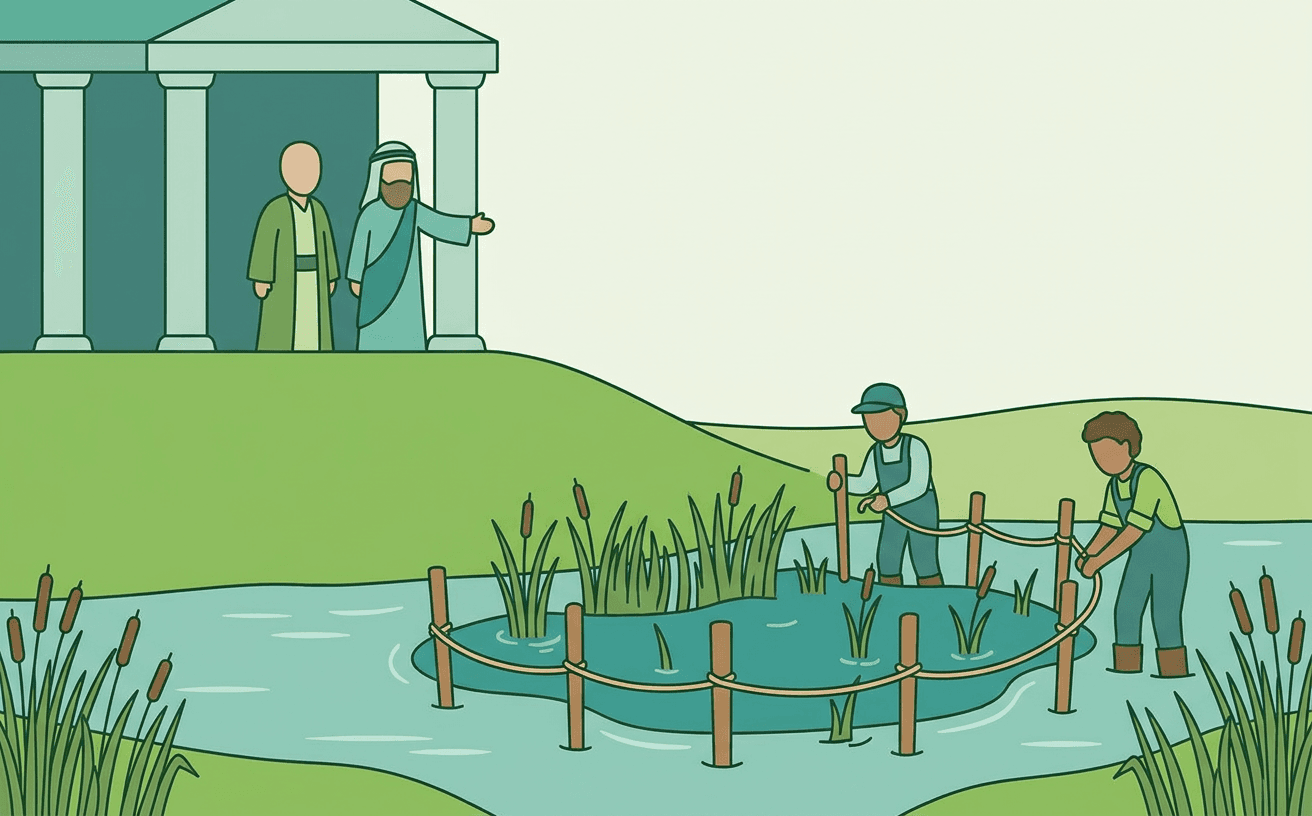
The has directed all states and to complete physical ground-truthing and demarcation of wetlands within four months. Hearing a Public Interest Litigation (PIL), the Court emphasized that protecting water bodies is essential to the fundamental right to life under of the Constitution, expressing concern that ground-truthing remains incomplete nine years after the publication of relevant rules.
Exam perspectives
This order exemplifies the concept of Judicial Activism, where the judiciary intervenes to ensure executive accountability when authorities fail to implement existing laws. By explicitly linking access to water bodies and drinking water to the right to life under Article 21, the Supreme Court reinforces the expansive interpretation of fundamental rights established in cases like Subhash Kumar vs. State of Bihar (1991), which held that the right to life includes the right to a pollution-free environment. For UPSC Mains (GS-2), this highlights the crucial role of Public Interest Litigation (PIL) in environmental jurisprudence and the ongoing tension between judicial directives and administrative delays. Candidates should be prepared to discuss how the judiciary uses constitutional mandates to compel the executive to fulfill its statutory duties regarding environmental protection.
The delayed implementation of wetland demarcation points to critical gaps in environmental governance under the Wetlands (Conservation and Management) Rules, 2017. Wetlands, often referred to as the 'kidneys of the landscape,' play a vital role in groundwater recharge, flood mitigation, and biodiversity conservation. The Court's insistence on 'ground-truthing' (verifying satellite or secondary data through physical surveys) is essential for effective mapping and subsequent protection from encroachment or land-use changes. For GS-3, this links directly to the topic of conservation and environmental degradation. The persistent failure of states to demarcate these areas over nine years underscores the challenges in enforcing environmental regulations at the ground level, often due to a lack of political will, administrative capacity, or competing land-use demands.
The prolonged delay in ground-truthing highlights significant issues in cooperative federalism and administrative efficiency. While the central government formulates rules like the Wetlands (Conservation and Management) Rules, 2017, implementation relies on state-level authorities (State Wetland Authorities). The senior counsel's plea for more time (6-9 months) reflects the practical challenges of inter-departmental coordination (revenue, forest, and water resources departments) required for physical surveys. For UPSC, this is a classic example of the 'implementation gap' in Indian governance. It demonstrates how policy design must account for the state capacity required for execution. The Court's strict four-month deadline acts as a forcing mechanism to overcome bureaucratic inertia, making it a relevant case study for discussions on improving public administration and environmental regulatory frameworks.
Key references
AI-generated study notes, sourced from The Hindu. Verify facts and figures with standard sources.