
Delhi air ‘very poor’ with AQI reading of 364
Context
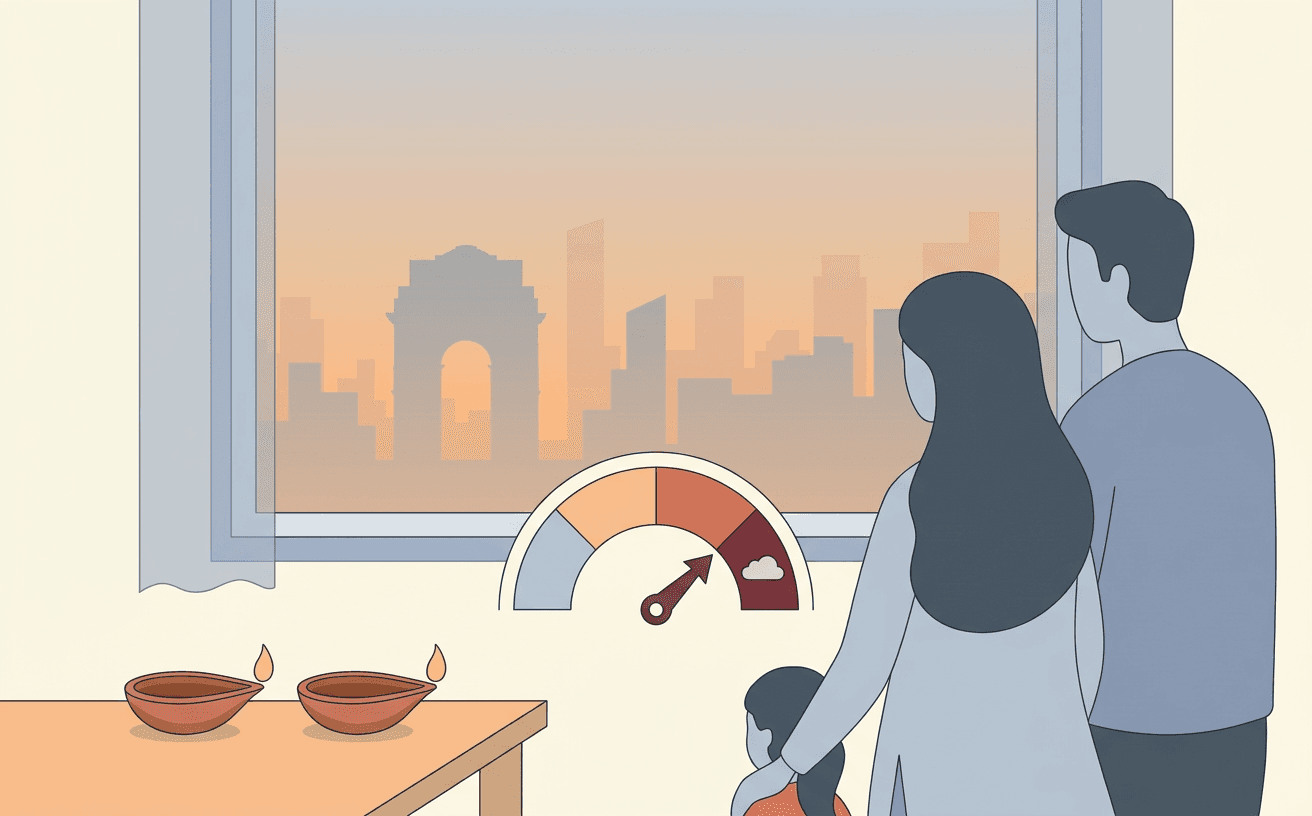
The air quality in Delhi has deteriorated significantly, reaching the 'very poor' category with an Air Quality Index (AQI) of 364 just before Diwali. In response to the worsening conditions and following directives from the invoking Stage III of the , the Delhi government has mandated hybrid classes for students up to class 5 across all schools.
Exam perspectives
The recurring crisis of severe air pollution in Delhi highlights the complex interplay of meteorological and anthropogenic factors. The Air Quality Index (AQI), developed by the Central Pollution Control Board, serves as a crucial metric for communicating health risks associated with air pollution, categorizing air quality from 'good' (0-50) to 'severe' (401-500). During the onset of winter, Delhi experiences a phenomenon known as temperature inversion, where a layer of cold air gets trapped near the surface by a layer of warmer air above it. This prevents the dispersion of pollutants, leading to a significant buildup of particulate matter (PM2.5 and PM10). This meteorological condition is exacerbated by anthropogenic activities such as vehicular emissions, industrial pollution, construction dust, and the seasonal burning of agricultural residue in neighboring states. The role of the Commission for Air Quality Management (CAQM), established under the Commission for Air Quality Management in National Capital Region and Adjoining Areas Act, 2021, is central to coordinating efforts across multiple states to address this multifaceted issue. For UPSC, candidates must understand the scientific principles behind temperature inversion, the specific pollutants monitored under the AQI, and the mandate and powers of the CAQM in enforcing pollution control measures.
The implementation of the Graded Response Action Plan (GRAP) exemplifies a dynamic policy response to environmental crises. GRAP is an emergency response mechanism that outlines specific actions to be taken based on the prevailing AQI levels. Stage III of GRAP, invoked in this instance, typically involves stringent measures such as a ban on non-essential construction and demolition activities, restrictions on the entry of certain types of vehicles into the city, and increased frequency of mechanized sweeping and water sprinkling on roads. The decision to mandate hybrid classes for primary school children reflects a crucial aspect of governance: prioritizing public health and child welfare in the face of environmental hazards. This demonstrates the necessity for inter-departmental coordination, as seen in the collaboration between the CAQM, the Delhi government, and the Directorate of Education. The effectiveness of GRAP, however, often hinges on the robust enforcement of these measures by various municipal and state agencies. From a UPSC perspective, the focus should be on evaluating the efficacy of GRAP as a policy tool, the challenges in its enforcement, and the broader implications of environmental degradation on public health policy and the right to a healthy environment, interpreted under Article 21 of the Constitution.
The impact of severe air pollution extends far beyond environmental concerns, significantly affecting social infrastructure, particularly education. The mandate for hybrid classes underscores the vulnerability of children to poor air quality, as their developing respiratory systems are more susceptible to the harmful effects of particulate matter. While the shift to online or hybrid learning mitigates immediate health risks, it also brings to the forefront issues of digital equity. Students from marginalized communities may lack access to reliable internet connectivity and necessary devices, potentially widening the learning gap. This highlights the need for inclusive policy design that anticipates and addresses the socioeconomic disparities exacerbated by environmental crises. Furthermore, the recurring nature of this pollution crisis emphasizes the necessity for long-term, sustainable solutions rather than just relying on reactive, emergency measures. For UPSC, candidates should analyze the cascading effects of environmental issues on vulnerable populations, the intersection of environmental policy with social equity, and the long-term socio-economic costs of air pollution on human capital development.
Key references
AI-generated study notes, sourced from The Hindu. Verify facts and figures with standard sources.