
Delhi overtakes Lahore as world's most polluted city as air quality drops
Context
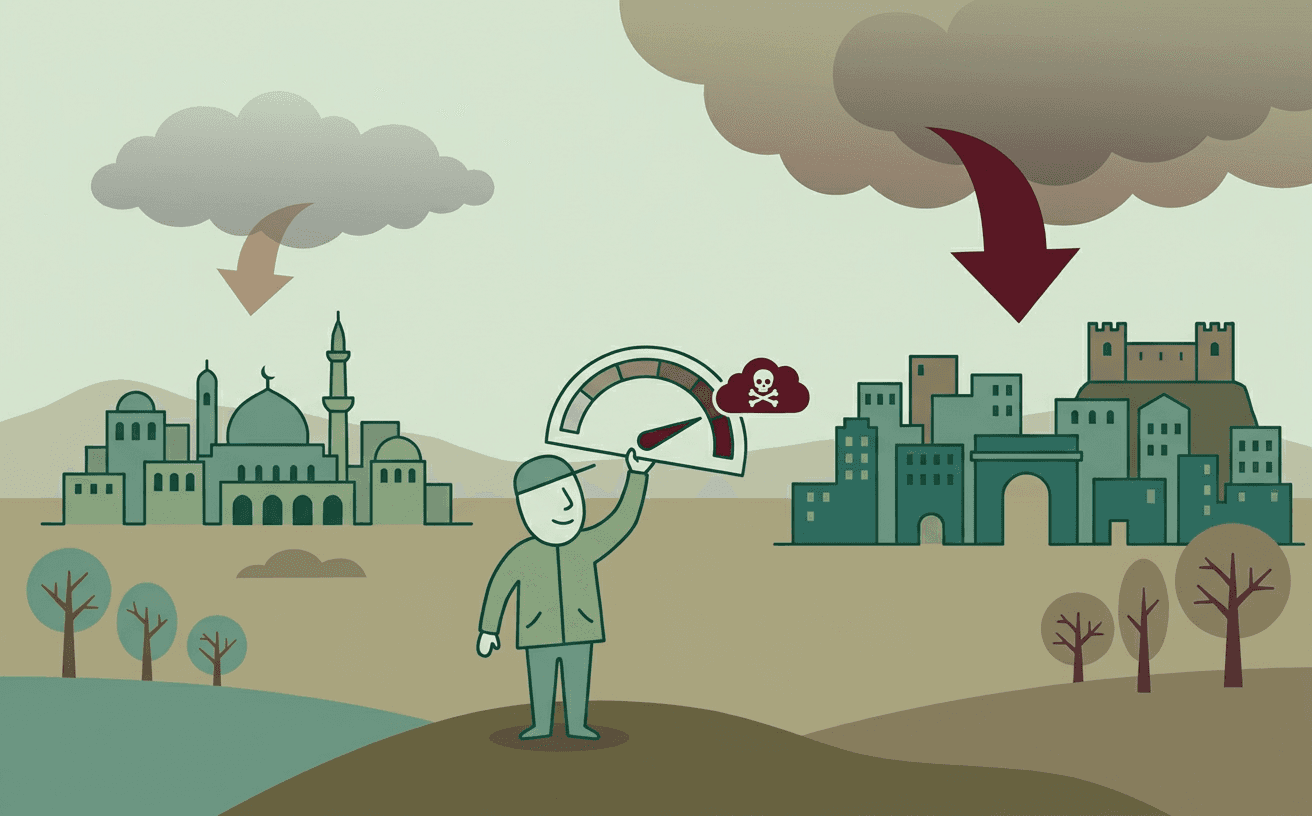
Delhi has surpassed Lahore to become the world's most polluted city, recording 'hazardous' air quality levels. The severe smog episode highlights the recurring seasonal crisis in northern India, driven by a combination of vehicular emissions, construction dust, agricultural stubble burning, and specific meteorological conditions.
Exam perspectives
The Air Quality Index (AQI) is a critical tool for communicating health risks associated with air pollution. The article highlights a discrepancy between the readings of IQAir and the Central Pollution Control Board (CPCB). This occurs because the CPCB calculates the AQI based on the concentration of eight major pollutants (PM10, PM2.5, NO2, SO2, CO, O3, NH3, and Pb) over specific time periods, converting these measurements into a single index value. IQAir's methodology may weigh these pollutants differently or focus primarily on PM2.5. UPSC often tests the composition of the National AQI and the statutory backing of the CPCB under the Water (Prevention and Control of Pollution) Act, 1974 and the Air (Prevention and Control of Pollution) Act, 1981. The recurring severe pollution demands an understanding of the Graded Response Action Plan (GRAP), an emergency measure implemented by the Commission for Air Quality Management (CAQM) when AQI breaches specific thresholds.
Delhi's severe winter pollution is a classic example of how topography and meteorology exacerbate anthropogenic emissions. The city experiences temperature inversion during winters. Normally, warm air rises and disperses pollutants. However, in winter, the ground cools rapidly, cooling the air immediately above it, while the air higher up remains relatively warmer. This creates an 'inversion layer' that acts like a lid, trapping cold, heavy air and pollutants close to the surface. Furthermore, the Himalayas to the north block the escape of pollutants, and the slow wind speeds during this season prevent dispersion. The burning of agricultural residue (stubble burning) in neighboring states like Punjab and Haryana, combined with north-westerly winds, transports significant particulate matter into the Delhi-NCR region, compounding the crisis. UPSC candidates must link these geographical phenomena (inversion, wind patterns, topography) to the severity of the smog.
The persistent failure to control Delhi's air pollution highlights complex governance challenges, particularly concerning cooperative federalism. While the Supreme Court has repeatedly intervened, directing states to halt stubble burning, enforcement remains weak due to economic constraints on farmers and political sensitivities. The establishment of the Commission for Air Quality Management (CAQM) in 2021 was a legislative attempt to address this by creating an overarching body for the National Capital Region and adjoining areas, superseding older bodies. However, the crisis underscores the limitations of reactive measures (like GRAP) versus proactive systemic changes (like promoting crop diversification away from water-intensive paddy, improving public transport, and managing construction dust). From a rights perspective, severe air pollution is increasingly recognized as a violation of the Right to Life under Article 21 of the Constitution, which courts have interpreted to include the right to a clean environment.
Key references
AI-generated study notes, sourced from The Hindu. Verify facts and figures with standard sources.