
Delhi’s air was already toxic before Deepavali. Here’s what a new study found
Context
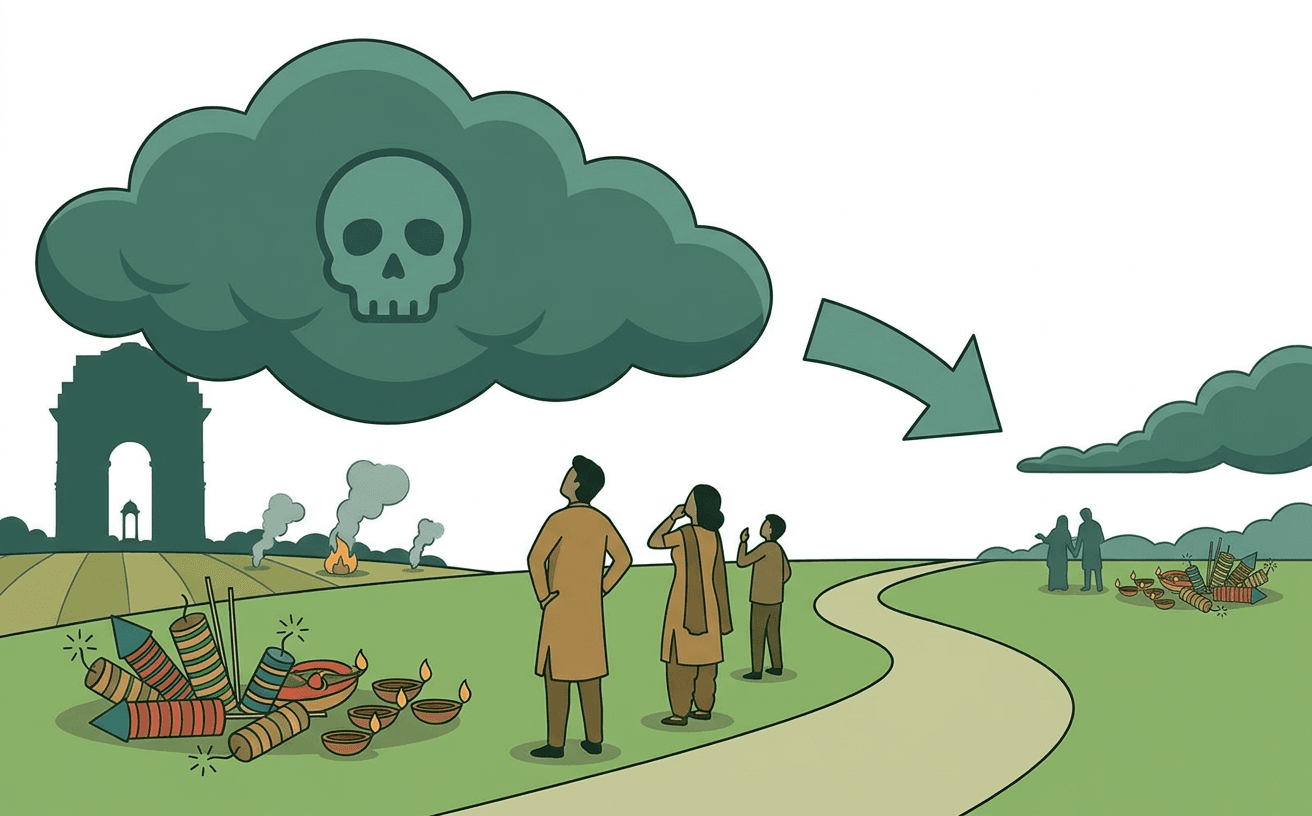
A new study indicates that severe pollution levels in Delhi were already present before the Deepavali festival, challenging the narrative that seasonal factors like stubble burning and firecrackers are the primary culprits. The report highlights that local emission sources, particularly transport, are the largest contributors to the city's persistent air quality crisis.
Exam perspectives
The study reinforces the concept of carrying capacity, which refers to an ecosystem's maximum ability to absorb pollutants without degrading. Delhi's geography, landlocked and prone to temperature inversions during winter, severely limits its carrying capacity for air pollution. The persistent high baseline of pollution, driven by local sources like vehicular emissions and construction dust, creates a critical situation long before seasonal factors like agricultural burning come into play. This underscores the need for a paradigm shift from reactive measures (like banning firecrackers or construction during peak pollution) to proactive, year-round strategies targeting the base load of pollution. Understanding the specific contribution of different sources, such as PM2.5 and PM10, is crucial for effective source apportionment, a key concept in environmental management. This data challenges the traditional narrative and necessitates a more nuanced approach to tackling the complex interplay of meteorological conditions and diverse emission sources.
The persistence of the air quality crisis highlights a significant failure in urban governance and regulatory enforcement. While statutory bodies like the Commission for Air Quality Management (CAQM) have been established to coordinate efforts across the National Capital Region, their effectiveness is often hindered by fragmented implementation and a lack of integrated planning. The reliance on emergency measures, such as the Graded Response Action Plan (GRAP), while necessary, reflects a reactive rather than a proactive governance model. The study's emphasis on local transport emissions points to the urgent need for comprehensive urban mobility planning, including promoting public transport, disincentivizing private vehicle use, and enforcing stricter emission norms. Furthermore, the issue raises questions about the right to a healthy environment, interpreted as a fundamental right under Article 21 of the Constitution, and the state's responsibility to protect it. Effective governance requires moving beyond episodic interventions and focusing on long-term systemic changes, including transitioning to cleaner energy sources and implementing stringent emission control technologies across sectors.
Delhi's unique geographical location exacerbates its vulnerability to air pollution. Situated in a landlocked region, it lacks the diluting effect of coastal breezes. During the winter months, a phenomenon known as temperature inversion occurs, where a layer of warm air traps cooler air near the surface, acting like a lid that prevents the dispersion of pollutants. This meteorological condition, combined with the city's high population density and intense economic activity, creates a perfect storm for severe air quality episodes. Furthermore, Delhi is impacted by transboundary pollution, receiving pollutants transported by prevailing winds from neighboring states, including dust from the Thar desert and emissions from industrial clusters and agricultural activities. This highlights the need for a regional approach to air quality management, recognizing that pollution does not respect political boundaries. The study emphasizes the importance of understanding the intricate relationship between local emissions, regional transport, and atmospheric dynamics to develop effective mitigation strategies.
Key references
AI-generated study notes, sourced from The Hindu. Verify facts and figures with standard sources.