
Don’t use language to divide people
Context
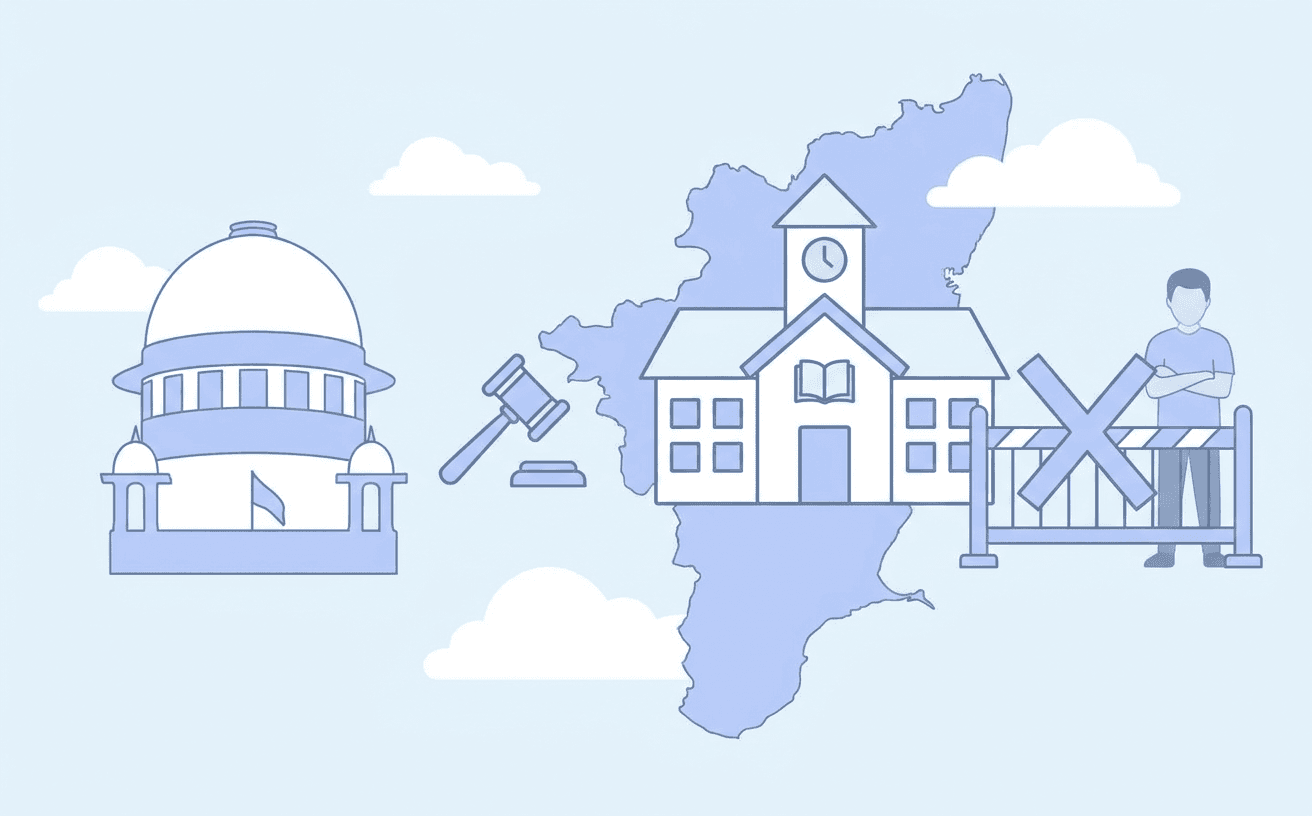
The is currently hearing a case regarding the establishment of Jawahar Navodaya Vidyalayas (JNVs) in Tamil Nadu. The Tamil Nadu government has historically opposed JNVs due to their implementation of a three-language formula, which runs contrary to the State's traditional two-language policy, viewing it as an attempt to reintroduce Hindi in the State's educational system.
Exam perspectives
The debate over the language policy in education highlights the complex dynamics of Federalism in India. Under the Seventh Schedule of the Constitution, Education is in the Concurrent List, allowing both the Union and State governments to legislate on the matter. However, Tamil Nadu has consistently advocated for a two-language formula (Tamil and English), contrasting with the Union government's push for a three-language formula, primarily incorporating Hindi. This tension reflects broader concerns about cultural autonomy and the preservation of regional languages against perceived linguistic imposition. The current Supreme Court case will significantly test the limits of State autonomy in educational policies and could establish a precedent for how linguistic diversity is managed within India's federal structure. UPSC candidates should connect this issue to the historical context of language agitations in Tamil Nadu and the broader discourse on cooperative federalism vs competitive federalism in shaping national educational policies, particularly in light of the National Education Policy 2020.
The opposition to Jawahar Navodaya Vidyalayas (JNVs) in Tamil Nadu presents a significant Social dilemma regarding educational access and equity. JNVs, run by the Navodaya Vidyalaya Samiti, are designed to provide quality education to talented children from rural areas, offering a crucial pathway to upward mobility. By opposing these schools over language policy, the State potentially disadvantages rural students, restricting their access to educational resources and opportunities that JNVs provide. This situation creates a conflict between preserving cultural and linguistic identity and the fundamental right to education. Students and policymakers must weigh the benefits of a uniform educational model against the necessity of accommodating regional linguistic preferences, particularly concerning how such policies affect marginalized rural populations. Understanding this conflict is vital for UPSC aspirants analyzing the intersection of Right to Education Act, 2009 provisions, social justice, and the impact of uniform national educational initiatives on diverse state landscapes.
The current controversy over the three-language formula is deeply entrenched in Tamil Nadu's Historical narrative, particularly the anti-Hindi agitations that have defined the State's political landscape. The scrapping of Hindi as a language of learning in 1968 by the Dravida Munnetra Kazhagam (DMK) government marked a pivotal moment in asserting Dravidian identity and resisting perceived North Indian cultural hegemony. This historical context is essential for understanding the ongoing resistance to policies like the three-language formula, which are often interpreted as tools of linguistic homogenization. The legacy of these agitations continues to shape the State's political discourse and its relations with the central government. For UPSC, connecting this contemporary issue to the post-independence language debates, the Official Languages Act, 1963, and the role of regional parties in shaping national integration strategies provides a comprehensive understanding of India's linguistic politics.
Key references
AI-generated study notes, sourced from The Hindu. Verify facts and figures with standard sources.