
El Nino Watch: the impacts around the world this week
Context
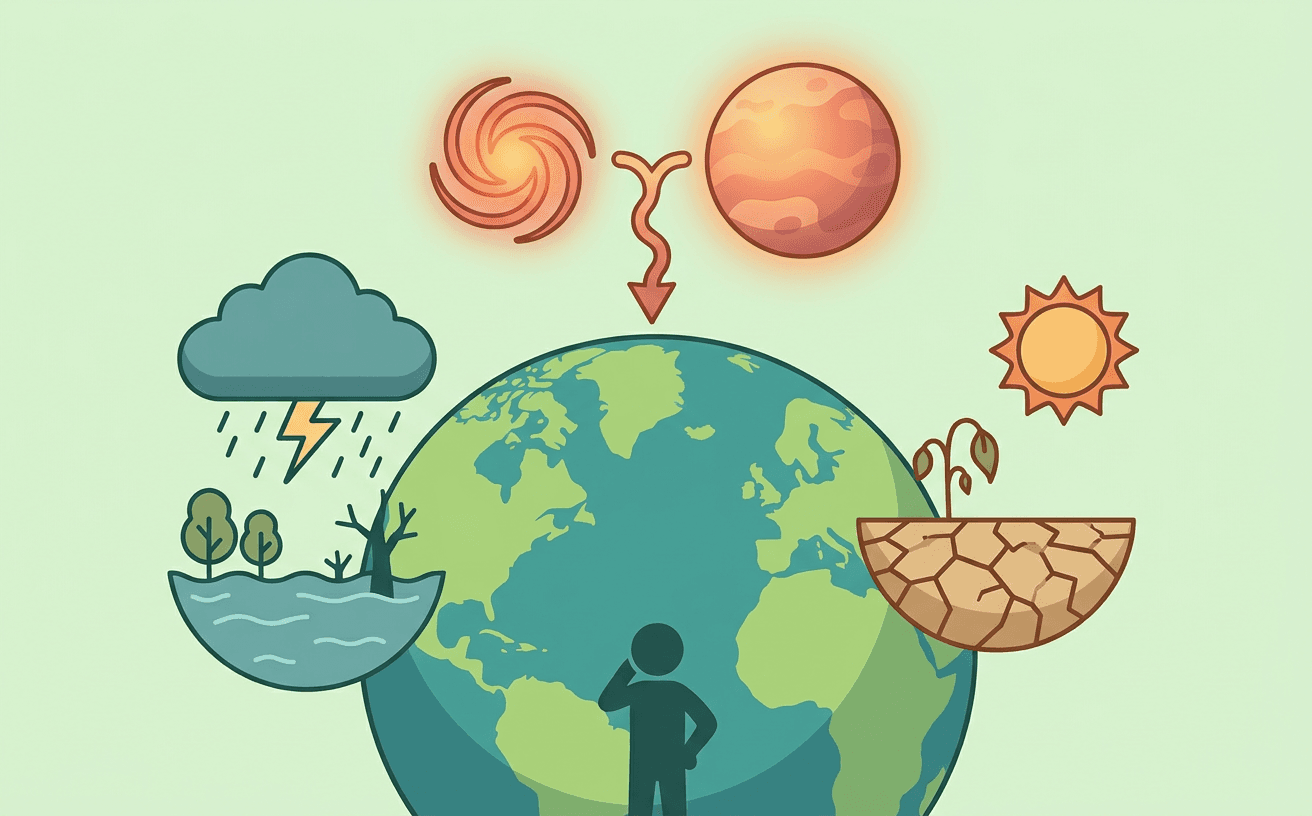
An exceptionally strong El Niño event is currently causing severe weather disruptions worldwide, exacerbating human-induced global warming. The reports record-breaking global temperatures, with significant cascading impacts on food security, agriculture, and energy production across multiple nations.
Exam perspectives
Understanding the mechanics of El Niño is crucial for GS-1. It is the warm phase of the El Niño-Southern Oscillation (ENSO), characterized by the unusual warming of surface waters in the eastern tropical Pacific Ocean. This alters atmospheric circulation, particularly the Walker Circulation, leading to weakened trade winds. The current event is described as 'exceptionally strong', highlighting the intensity of these anomalies. This results in unpredictable global weather patterns: heavy rainfall and flooding in parts of Latin America (like Peru), and severe droughts in regions of Asia and Australia. Furthermore, the article notes a disruption of the polar vortex, which scientists link to El Niño, demonstrating how tropical sea surface temperature anomalies can influence high-latitude weather systems, potentially causing severe cold snaps in certain regions despite overall global warming.
The economic ramifications of El Niño, relevant to GS-3, are profound, primarily manifesting through supply-side shocks. Agriculture is highly vulnerable to these extreme weather events. Droughts reduce crop yields, while floods destroy stored food and disrupt essential transportation infrastructure, leading to a classic case of cost-push inflation. The Food and Agriculture Organization warns that these supply disruptions, combined with market speculation regarding future shortages, generate significant price volatility. Furthermore, the crisis is compounded by external geopolitical factors (like the conflict mentioned) that elevate input costs, such as fuel and fertilizer. For nations highly dependent on agriculture, like nations dependent on agriculture face significant fiscal burdens due to climate-induced disasters and the need for emergency response plans., highlighting the fiscal burden of climate-induced disasters.
From an environmental perspective, El Niño acts as a threat multiplier, exacerbating the effects of anthropogenic climate change. The Copernicus Climate Change Service data indicates that the natural warming cycle of El Niño is turbocharging human-driven global warming, making it highly probable that 2026 will be the second-hottest year on record, with 2027 potentially becoming the hottest.. This compounding effect increases the frequency and severity of extreme weather events, challenging existing climate adaptation strategies. The situation in Sri Lanka illustrates a critical environmental trade-off: anticipated droughts may force a shift from renewable hydropower back to more polluting thermal generation, threatening decarbonization goals and underscoring the complex relationship between climate variability, energy security, and sustainable development.
Key references
AI-generated study notes, sourced from The Hindu. Verify facts and figures with standard sources.