
End of Maoist terror victory of right policies and strong political will: PM Modi
Context
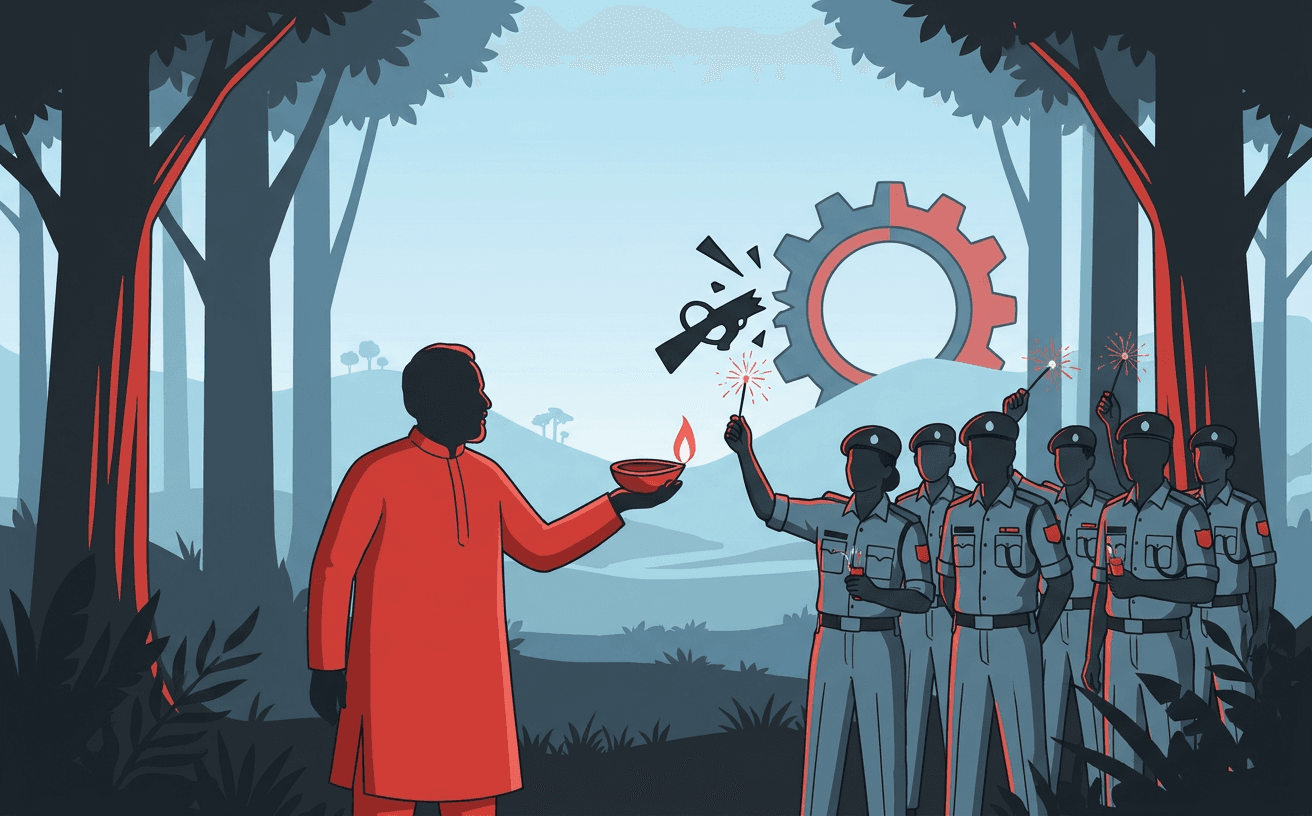
Prime Minister Narendra Modi, while celebrating Diwali with personnel in Bastar, Chhattisgarh, claimed that the government's policies have effectively ended Maoist terror. He attributed this success to a 'strong political will' that crippled the funding networks and choked supply lines of Left Wing Extremist (LWE) groups, reducing their influence from over 230 districts down to a fraction of that number.
Exam perspectives
The Prime Minister's remarks highlight the crucial role of political will and comprehensive policy frameworks in combating internal security threats like Left Wing Extremism (LWE). The statement implicitly refers to the multi-pronged approach adopted by the government, which goes beyond mere security operations to include development and intelligence-based action. This approach aligns with the National Policy and Action Plan (2015) to address LWE, which focuses on security, development, ensuring rights and entitlements of local communities, and managing public perception. The claim that funding networks were crippled points to the effectiveness of agencies like the National Investigation Agency and the Enforcement Directorate in tracking and neutralizing terror financing, a critical component of internal security management. UPSC aspirants must analyze the evolution of government strategies against Naxalism, evaluating the balance between kinetic operations (military/police action) and developmental initiatives.
The PM's assertion that the government destroyed the 'fake currency nexus' and 'choked the supply line' of Maoists touches upon the economic dimensions of insurgency. Terror financing is the lifeblood of extremist organizations. Policies targeting counterfeit currency and illicit financial flows are essential to neutralize such groups. This connects directly to initiatives like demonetization (which aimed, in part, to curb black money and fake currency used by extremist groups) and strengthened anti-money laundering frameworks. The economic marginalization of LWE groups significantly reduces their capacity to procure weapons, sustain cadres, and expand their ideological footprint. For UPSC, understanding the mechanisms of terror financing, including extortion, illegal mining, and the use of the formal/informal financial system, is vital when studying the broader topic of organized crime and its links to terrorism.
The statement that, for the first time in 47 years, not a single Central Reserve Police Force jawan lost his life in the line of duty over the past year is a significant metric for evaluating the success of counter-insurgency operations. The CRPF is the lead force for internal security and counter-insurgency duties, bearing the brunt of the LWE conflict. A zero-casualty year for the CRPF in LWE-affected areas suggests a substantial degradation of the Maoists' operational capabilities and an improvement in the strategic dominance of security forces. This achievement reflects better training, intelligence gathering, coordination among different security agencies (like the CRPF, state police forces, and intelligence bureaus), and improved infrastructure (such as fortified camps and better communication networks) in conflict zones. Candidates should be prepared to discuss the challenges faced by Central Armed Police Forces (CAPFs) in LWE areas and the measures needed for their modernization and capacity building.
Key references
AI-generated study notes, sourced from The Hindu. Verify facts and figures with standard sources.