
Even as unemployment falls, lack of ‘decent work’ in India
Context
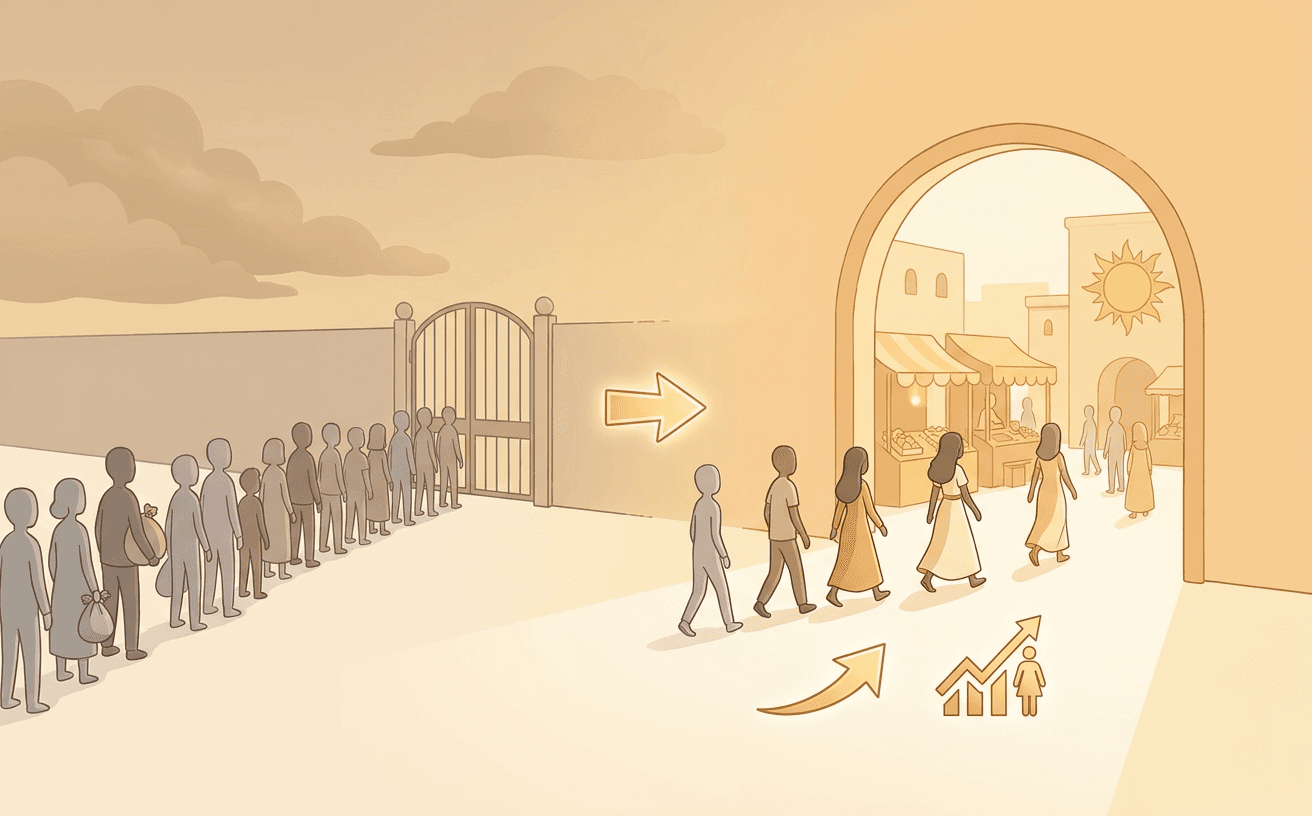
Recent data indicates a significant drop in India's unemployment rate from 6.1% in 2017-18 to 3.2% in 2023-24, alongside an increase in female workforce participation. However, this editorial highlights a critical qualitative issue: the lack of 'decent work' accompanying these new jobs. Despite statistical improvements in employment, a large portion of the workforce remains in informal, insecure roles without adequate social protection, raising concerns about the true nature of India's economic growth and labor market health.
Exam perspectives
The core economic issue highlighted is the distinction between employment quantity and employment quality. While the Periodic Labour Force Survey (PLFS) data shows a declining unemployment rate, this metric alone is insufficient to gauge economic well-being. The Indian economy suffers from a high degree of informalization, where workers lack formal contracts, job security, and benefits. This phenomenon is often termed 'jobless growth' or, more accurately in this context, 'poor-quality job growth'. The rise of the gig economy further exacerbates this, creating a class of workers who are technically employed but lack the protections of traditional employment. For UPSC, it's crucial to understand that sustainable economic development requires not just job creation, but the creation of productive, secure jobs that contribute to poverty reduction and equitable growth. The transition from informal to formal employment is a key structural challenge for the Indian economy.
From a social perspective, the lack of 'decent work' directly impacts human dignity and social security. The International Labour Organization (ILO) defines decent work as involving opportunities for work that are productive and deliver a fair income, security in the workplace, and social protection for families. The article points out that many workers, such as garment workers or construction laborers, fall outside this definition. This lack of social security nets leaves vulnerable populations exposed to economic shocks, health crises, and old-age poverty. Furthermore, while female workforce participation has increased, it's essential to analyze whether these women are entering secure, formal jobs or being pushed into low-paying, informal sectors due to economic distress. This ties into the broader issue of inclusive growth and the realization of Sustainable Development Goal 8 (SDG-8), which explicitly calls for 'decent work for all'. The social implications of a highly informal workforce include persistent inequality and limited social mobility.
The governance challenge lies in regulating the labor market to ensure worker protection without stifling economic growth. India has a complex web of labor laws, which the government has attempted to simplify and consolidate into four Labour Codes (on Wages, Industrial Relations, Social Security, and Occupational Safety, Health and Working Conditions). However, the implementation and effectiveness of these codes in addressing the informal sector and the emerging gig economy remain a significant concern. The state has a constitutional obligation, under the Directive Principles of State Policy (DPSP), specifically Article 41 (right to work, to education and to public assistance in certain cases) and Article 43 (living wage, etc., for workers), to strive for decent working conditions. The failure to provide adequate social security and enforce labor rights for a vast majority of the workforce highlights a gap in governance and policy implementation. UPSC questions often focus on the effectiveness of government interventions in the labor market and the balance between labor flexibility and worker protection.
Key references
AI-generated study notes, sourced from The Hindu. Verify facts and figures with standard sources.